

All News

Weight Loss as a Therapeutic Goal in Psoriatic Arthritis
Psoriatic arthritis (PsA) is a complex inflammatory disease often complicated by obesity, which not only worsens disease activity but also impairs treatment response. At ACR Convergence 2025, three compelling studies spanning pharmacologic, lifestyle, and longitudinal observational data converged on a central theme: weight loss is a powerful modulator of PsA outcomes, regardless of the intervention used.
Read Article
IgG4: Rare, but new treatments on the horizon
IgG4 is a rare autoimmune disease with excessive IgG4 immunoglobulins that can affect multiple organs yielding plasma cell deposition (inflammation) and fibrosis.
Read Article
#ACR25 Abstr#LB14 Promising therapy BMS-986353, a CD19 CAR-T in Severe Refractory Idiopathic Inflammatory Myopathies. 11/12 had evaluable data; muscle, skin and ILD improved. 1 x G2 CRS, 1 G3 ICANS. Longer FU needed and larger sample @RheumNow https://t.co/zAG23tAsbL
Links:


Links:


#ACR25 How hard will you go & at what cost? A study in China using CD20/BCMA Bispecific autologous CAR-T showed profound depletion, normalisation of abs and good response in #SLE (10/11 had LN). But 2 had G3 infections & cytopenia. Presenters said some had IVIG @RheumNow #ACRBest https://t.co/TF0wpib5rr
Links:

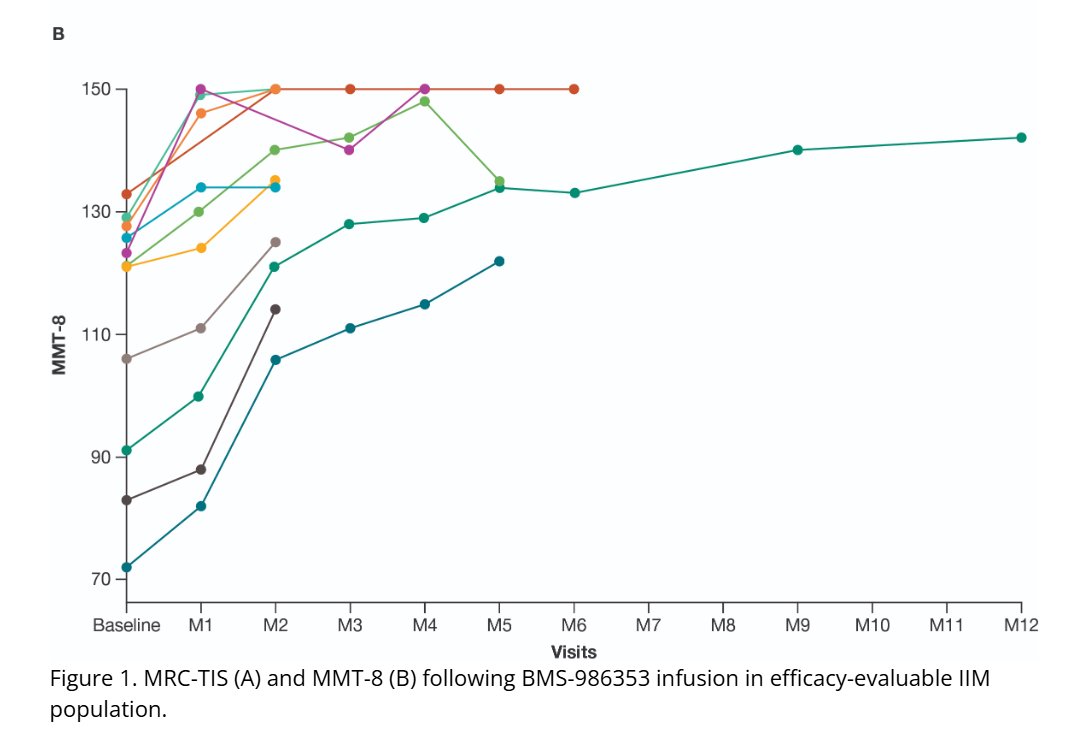
CAR T flex for myositis 💪 LB14: Ongoing Phase 1 CD19 CAR T in refractory myositis ✅ Well-tolerated (low-grade CRS, transient cytopenias) 📈 11/11 improved MMT-8 (median +22 Day 85, +27 Day 169) 🔹 10/11 off myositis therapy at follow-up @RheumNow #ACR25 https://t.co/btOsIcHe0f

Links:

Jiha Lee JihaRheum ( View Tweet)

