All News
Synovial Tissue Signature Guiding Targeted IL-6 Therapy in RA
RNA sequencing and classification of RA subsets has proven useful. RNA sequencing-based stratification of RA synovial tissue showed stronger associations with clinical responses compared with histopathological classification. Additionally, for patients with low or absent B-cell lineage expression signature in synovial tissue, tocilizumab is more effective than rituximab.
Read ArticleComorbidity and Drugs Drive COVID-19 Severity and Survival in Rheumatic Disease
While comorbidities are associated with severe COVID-19 infection, it appears they also influence severity and survival in rheumatic disease (RMD), according to a a French cohort study,
Read ArticleIVIg in MIS-C
Among children with multisystem inflammatory syndrome (MIS-C), treatment with IVIG and methylprednisolone vs IVIG alone was associated with a more favorable fever course. MIS-C is a rare but serious pediatric condition associated with COVID-19 where different body parts can become inflamed, including the heart, lungs, kidneys, brain, skin, eyes, or gastrointestinal organs.
Read ArticleNSAIDs in Osteoarthritis: Study Suggests Need for New Look
Knee osteoarthritis (OA) patients using nonsteroidal anti-inflammatory drugs (NSAIDs) showed greater loss of medial minimum joint space width than did others taking other drugs, registry data indicated.
Read ArticleRheumNow Podcast – Tofacitinib Safety Concerns (2.5.2021)
Dr. Jack Cush reviews and discusses the news and journal reports from the past week on RheumNow.com.
Read ArticleHydroxychloroquine Fails to Prevent COVID-19
There is a preponderance and mounting evidence that hydroxychloroquine is ineffective in COVID-19 infection; and now the NEJM reports a the results of a trial where HCQ given as post-COVID exposure therapy failed to prevent SARS-CoV-2 infection or symptomatic Covid-19 in healthy persons.
Read ArticleCardiac and Cancer Signals Tofacitinib Safety Alert from FDA
The FDA has notified healthcare professionals of a safety alert concerning tofacitinib (Xeljanz), noting that preliminary results from a long-term safety clinical trial show an increased risk of serious heart-related problems and cancer with tofacitinib (compared to adalimumab) when given to
Read ArticleAdverse Events with Anti-malarials during the COVID Pandemic
For a variety of reasons, the use of anti-malarials (chloroquine and hydroxychloroquine) rose dramatically in the pandemic; notable was the lack of proven benefit and the dramatic risk in reported adverse drug reactions (ADRs) associated with these drugs being used to treat SARS-CoV-2.
Read ArticleHealth Canada Approves Subcutaneous Infliximab Biosimilar
The infliximab biosimilar CT-P13, developed by Celltrion and marketed as Remsima has been approved by HealthCanad for subcutaneous (SC) use in all the indications for infliximab.
Read ArticleLow Persistence of Biologics in Psoriatic Arthritis
A longitudinal observational cohort study of psoriatic arthritis (PsA) patients treated with biologic therapy finds relatively low persistence of selected biologic therapy in PsA patients
Read ArticleVagal Nerve Stimulation in Rheumatoid Arthritis
Lancet Rheumatology has reported the results of a proof of concept trial, wherein vagal nerve stimulation was shown to ameliorate RA disease activity. The intervention involved non-invasive stimulation of the auricular branch of the vagus nerve using a wearable vagus nerve stimulation device for up to 30 min per day, delivering pulses of 20 kHz.
Read ArticleOne-Third Rheumatoid Risk from Lifestyle
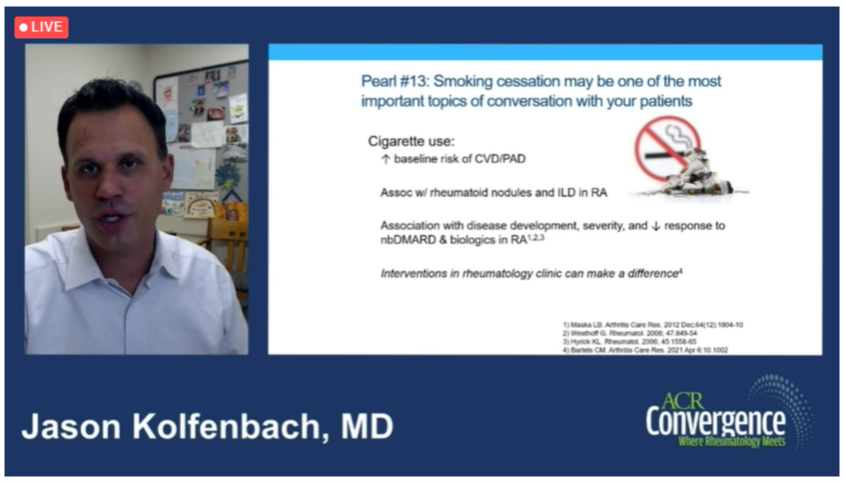
Analysis of the NHANES (National Health and Nutrition Examination Survey) data suggests that one-third of the risk of developing rheumatoid arthritis (RA) in the USA is attributable smoking, obesity and alcohol intake.
Read ArticleCalculating Serious Infection Risk in IMID Patients
Predictive modeling of data derived from the DANBIO registry (of treated IMID patients) revealed a 4 fold increased risk of serious infection (SIE) in those starting biologic DMARD (bDMARD) treatment. From this large dataset, researchers developed a simple prediction model to estimate future infection risk that may inform shared decision-making in individual patients.
Read ArticleHigh Placebo Responses in SLE Trials
A systematic review by Urowitz and colleagues examined placebo responses in randomized controlled trials of non-renal, non-neuropsychiatric SLE patients showing unexpectedly high placebo responses; with more than one-third of the placebo-treated SLE patients responding by validated outcome measures.
Read ArticleLupus Nephritis Despite Low Level Proteinuria
Kidney International reports on a series of systemic lupus erythematosus (SLE) patients, who despite inactive urinary sediment and low level proteinuria, had a high rate of glomerulonephritis (GN) proven by renal biopsy; moreover, the LN was not predicted by laboratory abnormalities.
Read Article
Links:
Dr. John Cush RheumNow ( View Tweet)
Links:
Links:
Dr. John Cush RheumNow ( View Tweet)
Links:
Dr. John Cush RheumNow ( View Tweet)
Links: