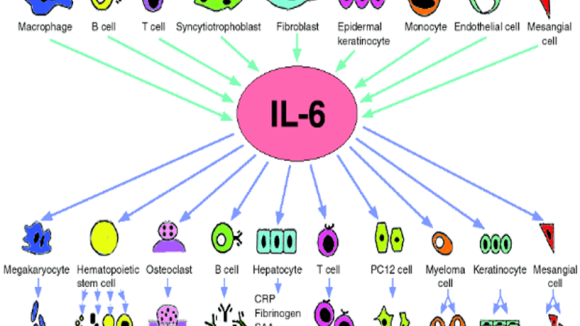
This week's NEJM has published the efficacy results of a large phase 3 trial of olokizumab, a humanized monoclonal antibody that directly targets IL-6 in patients with rheumatoid arthritis.
This is in contrast to two other marketed IL-6 inhibitors (sarilumab, tocilizumab) that bind to the IL-6 receptor.
All News
A recent meta-analysis suggests a bidirectional association between rheumatoid arthritis (RA) and depression. Finding RA patients with depression yields an 80% increased mortality risk.
Anti-cytokine therapies represents a potential alternative for the treatment of depression.
We've got a lot to discuss this week: psoriasis; fatigue; sleep; sural nerve biopsies; uveitis and SpA; diet and RA; tofacitinib and the ORAL surveillance study; what not to take with mycophenolate - and more. In what order should these items be discussed? This week the run down is based on popularity, measured by rheumatologist engagements on the website and social media.
MMWR from last week focused on chronic conditions in young adults showing they are common, costly, and major causes of death and disability. Overall arthritis ranks behind five more common chronic condition in young adults - obesity, depression, hypertension, hypercholesterolemia and asthma.
More Bad Safety News for Xeljanz
Another analysis of the mandatory postmarketing safety study for tofacitinib (Xeljanz) has confirmed what most observers expected: that rates of infection with the drug in rheumatoid arthritis are higher than with tumor necrosis factor (TNF) inhibitors.
A small retrospective study suggests that patients with difficult to treat adult-onset Still's disease (AOSD) or sytemic juvenile idiopathic arthritis (sJIA) may respond well to JAK inhibitor (JAKi) agents - presumable by blocking pro-inflammatory cytokines, notably IL-6 and IFN.