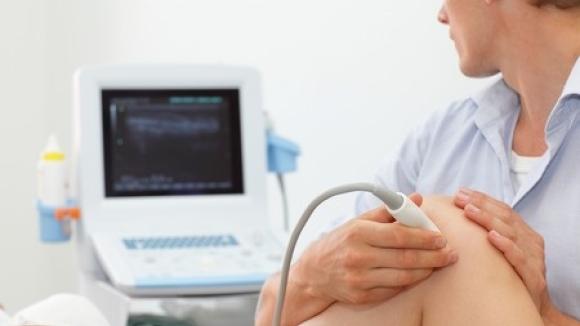
Unlike traditional imaging techniques, MSUS can be easily used at the point-of-care and offers high-resolution images of joints, tendons, and soft tissues, facilitating the early detection of inflammation and structural damage. On Saturday, November 16th at the ACR Convergence 2024, Dr. Veena Ranganath, Dr. Gurjit Kaeley, and Dr. Catherine Bakewell will present the “Proposed ACR Guidance for Use of Musculoskeletal Ultrasound in Rheumatoid and Psoriatic Arthritis.” This is the first update in a decade since the 2012 ACR guidance on the reasonable use of MSUS in rheumatology clinical practice.
All News
Despite all its benefits, ultrasound’s daily clinical use remains the domain of only a subset of interested rheumatologists. If the benefits are so clear, then why is it not universal? In the late-breaking oral abstracts at ACR Convergence, the final abstract presentation was from the Danish rheumatologists behind ARTHUR and DIANA: the robot which holds the MSK ultrasound probe, and the artificial intelligence brains which empowers it. Perhaps the robots will save us?
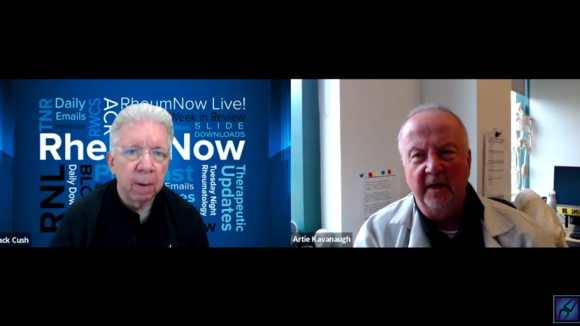
Join Drs. Jack Cush and Artie Kavanaugh as they review 15+ presentations and abstracts from the 2024 ACR Convergence meeting in Washington, DC.
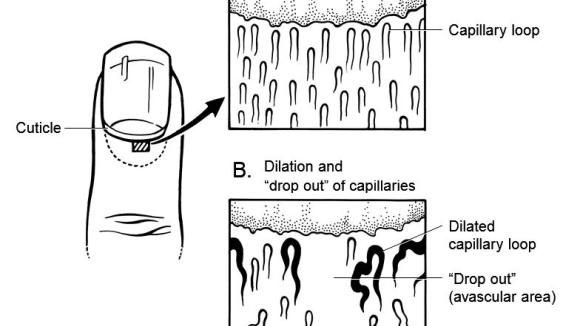
Capillaroscopy is a non-invasive imaging technique used for the in vivo assessment of the microcirculation. kin capillaries at the nailfold are evaluated because the fingers are involved in pathological processes such as Raynaud’s phenomenon. Several abstracts and sessions on nailfold capillaroscopy were presented during ACR24.
In 1950, three scientists were awarded the Nobel Prize for their groundbreaking discovery of steroids, heralded at the time as a "miracle cure" for rheumatoid arthritis (RA).
Bimekizumab (BKZ), a monoclonal antibody that selectively targets both IL-17A and IL-17F, was evaluated in the BE MOBILE 1 (non-radiographic axSpA) and BE MOBILE 2 (radiographic axSpA) trials and found to yield significant cli
One of the hot topics during the meeting was gender differences in SpA. Three abstracts presented addressed issues related to these differences particularly in the aspects of treatment response and disease activity.