

Dr. John Cush RheumNow
1 year ago
🆕 Intro to ILD (Part I): the essentials
🫁 Definition & basics
🔬 Key pathology patterns
🧑⚕️ Clinical approach
📋 What rheums need to know
⬇️ Download & learn more: https://t.co/Fn76PiGsPl
Created by @MithuRheum | via @RheumNow for our Rheum to Breathe: ILD Campaign https://t.co/MalDKUjonR

Dr. John Cush RheumNow
1 year ago
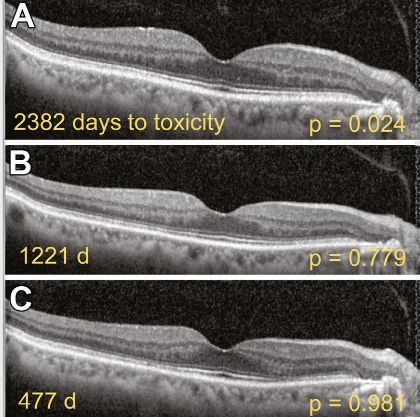
AI can Dx & predict HCQ retinopathy (HR). An International, Multi-center study used retrospective data from 409 pts (171 HR+, 238 HR-) & tested on 8251 SD-OCT scans. AI Dx 100% & predicted 98.7% mean 221 D before Dx. Sensitivity 100%; specificity 98%, PPV 94%; NPV 100% https://t.co/USABVO8Ss5
Dr. John Cush RheumNow
1 year ago
Gout: Highlights from APLAR 2025
Dr. Sheila Reyes, The Philippines, reports on highlights and takeaways from lectures on the treatment of gout from the APLAR 2025 Congress in Fukuoka, Japan.
https://t.co/Fxd3MBUYrT https://t.co/gKjHlJXttT


sheila RHEUMarampa
1 year ago
Dr. Binit Vaidya aptly poses this slide on the gout paradox: evidence-based T2T tx exist yet many still have uncontrolled dse.
How can we close this gap?
- address barriers to tx adherence
- motivation
- px education
- multidisciplinary approach to px care
@rheumnow #APLAR25 https://t.co/IEn9PMAxH5

sheila RHEUMarampa
1 year ago
Colchicine for #gout patients with CV risk:
- since it has a purely anti-inflammatory effect, risk of acute CV events in pts w/ high CV risk is reduced.
vs. NSAIDs/steroids, colchicine remains to be a safer option for gout prophylaxis
@rheumnow #APLAR25 https://t.co/WgfTcIleMd

sheila RHEUMarampa
1 year ago
SGLT2 inhibitors exert their anti-inflammatory effects by inhibiting activation of the NLRP3 inflammasome.
Secondary analyses of RCTs show that SGLT2is can reduce the risk of incident #gout
@RheumNow #ACR25 https://t.co/IWgyDYEQoZ

Dr. John Cush RheumNow
1 year ago
Addressing Disparities and Unequal Burdens in ILD
Interstitial lung diseases (ILDs) represent a complex spectrum of conditions that share one unifying truth: they are almost always serious, progressive, and life-altering. But for many patients, the burden of disease does not https://t.co/Ubh7R7Xb3E


Pulmonary arterial hypertension (PAH) is a serious complication of connective tissue disorders. Approximately 25% of patients with PAH have an underlying CTD, making CTD-PAH the second most common cause of PAH. During the session on Management of Lung Complications in CTD at APLAR 2025, Prof. Dinesh Khanna and Masataka Kuwana provided an excellent overview of PAH diagnosis and management strategies the context of CTD-ILD.
Dr. John Cush RheumNow
1 year ago
Study of 111 TAKayasu arteritis pts Rx w/ 74 MMF+MTX vs 37 CYC/AZA. Response rates at 28 & 52 weeks were 58.1% and 55.4% in the MMF+MTX group, respectively, higher than 32.4% at both time points in the CYC/AZA group. https://t.co/wqlOLH0VEA https://t.co/nbLvcyYkbn

Dr. John Cush RheumNow
1 year ago
Long-term data from the 48-wk phase 2 SLEek study of upadacitinib +/- a BTK inhibitor elsubrutinib, in SLE pts, showed both arms effective (little added from BTK), @ 1yr, 127 pts maintained efficacy, GC dose and flare rates https://t.co/FbTHCGZ4pQ https://t.co/cATXVHsiXV


Dr Gurdeep S Dulay gurdeep_dulay
1 year ago
#APLAR2025 Prof Peter Taylor
RA patients have ⬆️ rates of CKD https://t.co/DZl9qpbLhH


Dr. John Cush RheumNow
1 year ago
Systemic Sclerosis–Associated ILD
Watch Alicia Hinze, MD, share personalized strategies for managing Systemic Sclerosis–Associated ILD. Sponsored By: Boehringer Ingelheim
https://t.co/Mxg9P50m7C
#ILD #Scleroderma https://t.co/Cmupl7Dgwl


