

Antoni Chan MD (Prof) synovialjoints
1 year 10 months ago
VACIMRA Study showed timing matters for Methotrexate and Pneumococcal Vaccine in RA.
RA patients vaccinated with PCV13 1 month before MTX initiation had higher responder rates at 1 month:
88% (ELISA) vs. 75%
96% (OPA) vs. 88%
At 12 months, responses remained stronger in… https://t.co/bSbIazsRtG

Brian Jaros, MD Dr_Brian_MD
1 year 10 months ago
Hydralazine - known culprit of drug-induced AAV
How does hydral (H) AAV differ from primary (1) AAV?
💥 High dual positivity MPO/PR3
💥 DAH / pleuritis more common in H-AAV
💥 ENT, constitutional, nervous, ILD in 1-AAV
💥 More 6mo remission in H-AAV
@rheumnow #ACR24 Abst 2496

Richard Conway RichardPAConway
1 year 10 months ago
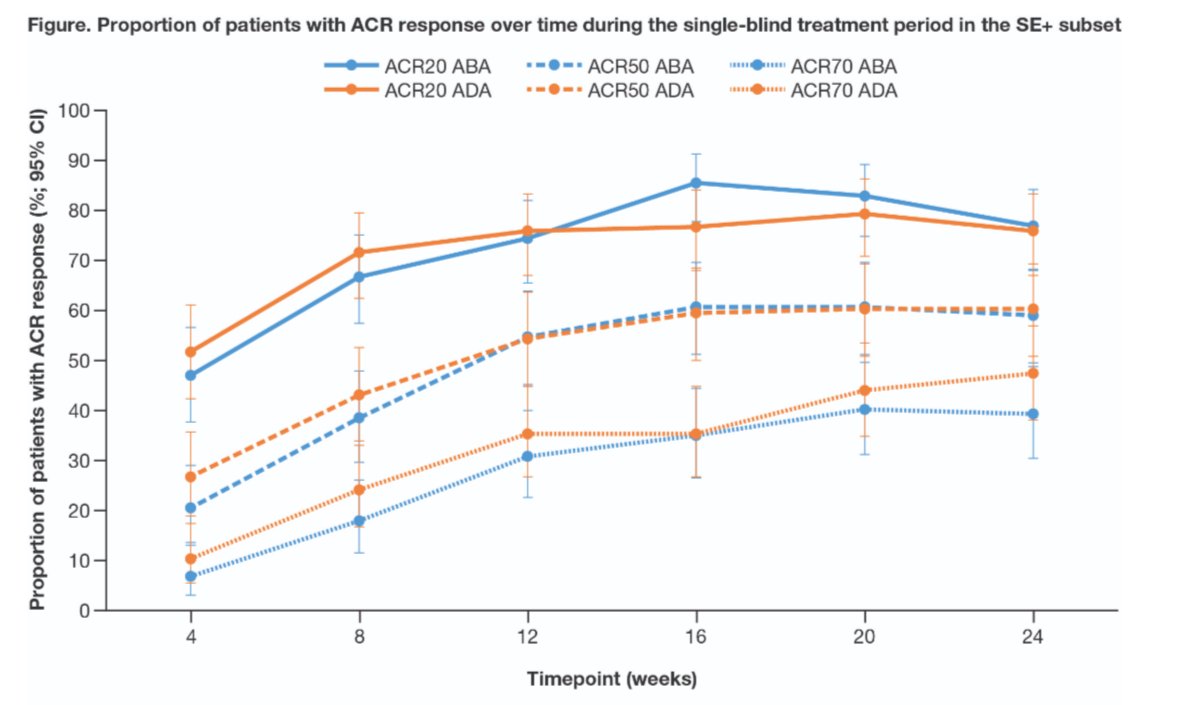
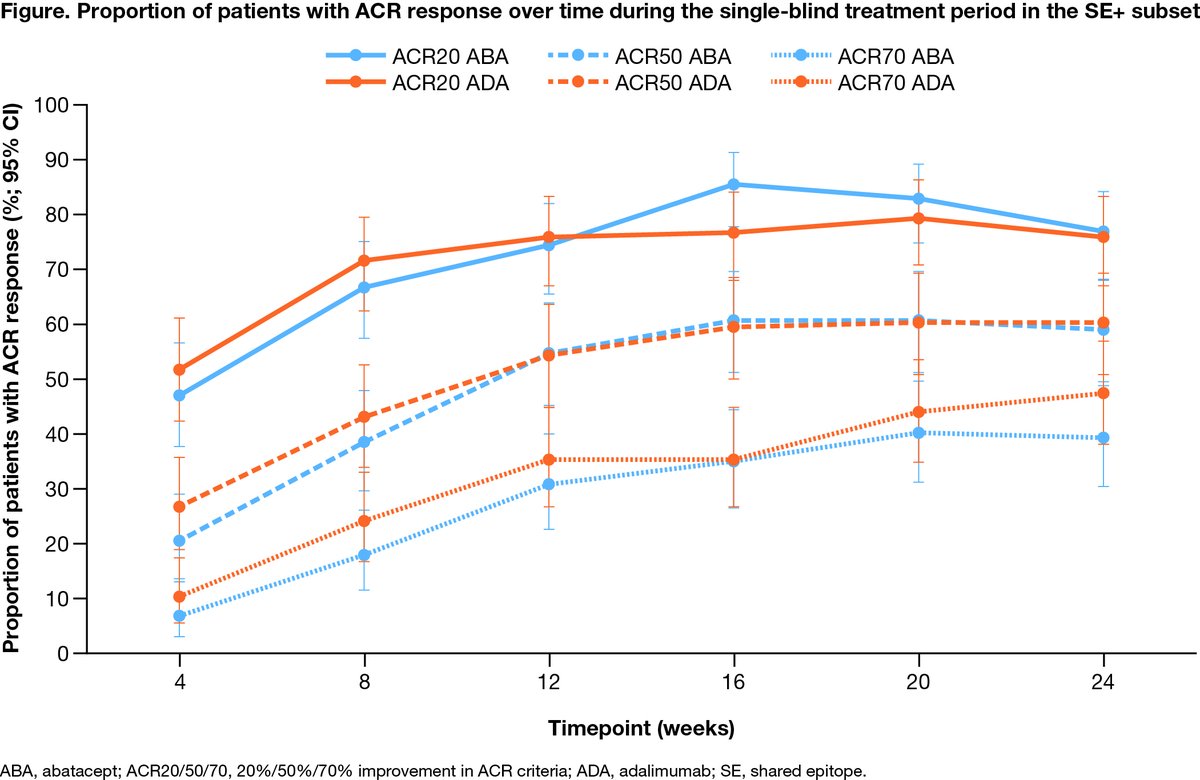
Weinblatt et al. AMPLIFIED trial. No difference in response rates of RA to adalimumab or abatacept based on dual seropositivity/shared epitope status. Fits with my priors and refutes a previous pilot study. @RheumNow #ACR24 Abstr#2671 https://t.co/OUwnlsP6jU https://t.co/RBN6ivSKDr

Bella Mehta bella_mehta
1 year 10 months ago
Severe thrombocytopenia (TP) is rare but linked to major organ involvement and poor prognosis in #SLE. Data from the RISE registry shows TP in 9.3% of SLE patients, with higher prevalence in males, African-Americans+ those with multiple comorbidities.
#ACR24 @RheumNow abst#2680

sheila RHEUMarampa
1 year 10 months ago
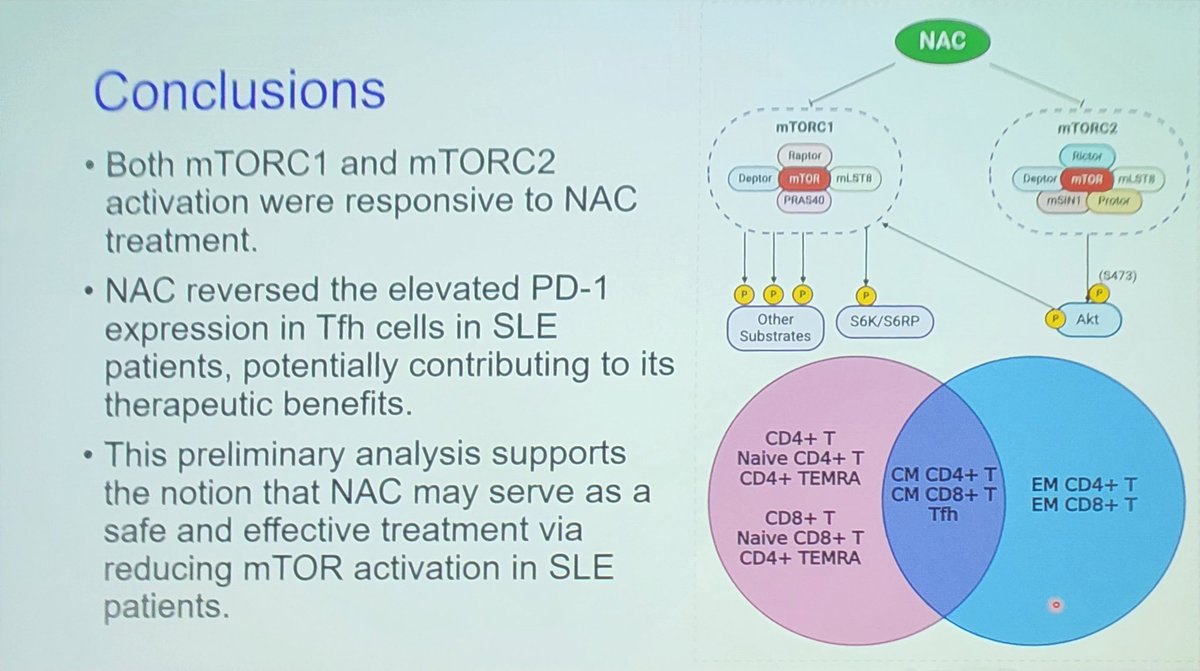
In prelim analysis of this controlled clinical trial, SLE pts w/ active dse who weres given addtl NAC for 3 mos had significantly reduced dse activity.
Mechanism? NAC reduces rapamycin (mTOR) activation.
Common AEs: nausea, vomiting
@RheumNow #ACR24 abs2677 https://t.co/E4w2Qd7RwP
Richard Conway RichardPAConway
1 year 10 months ago
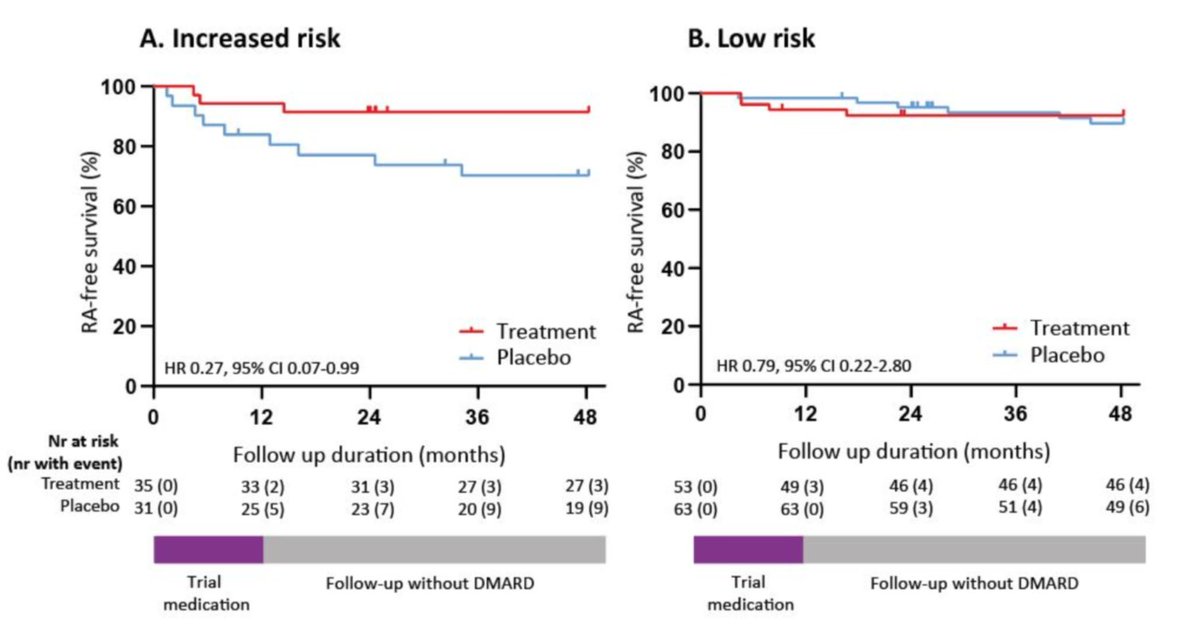
Dumoulin et al. 4 year results of TREAT EARLIER trial of 1 year MTX in CSA. In high risk ACPA- group, reduced risk of RA development, 8.6% vs 29%, HR 0.27. No difference at 4 years in ACPA+ or low risk ACPA- @RheumNow #ACR24 Abstr#2672 #ACRbest https://t.co/S2yJm196UV https://t.co/bJ9JySteUs

Jiha Lee JihaRheum
1 year 10 months ago
In the AMPLIFIED study (phase 3, single-blind RCT) ABA not superior to ADA in patients with dual seropositive early RA and HLA Class II
#ACR24 @RheumNow ABST#2671 https://t.co/VSorAiJUIe

Dr. John Cush RheumNow
1 year 10 months ago
Difficult to Manage Axial Spondyloarthritis
Axial spondyloarthritis (axSpA) is a chronic inflammatory disease primarily affecting the spine and sacroiliac joints, causing back pain, stiffness, and reduced mobility. #ACR24
https://t.co/5i5QtJJm16 https://t.co/c4bllA8ngJ

Dr. John Cush RheumNow
1 year 10 months ago
RheumNow’s expanded coverage of the #ACR24 Annual meeting is sponsored in part by Bristol Myers Squibb and UCB. All content is chosen by RheumNow and its faculty.
Dr. John Cush RheumNow
1 year 10 months ago
SELECT-GCA suggests JAKis may be the new kid on the block
Clinicians treating giant cell arteritis (GCA) have long had to contend with a disappointingly limited selection of drugs from which to select.
https://t.co/vtJzwFZMBq https://t.co/dikMRwjIZY


Reported safety signals, at odds with the efficacy of these medications, have left rheumatology clinicians in a difficult position when considering when during a patient’s treatment course and in which patients, specifically, JAKi should be used. Two abstracts from ACR convergence 2024 further contribute to our understanding of this potential risk profile.

Suppose you have a patient with lupus returning for follow-up. Their joint symptoms are well controlled. The kidneys—managed with a combination of biologic DMARD and mycophenolate—show no signs of active urinary sediment or protein. Yet, during the routine visit, your patient brings up fatigue and difficulty remembering things. How do you address this? Several studies presented at ACR24 focused on cognitive impairment in lupus.

The treatment paradigm for Giant Cell Arteritis (GCA) has been a binary approach to the presence or absence of vasculitis. When GCA is present, we institute high doses of glucocorticoids for treatment of the inflammatory process. This approach is not well individualized to the patient as we do not account for the degree of inflammation that may or may not be present in the disease. Improved markers to stratify the extent of inflammation can help

We now have an absolute plethora of agents available for use in psoriatic arthritis (PsA). In contrast we have an almost complete lack of understanding of how best to optimise use of these agents – what is the right agent at the right time for the right patient. A study presented this week has given us some further information on the topic.

