


Narrative Medicine Save
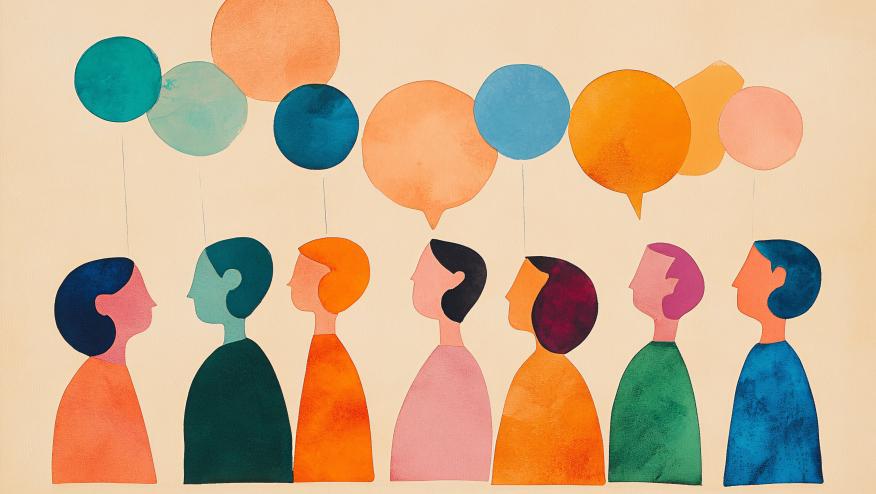
As rheumatologists, we are trained to carefully analyze signs and symptoms, interpret laboratory parameters, understand radiologic findings, make complex clinical decisions, and utilize the growing array of immunomodulatory treatments available to treat an expanding spectrum of diseases. Over the past two decades, there has been an increasing emphasis on a treat-to-target approach, the target being remission. In this intellectually demanding and scientifically driven environment, we need to remind ourselves that behind all of this is a person whose experience of illness often extends far beyond what we can capture during a busy clinic visit. Additionally, as compassionate healthcare providers, every patient encounter can have an impact - positive or otherwise - on our wellbeing. This is where narrative medicine offers a powerful perspective and a valuable tool to better understand, reflect upon and experience the stories behind illness and health.
Narrative medicine (NM), a field pioneered by Dr. Rita Charon in the 1990s, emphasizes the ability to recognize, absorb and learn from the stories of illness. Through patient and caregiver narratives, reflective writing and parallel charts, it creates opportunities to express, listen, engage, empathize and hopefully, heal.
Why Stories Matter?
Many patients living with chronic rheumatic diseases have the lived experience of an invisible disease. Almost all have encountered some degree of uncertainty, disappointment, or isolation in their medical journey. Some are more fortunate than others in finding a provider who can empathize with and understand their experiences beyond the clinical aspects of their disease. Providing a safe space for patients to tell their stories as they have lived them, offers an opportunity to make the invisible more visible. For instance, an adolescent with lupus may have well-controlled laboratory markers yet continue to struggle with fatigue, cognitive difficulties, social isolation and uncertainty about the future. Without inviting their narrative into the encounter, how can we truly claim to be “healers” or even do complete justice to the patients we treat and the families whose lives we touch?
From the clinician’s perspective, NM allows us to reflect our own experiences as human beings, beyond our roles as diagnosticians and healthcare providers. Through reflective writing, parallel charts, shared storytelling, we as professional can examine uncertainty, recognize our assumptions and bring greater awareness to the emotional dimensions of clinical care. These practices can foster empathy, strengthen relationships and create space for healing on both sides of the clinical encounter.
The Power of Community
One of the most powerful aspects of the NM community is that we all sit on the same side of the table - patients, caregivers, physicians, advanced practice providers, therapists, and others, regardless of our roles or titles. We come together, not simply as those who provide care or receive it, but as human beings with stories worth telling and experiences worth understanding. As we continue to advance the science of rheumatology, NM reminds us that healing is not always synonymous with remission. Sometimes, it begins with something as simple, yet profound, as being heard.
“Wouldn’t you want someone to tell your story? Ultimately, it’s the best proof there is that we mattered. And what else is life from the time you were born but a struggle to matter, at least to someone?” — Elliot Perlman
More ACR Coverage:
Related Content
Dr. Anita Dhanrajani | ACR 2026
The emergence of large language models (LLMs) represents a promising shift in how complex diseases such as systemic lupus erythematosus (SLE) are communicated and interpreted across both patient and clinical settings. Two EULAR 2026 abstracts highlight the evolving role of LLMs across this spectrum, from patient-facing education to diagnostic reasoning.



If you are a health practitioner, you may Login/Register to comment.
Due to the nature of these comment forums, only health practitioners are allowed to comment at this time.