
Obesity – Inflammation – PsA Save
Developed under the direction and sponsorship of Lilly Medical Affairs and is intended for US healthcare professionals only
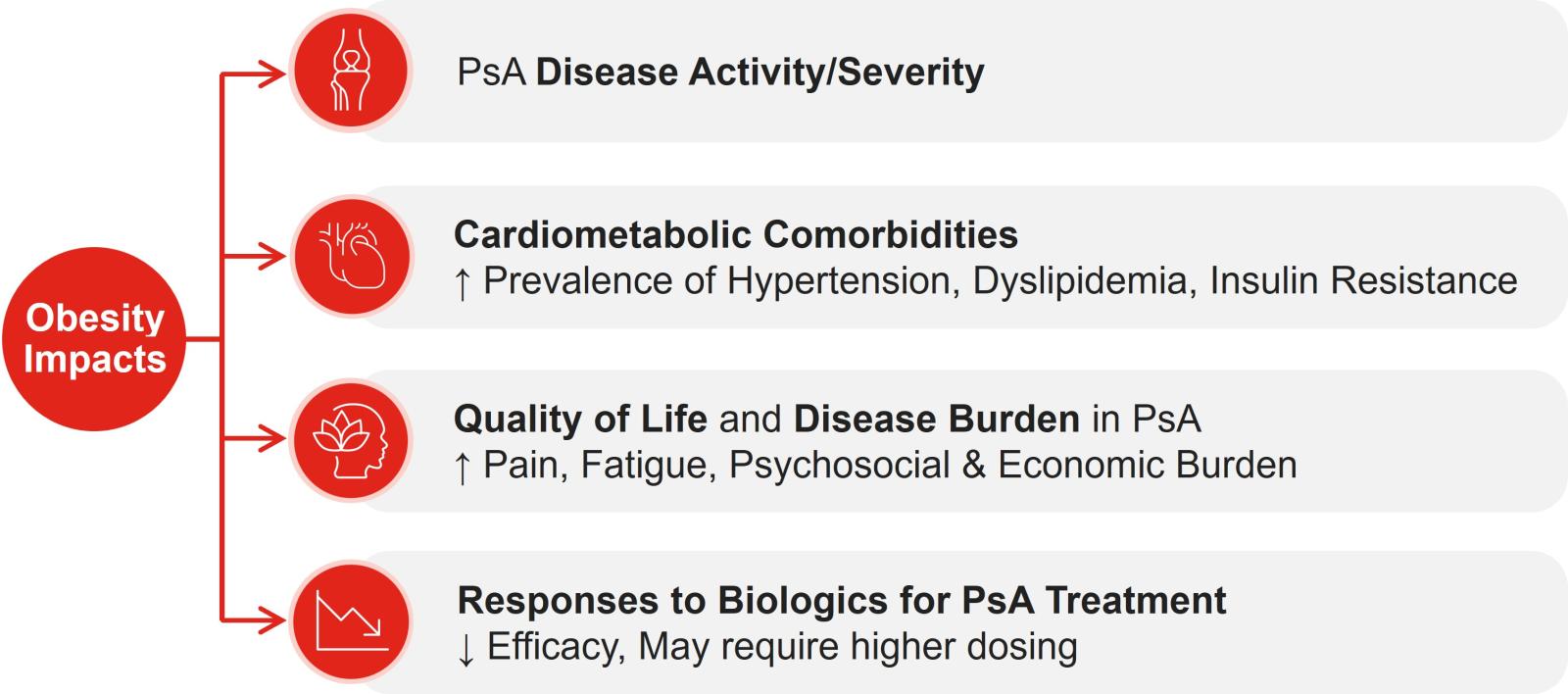
Obesity May Impact PsA Burden and Outcomes 1
Despite advances in PsA treatment, obesity remains a key modifiable risk factor impacting disease severity, cardiometabolic risk, treatment response, and patient outcomes
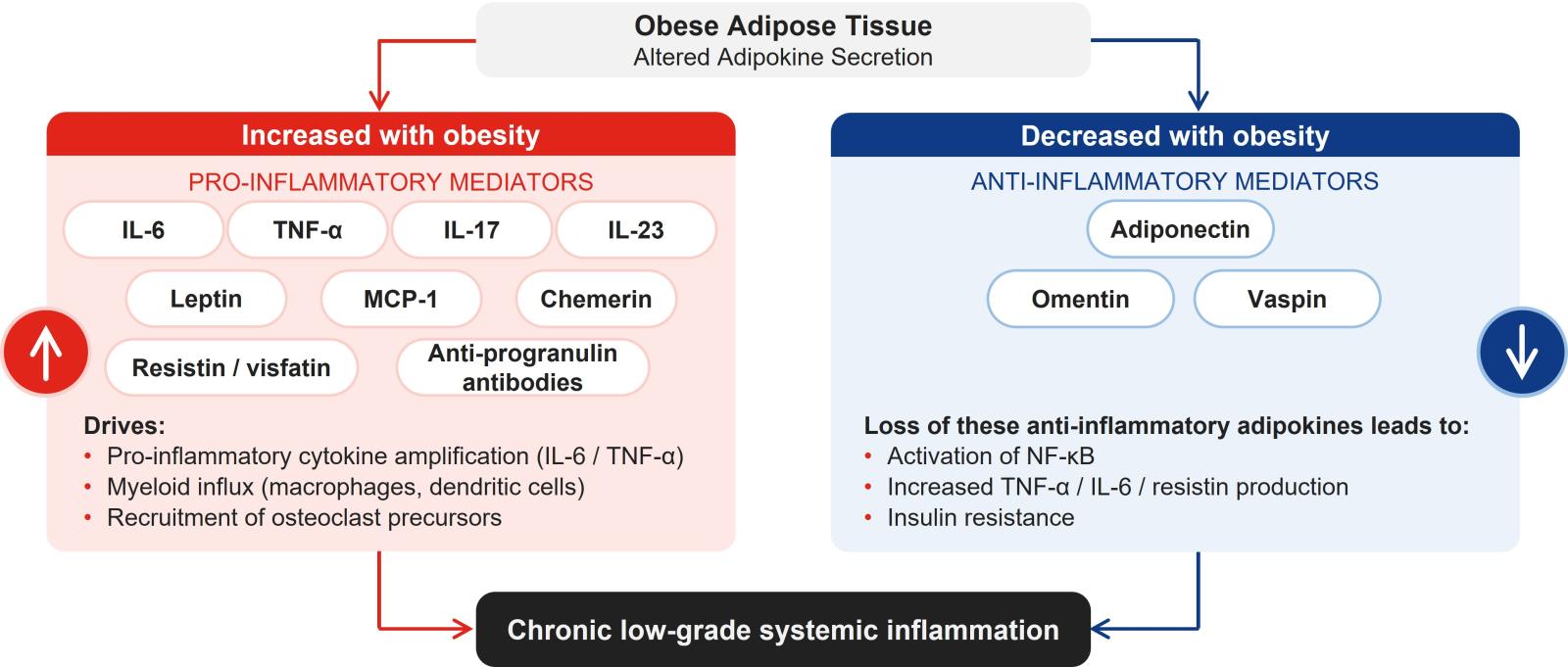
Obese Adipose Tissue Is an Active Endocrine Driver of Inflammation1
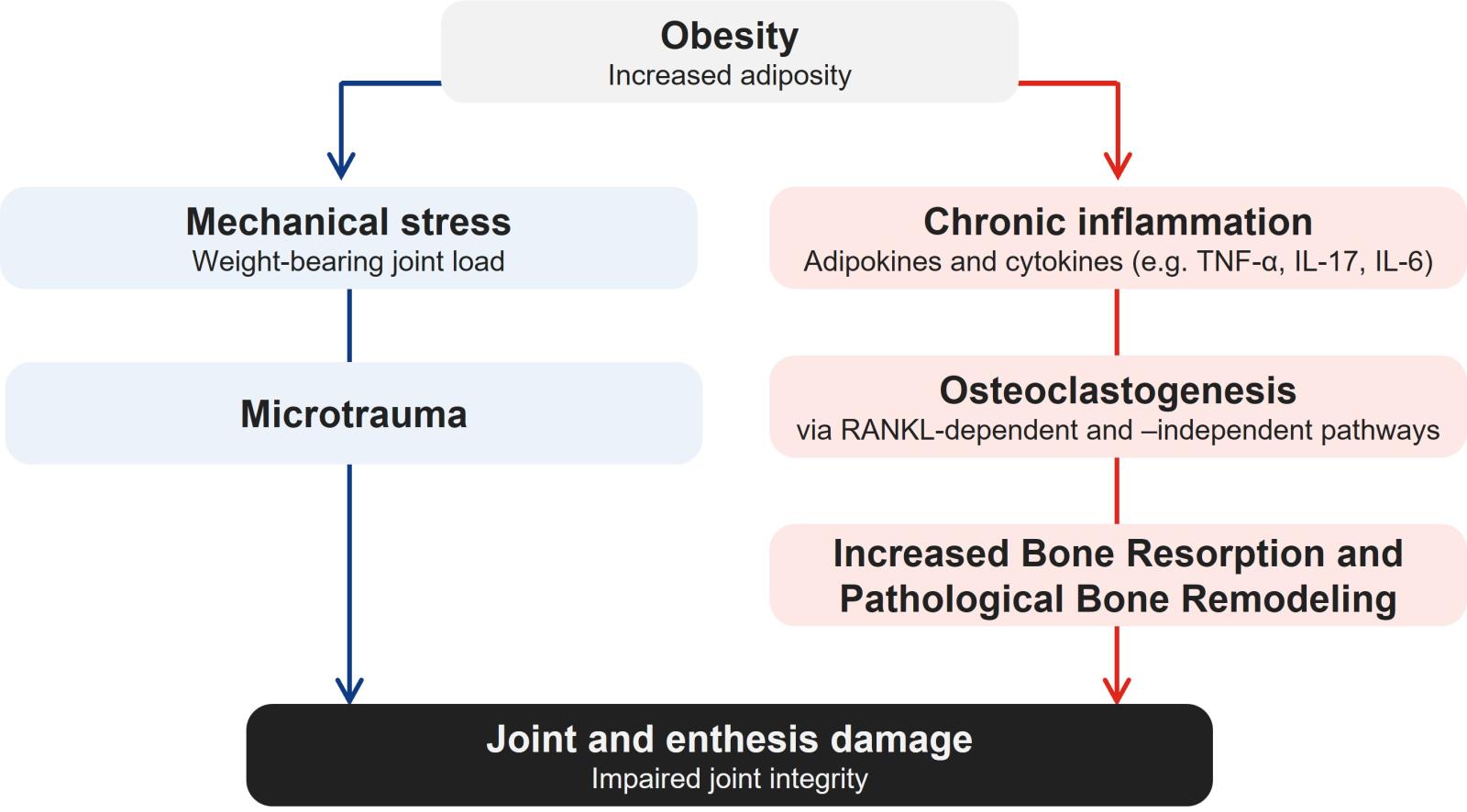
Two Paths from Obesity to Joint Damage in PsA
- Increased mechanical load from excess adipose tissue adds stress to entheses of weight-bearing joints, resulting in microtrauma associated with the pathology of PsA2,3
- Pro-inflammatory adipokines and cytokines (e.g. TNF-α, IL-17, IL-6) stimulate osteoclast differentiation and bone resorption via RANKL-mediated and RANKL-independent mechanisms.1,4
Obesity Activates Immune Pathways Relevant to PsA Pathogenesis
- PsA and obesity share intertwined pathogenic pathways built on common inflammatory mediators, lymphocyte and macrophage polarization, and overlapping signaling cascades.1
- This overlap positions excess adiposity as an active contributor to the PsA inflammatory milieu, not merely a comorbidity.1
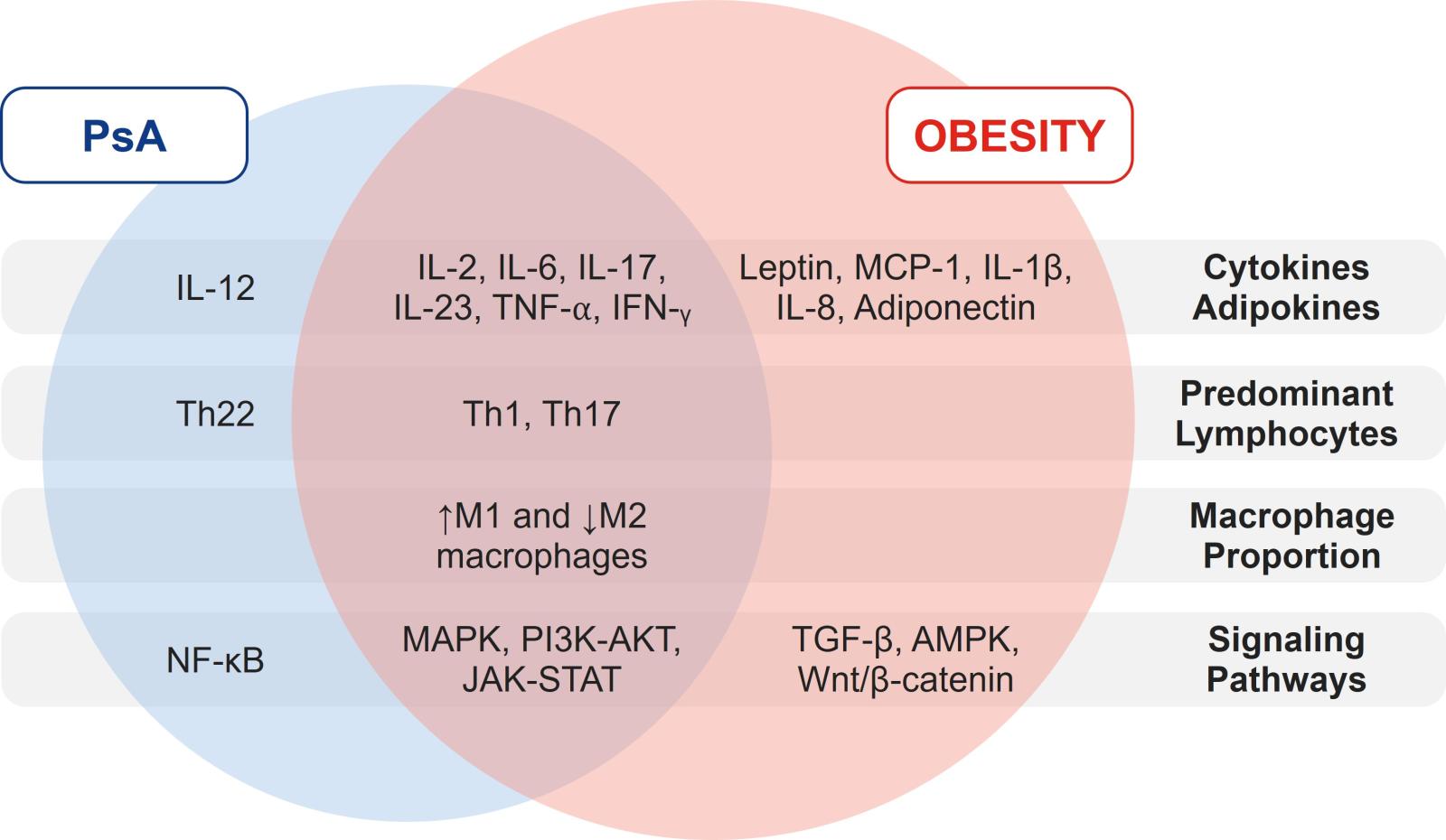
PsA and Obesity Have Mutually Reinforcing Mechanisms2,3
Click below to watch a short animation on the obesity–PsA connection and the underlying mechanisms driving disease
Clinical Implications1
- Obesity is increasingly recognized as an active contributor to the inflammatory biology of PsA rather than a passive comorbidity
- Understanding this shared pathophysiology reinforces the value of considering adiposity in the comprehensive assessment and care of patients with PsA
Abbreviations
AMPK=adenosine monophosphate-activated protein kinase; IFN-γ=Interferon gamma; IL=Interleukin; JAK-STAT=Janus kinase–signal transducer and activator of transcription; M1/M2=Macrophage polarization phenotypes 1 and 2; MAPK=Mitogen-activated protein kinase; MCP-1=Monocyte chemoattractant protein-1; NF-κB=Nuclear factor kappa B; PI3K-AKT=Phosphoinositide 3-kinase–AKT; PsA=Psoriatic arthritis; RANKL=Receptor activator of nuclear factor kappa-B ligand; TGF-β=Transforming growth factor beta; Th1/Th17/Th22=T-helper cell subsets 1, 17, and 22; TNF-α=Tumor necrosis factor alpha; Wnt/β-catenin=Wingless-related integration site/beta-catenin signaling pathway.
References
- Madsen N, et al. RMD Open. 2026;12:e006577.
- Porta S, et al. Front Immunol. 2021;11:590749.
- Kumthekar A, Ogdie A. Rheumatol Ther. 2020;7:447-456.
- Paine A, Ritchlin C. Calcif Tissue Int. 2018 May;102(5):559-574.
MMAT-08219 © 2026 Eli Lilly and Company. All rights reserved.