

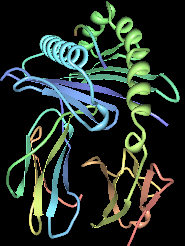



TRBV9+ a novel treatment approach for AxSpA? Save


What we know
1. HLA-B27 is the strongest genetic risk factor for AxSpA positive in 90% of rAxSpA and 30-40% of PsA patients. B27 is an MHC class1 molecule which presents peptide to CD8 T cells .
2. Current therapies treat inflammation but do not eliminate the cellular drivers of disease and only 40-60% of AxSpA patients achieve adequate disease control. Further, only 45% of PsA patients achieve minimal disease activity.
What is proposed.
1. The arthritogenic peptide hypothesis proposes that cytotoxic CD8 T cells cross-react with antigen presenting cells such as dendritic cells expressing B27-presented “self” peptide or a peptide released from gut bacterial/infection/inflammation. (see figure 1)
2. a small clone of T cells - some 4% of the total T cell repertoire express T cell receptors with TRVB9+ on the beta chain and TRAV on the alpha chain
3. the presence of these T cells are higher in the blood synovial and ocular fluid of AxSpA patients
4. activated these cells are thought to produce TNF and IL-17.
5. other clonal populations exist. TRBV9+ cells are not the only clonally expanded T cells in HLA-B27+ axSpA, so TRBV9 therapy may not work in every HLA-B27+ patient but a therapy that is aimed at the TRAV chain as well could be more effective, since the motif also appears on non-TRBV9 positive receptors.
First-in-human case
Seniprutug is a monoclonal antibody against the TRBV9 segment of the T cell receptor beta chain. It removes TRBV9+ CD8 T cells from blood while leaving the rest of the T cell repertoire in place. After tests in non-human primates, one patient with ankylosing spondylitis had TRBV9+ T cells eliminated and went into remission, with marked gains in function and mobility. Some symptoms partly returned after 10 months, at the same time as the pathogenic motif reappeared in blood, which supports its causal role. (1)
RCT
The randomized, double-blind, placebo-controlled trial enrolled 260 patients with active radiographic axSpA and inadequate response to NSAIDs. Dosing was at weeks 0, 12 and 36, and the primary endpoint was ASAS40 at week 24. The authors report superiority over placebo, a favorable safety profile and low immunogenicity. Pharmacodynamic analysis showed sustained TRBV9+ depletion, tying target engagement to efficacy, (2)
At ACR Convergence Orlando 2026
Late Breaking Abstract 01: A T cell engager is a bispecific antibody with one arm on a target cell such as a CD8 T cell expressing TRBV9+ and the other arm on CD3, which pulls a patient's own cytotoxic T cells onto the target and kills it. A novel TRBV9+ x CD3, T cell engager called CDR209 was presented as a precise depleter of these disease associated T cells in AxSpA whilst preserving the rest of the T cell repertoire.
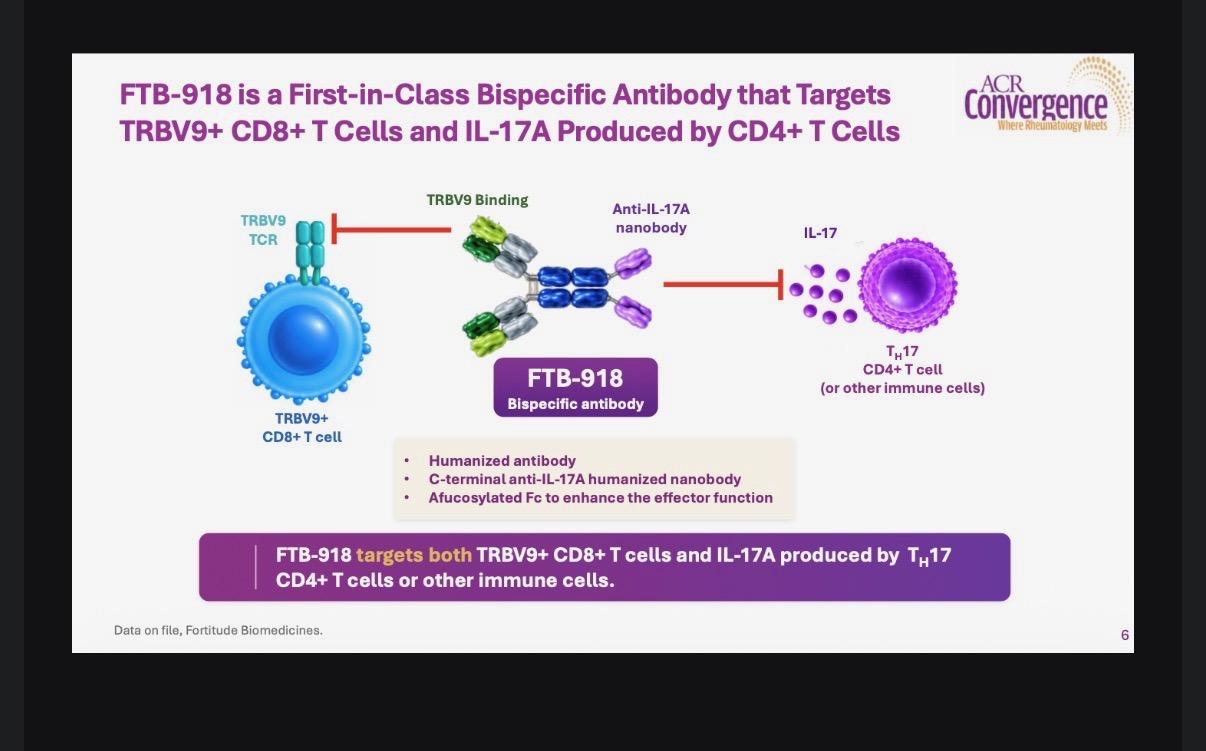
In an oral presentation at ACR Convergence Orlando 2026, Deodhar et. al presented a first in class bispecific monoclonal antibody that targeted TRBV9+ T cells and IL 17 A (Figure 3). It rapidly depleted these T cells by NK cell mediated antibody-dependent cellular cytotoxicity (ADCC). The nanobody portion has 10 times the affinity for IL17 compared to ixekizumab using a primate model with first in human clinical trials to begin in 2027.
Take-home messages
TRBV9 depletion is the first test of whether removing a defined T cell population can treat AxSpA and by extrapolation in the smaller B27 positive with PsA. Additional benefit is likely as bispecific antibodies target both TRBV9+ and TRAV as well as novel constructs that target TRBV9+ and other targets like IL19 and perhaps one day IL23 as an alternate.
- Promising novel therapeutic pathway in AxSpA and perhaps PsA, Uveitis and IBD.
- Immunosuppression will be limited as only the auto-reactive clone is removed leaving the rest of T cells untargeted.
- There is a possibility of targeted immune reset in AxSpA, potentially PsA and other IMIDs.
References.
- Britanova, O.V., Lupyr, K.R., Staroverov, D.B. et al. Targeted depletion of TRBV9+ T cells as immunotherapy in a patient with ankylosing spondylitis. Nat Med 29, 2731–2736 (2023). https://doi.org/10.1038/s41591-023-02613-z
- Vasilenko E. Samigullina R et al Efficacy and safety of 24-week therapy with a monoclonal antibody to TRBV9+ T lymphocytes (seniprutug) in patients with ankylosing spondylitis: real-world data. Modern Rheumatology Journal 18 October 2025 10.14412/1996-7012-2025-5-62-68Corpus ID: 282220941
Figure 1
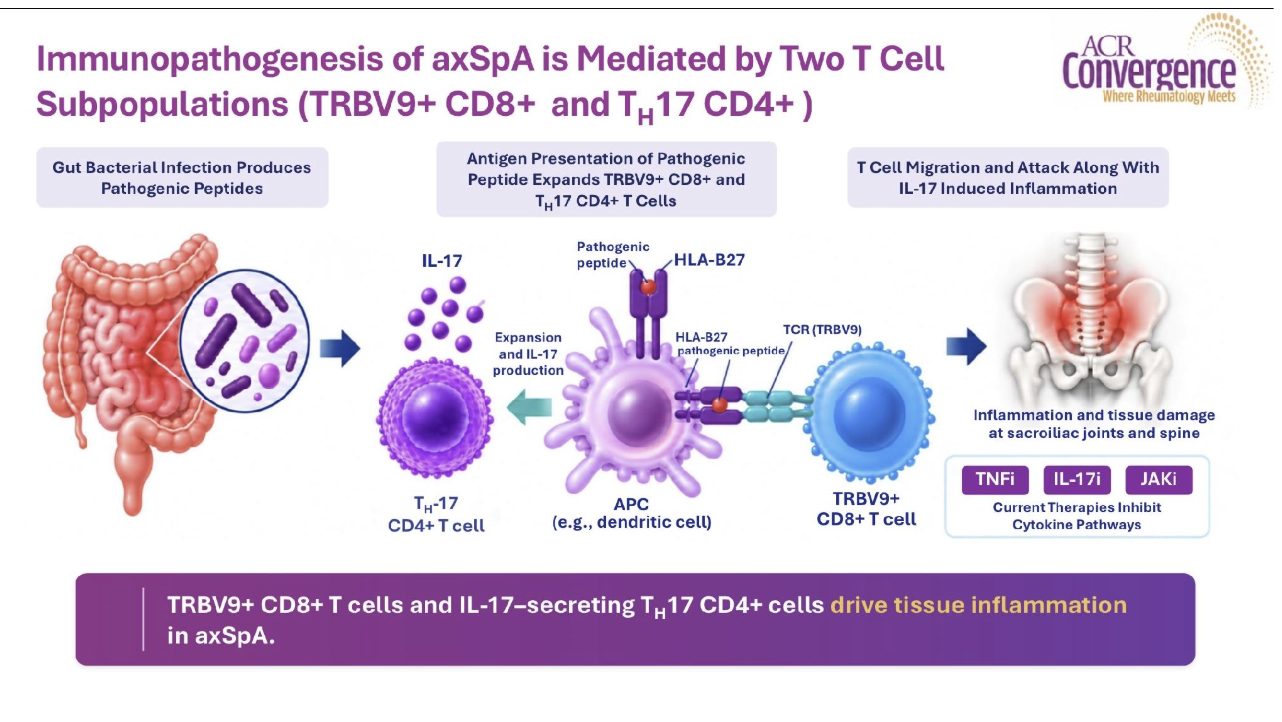
Figure 3
More ACR Coverage:
Related Content
HLA-B27 remains the dominant genetic link to spondyloarthritis (SpA) across the age spectrum, but B27 related clinical expression diverges between children and adults. New mechanistic data on autoreactive T cells, HLA-B27 misfolding, and gut-joint trafficking point to new plausible, targetable pathways.
Dr. Antoni Chan & Dr. Atul Deodhar discuss abstract 2941 presented at ACR Convergence 26
Dr. Peter Nash | LB01 | ACR 2026 Orlando




If you are a health practitioner, you may Login/Register to comment.
Due to the nature of these comment forums, only health practitioners are allowed to comment at this time.