All News

Predicting Premature Death with Multimorbidity
Machine learning (ML) models were used to predict premature death in inflammatory bowel disease (IBD) patients with multimorbidity, the co-occurrence of 2 or more chronic conditions.
Autoimmune Disease Impact Report
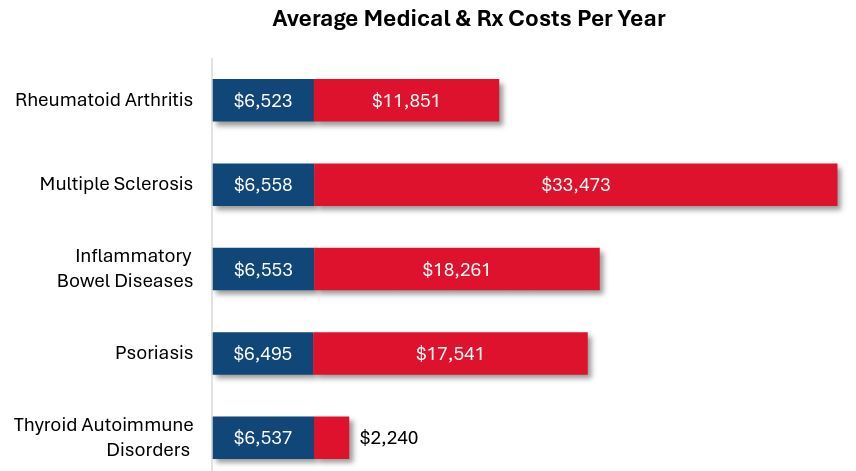
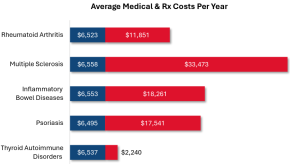
Integrated Benefit Institute, a nonprofit independent research organization, has published its 2025 Autoimmune Disease Impact Report, which examines the health and productivity impacts of five prevalent and costly autoimmune conditions: rheumatoid arthritis, multiple sclerosis, inflammat
Read Article
Increasing Prevalence of Osteoporosis
Research published in Osteoporosis International studied NHANES data showed increasing trends in osteoporosis in the United States of America. The key findings showed statistically significant results.
Read Article
NP and PA Growth in the USA
Forbes has published a thoughtful perspective on the declining number of US physicians and the growth in the number of advanced practice providers or APPs (nurse practitioners and physician assistants) in the US clinical workforce. Gastroenterologist Dr. Spencer Dorn writes that in the US, there are fewer physicians per capita (2.6 per 1,000) than most developed nations (average 3.6 per 1,000), with a physician shortfall of 125,000, that is projected to be ~200,000 by 2037.
Read Article
Adrenal Dysfunction after Steroids in PMR and GCA Patients
JAMA has published a study of PMR and GCA patients who stopped glucocorticoid (GC) therapy and noted a low (1.2%) risk of GC-induced adrenal insufficiency after planned cessation.
Read Article
ACR Frustrated with Congress Failures on Physician Fee Schedule and Research Programs
The American College of Rheumatology (ACR) expressed deep dissatisfaction that the recent passage of the Full-Year Continuing Appropriations and Extensions Act, failed to address payment cuts imposed in the CY25 Medicare Physician Fee Schedule (MPFS) at the beginning of
Read Article
PAFLAR Guidelines for Polyarticular Juvenile Idiopathic Arthritis
The Pediatric African League against Rheumatism (PAFLAR) initiative has published its guidelines for the diagnosis and treatment of polyarticular juvenile idiopathic arthritis (pJIA).

World Changers (3.14.2025)
Dr Jack Cush and his podcast friends are out to change the world. Here is his weekly review of the news and journal reports from the past week on RheumNow.
Read Article
Channeling Bias and Cancer Risk with Biologic or Targeted Synthetic DMARDs
A retrospective US administrative claims cohort study of RA patients on tumor necrosis factor inhibitors (TNFis), non-TNFi biologics, or Janus kinase inhibitors (JAKis) found a statistically significantly higher risk of incident cancer in patients receiving rituximab, abatacept, or JAKis (compared with TNFis).
Read Article
Glucocorticoid Toxicity Index
Dr. John Stone has led the effort to develop the GTI - glucocorticoid toxicity index. In this review article he acknowledges the need and benefit of steroids, but details a novel means to identify and limit the untoward effects of glucorticoids (GC).
Read Article
2024 Rheumatology Year in Review
2024 was a year of surprising new growth in technology, with the expansion of new therapeutic options for many patients and clinicians. While these many advances offer new hope, they are countered by disappointments and gapping unmet needs in rheumatology. Below is my top 10 list (in no particular order) of 2024 developments and desires that may change rheumatologic practices.
Read Article
Hydroxychloro-King (3.7.2025)
Dr. Jack Cush reviews the news, journal reports and regulatory actions from the past week on RheumNow.com
Read Article
MMWR: Idiopathic Pulmonary Fibrosis Mortality in the United States
Idiopathic pulmonary fibrosis (IPF), a progressive lung disease characterized by scarring and worsening lung function, has a poor prognosis. An estimated 21% of IPF deaths might be attributable to occupational exposures.

ED Utilization by Psoriatic and Spondyloarthritis Patients
A cohort analysis of ambulatory emergency department (ED) utilization by patients with psoriatic arthritis (PsA) and radiographic axial spondyloarthritis (r-axSpA) demonstrated significant use for less urgent and nonurgent health issues, particularly in rural settings.

Early Hydroxychloroquine Slows Cutaneous Lupus Progression
A prospective study of patients with limited cutaneous lupus erythematosus shows that early introduction of hydroxychloroquine may prevent progression to systemic lupus erythematosus.
Opioid Deaths are Down (2.28.2025)
Dr. Jack Cush reviews the news and journal reports from the past week on RheumNow.com. Opioid deaths are down, IL-33 levels are up and Weight loss is in the news again this week!
Read Article
Diagnoses via Immune ‘Fingerprints’
Science and researchers at Stanford Medicine have reported the use of Mal-ID (machine learning for immunological diagnosis) to analyze B and T cell receptors sequences from human blood, showing the ability to predict health status (healthy vs diseased) and discriminate between distinct autoimmune diseases or viral infections, and those who had received an influenza vaccine.
Read Article