
Article
Racial discrimination was a key feature at a 2-day summit on pain management and the opioid crisis, hosted by the National Institutes of Health on Thursday and Friday.

Search for Terms or Answers
Racial discrimination was a key feature at a 2-day summit on pain management and the opioid crisis, hosted by the National Institutes of Health on Thursday and Friday.

A systematic review of prescription drug monitoring programs (PDMPs), advocated in the president's Prescription Drug Abuse Prevention Plan, fails to show evidence of efficacy in preventing nonfatal and fatal overdoses.

Patients with systemic lupus erythematosus (SLE) who were assessed as being in a low disease activity state during more than half of clinical visits had a decrease in organ damage events of approximately 50%, a retrospective study found.

The US Food and Drug Administration has approved baricitinib (Olumiant) for use in adults in moderate-to-severe active rheumatoid arthritis (RA) who have had an inadequate response to TNF inhibitors (TNFi). It is not approved for use, nor has it been studied, in children.

Today the U.S. Food and Drug Administration approved baricitinib (Oluminant) at the lower dose of 2 mg per day for use in adults with with moderate-to-severe active rheumatoid arthritis (RA) who have had an inadequate response to commonly-used treatments known as TNF inhibitors.

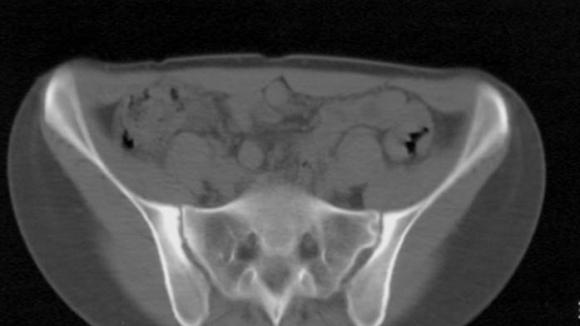
de Winter and colleagues from the Netherlands have reported on magnetic resonance imaging of the sacroiliac joints of healthy subjects, patients with axial spondyloarthritis, runners and those with chronic back pain, and found a high incidence of sacroiliitis in many, but that deep bone marrow edema was most specific for those with axial SpA.
Treatment of refractory giant cell arteritis (GCA) with ustekinumab (Stelara) showed therapeutic promise as a steroid-sparing agent in a small, open-label study, Irish researchers reported.

The current issue of Annals of Internal Medicine examines patterns of potential opioid misuse that are associated with subsequent adverse outcomes nationally.

Amgen announced that the U.S.

The New England Journal of Medicine reports that the anti-interleukin (IL)-1β monoclonal antibody canakinumab (Ilaris) was effective in the treatment of three distinct autoinflammatory recurrent fever syndromes (FMF, TRAPS, HIDS) with responses that were far superior to what was see

Dr. Jack Cush reviews the news and journal articles from the past week on RheumNow.com. He discusses opioids, new approval for polyarticular JIA, running and osteoarthritis, and modifiable behaviors that influence outcomes.

Lee and colleagues from Brigham and Women's Hospital have analyzed the last decade of disease‐modifying antirheumatic drugs (DMARDs) use in patients with psoriatic arthritis (PsA) and found nearly 40% were treated with a bDMARD, along with a decreasing trend in complete DMARD discontinuations.

A current study in JAMA Internal Medicine showed that while US physicians who received no opioid-related marketing payments had fewer opioid prescriptions in 2015 compared with 2014, those receiving such payments wrote for more opioid in 2015.
Researchers at University of California San Diego School and the Icahn School of Medicine have found a high-resolution epigenomic landscape of rheumatoid arthritis (RA) that overlaps with that seen in Huntington's disease, suggesting potentially new unanticipated pathways that could be devel

A population based study from southern Denmark finds excess mortality RF-positive males with rheumatoid arthritis (RA) and that employment status and comorbidity were independent predictors of mortality.

Reuter's reports Friday that President Donald Trump blasted drugmakers and healthcare “middlemen” for making prescription drugs unaffordable for Americans.

Dr. Jack Cush reviews highlights, news and journal articles from the past week on RheumNow.com.

The European League Against Rheumatism (EULAR) convened a multidisciplinary task force including health professionals and patient representatives to develop evidence-based recommendations for pain management in patients with inflammatory arthritis (IA) and osteoarthritis (OA).

Patients with rheumatoid arthritis (RA) who had previously had an inadequate response to one biologic agent remained on tocilizumab (Actemra) longer than on a tumor necrosis factor (TNF) inhibitor, whether or not conventional disease modifying anti-rheumatic drugs (DMARDs) were given concomitantl

A new study linking administrative claims and electronic health records (EHRs) shows that nearly 40% of patients fill and take newly prescribed methotrexate (MTX), tofacitinib or biologics.
Kan et al set out to estimate the extent and predictors of primary nonadherence in rheumatoid arthritis (RA) patients who received new prescriptions for methotrexate, biologics or tofacitinib.

By downloading this material, I acknowledge that it may be used only for personal use and personal education and that I will accredit RheumNow.com as the source and owner of this material. Commercial use or mass reproduction of this material without permission from RheumNow (info@rheumnow.com) is prohibited.