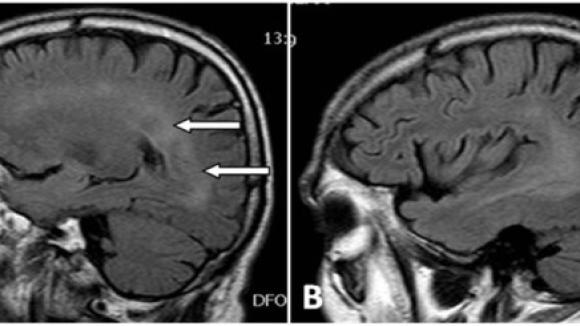
Patients with autoimmune diseases who were treated with tumor necrosis factor (TNF) inhibitors had an increased risk of developing inflammatory central nervous system (CNS) adverse events, a nested case-control study found.
All News
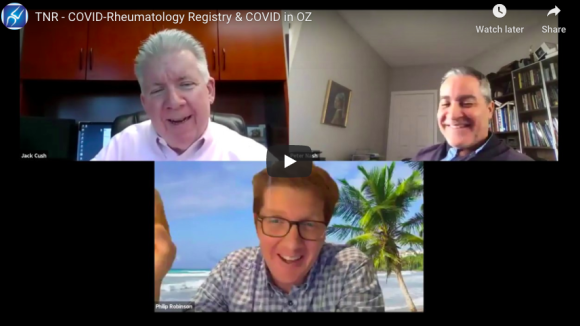
This week's Tuesday Nite Rheumatology features presentations and interviews with Drs. Peter Nash and Philip Robinson. Dr. Robinson presents latest data on the Rheum-Covid.org Registry, that he helped establish under the Global Rheumatology Alliance. Dr. Nash presents the impact of COVID in Australia and pragmatic COVID management.
Nagaraja, Khanna and colleagues have published an overview of current and future therapies in patients with systemic sclerosis (SSc) and have reviewed the potential outcome measures for this difficult autoimmune disorder.
Hydroxychloroquine is one of many medications frequently used in rheumatology practice. Its remarkable versatility is attested by its routine use in lupus, in patients with an autoimmune coagulopathy, in patients with rheumatoid arthritis, as well as in those with a low-level inflammatory arthropathy.
Dr. Jack Cush reviews the news and journal articles from the past week on RheumNow.com.
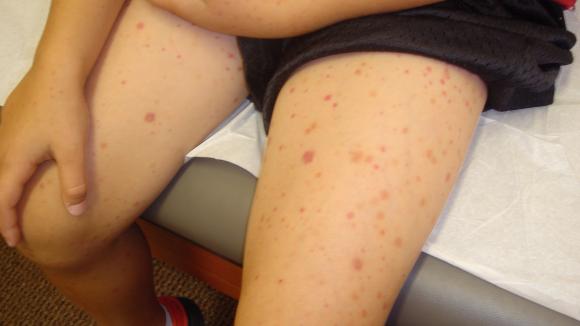
The latest hazardous spinoff to the coronavirus infection is an inflammatory, Kawasaki-like syndrome unique to children or adolescents with COVID-19. Sporadic reports from around the globe of this severe pediatric COVID syndrome have littered the news with brief mentions and little detail.
As data continue to emerge about a multi-system inflammatory disorder in children apparently connected to COVID-19, evidence is growing that this is not your typical Kawasaki disease.
Annals of Rheumatic Disease reports on an analysis of lupus (SLE) patients that shows COVID-19 infection rates were similar between those lupus patients who were taking hydroxychloroquine (HCQ) and those not taking HCQ.
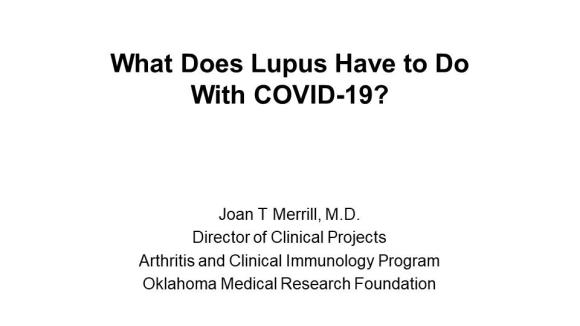
Last night's Tuesday Nite Rheumatology featured Dr. Joan Merrill (OMRF). In her lecture, "What does COVID-19 have to do with lupus?", she discusses the pathogenesis of lupus, and specifically thrombotic microangiopathy, complementopathies, catastrophic lupus syndrome and the potential overlap with the vascular pathology seen with COVID-19 infection.
Dr. Jack Cush reviews the news and journal reports from the past week on RheumNow.com.
Severe and fatal outcomes with coronavirus infection are often the result of the downstream damage that follows the viral infection.
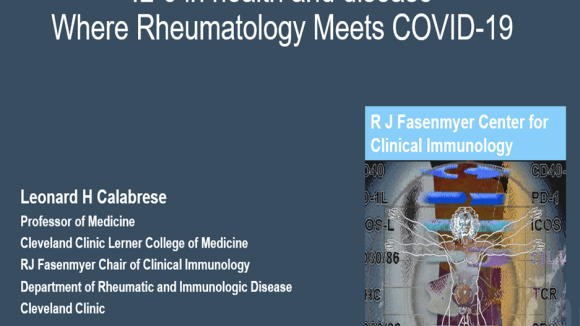
Dr. Len Calabrese from the Cleveland Clinic delivers this week's Tuesday Nite Rheumatology Grand Rounds, entitled "IL-6 in Health and Disease: Where Rheumatology Meets COVID-19".
Dr. Calabrese provides a comprehensive review of IL-6 biology, and discusses IL-6 signaling, IL-6 roles in health, exercise, infection, innate and adaptive immunity as pertains to both rheumatology and the management of coronavirus infection.
On April 26, 2020 the American College of Rheumatology (ACR) published a guidance paper to assist rheumatologists and rheumatology health professionals in assessing the need for urgent or face-to-face medical care versus virtual or telehealth patient care. The driving principals being
JAMA Internal Medicine has reported that cigarette smoking associated with an increased odds of having antineutrophil cytoplasmic antibody–associated vasculitis (AAV) (especially MPO positive AAV) and is thereby a modifiable risk factor for AAV.
JAMA Cardiology reports the risk of QT (QTc) prolongation when hydroxychloroquine (HCQ) was given to hospitalized patients with coronavirus disease 2019 (COVID-19), especially when given with azithromycin.