
Article
Dr. Jack Cush reviews the news and journal articles from the past week on RheumNow.com.

Search for Terms or Answers
Dr. Jack Cush reviews the news and journal articles from the past week on RheumNow.com.
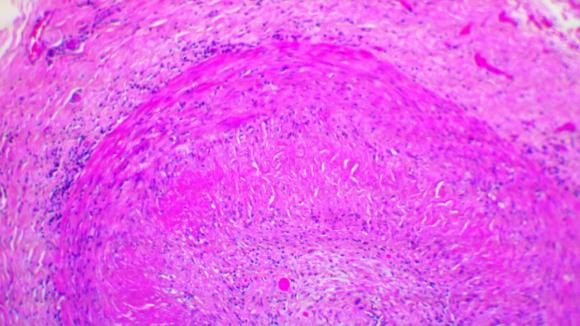
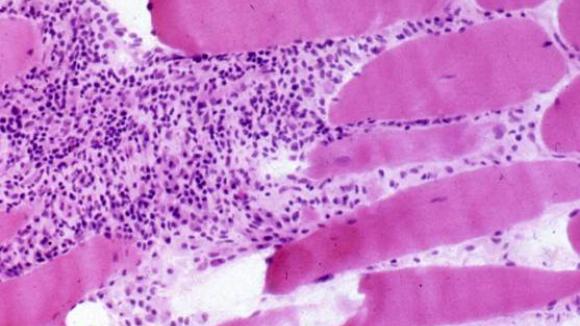
Metanalysis shows that temporal artery biopsy (TAB) for the diagnosis of giant cell arteritis (GCA) has a sensitivity of 77%, similar to results seen with temporal artery imaging. These data suggest clinicians may be willing to accept a GCA diagnosis without proof by TAB.
The interleukin (IL)-1 receptor antagonist anakinra (Kineret) showed promise in critically ill children who develop the often-lethal condition known as secondary hemophagocytic lymphohistiocytosis (sHLH)/macrophage activation syndrome (MAS), a retrospective single-center study found.

Americans living with rheumatic disease face significant healthcare challenges, according to a national patient survey released this week by the American College of Rheumatology. More than 1,500 U.S. adults living with rheumatic disease responded to the survey, which asked a range of questions related to healthcare access, affordability and lifestyle. Key findings include that even though 90 percent of respondents reported having health insurance coverage, nearly 60 percent said they had difficulty affording their medications or treatments in the past year.

Physicians who believe their patients' health is negatively affected by insurers' demands for prior authorization, and the delays that often result, will find that opinion vindicated by a new study of rheumatology care: when permission had to be sought from insurers to provide intravenous drugs,

Dr. Jack Cush reviews the news and journal articles from the past week on RheumNow.com.

Bimekizumab is a dual inhibitor of IL-17A and IL-17F that has been shown to be effective in psoriasis and psoriatic arthritis. A proof-of-concept study shows that giving bimekizumab to rheumatoid arthritis patients not adequately controlled by certolizumab pegol resulted in a rapid decrease in disease activity achieved after 12 weeks of treatment. These findings are novel as anti-IL-17 monoclonal antibody therapy has previously been shown to be ineffective in RA.
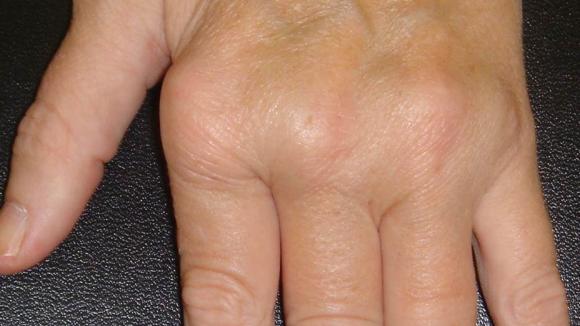
Riociguat is an oral, selective soluble guanylate cyclase stimulator that has been studied in patients with digital ulcers (DU) due to systemic sclerosis (SSc) but study results show that short term (16 weeks) riociquat therapy does not sufficiently reduce the DU burden in SSc patients.
Lancet reports a head-to-head trial of antibodies against interleukin (IL)-23 and IL-17A in patients with moderate-to-severe psoriasis favored guselkumab with superior PASI 90 responses at week 48 (compared to secukinumab).

Last Friday, the US Food and Drug Administration approved Ofev (nintedanib) to slow the rate of decline in pulmonary function in adults with interstitial lung disease associated with systemic sclerosis or scleroderma, called SSc-ILD.
ILD as a complication of SSc may lead to progressive loss of lung function and may be associated with a significant mortality risk. Prior to the approval of Olev, there were no FDA approved drugs for SSc-ILD.
An insurance claims based study of RA patients with COPD shows that biologics do not have an increased rate of respiratory events compared to those on conventional DMARDs.
A real world cohort of RA patients with COPD was drawn from US-based MarketScan databases. Patients on biologic DMARDs and/or targeted synthetic DMARDs (tsDMARDs) were propensity matched to those on conventional synthetic DMARDs (csDMARDs).

The ENTRACTE trial examined the risk for major adverse cardiovascular events (MACE) in RA patients and found no increased risk of MACE in patients treated with tocilizumab (TCZ) versus etanercept (ETN).

Dr. Jack Cush vents on choosing new therapies in rheumatoid arthritis.
The usual risk factors for myocarditis may not apply to who gets it while on immune checkpoint inhibiting cancer drugs, an FDA adverse event database suggested.
The FDA has approved the IL-17A inhibitor Taltz (ixekizumab) for the treatment of adults with active ankylosing spondylitis (AS: also known as radiographic axial spondyloarthritis).
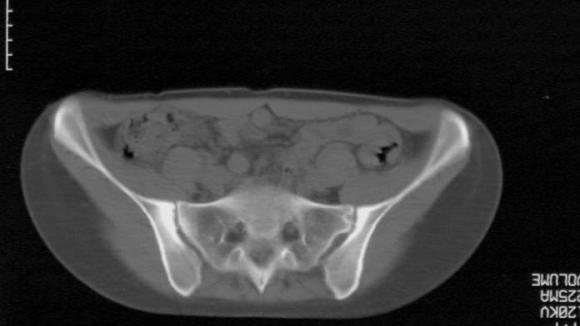
The American College of Rheumatology (ACR), in partnership with the Spondylitis Association of America (SAA) and the Spondyloarthritis Research and Treatment Network (SPARTAN), released the 2019 Update of the Recommendations for the Treatment of Ankylosing Spondylitis (AS) and Nonradiographic Axi

Dr. Jack Cush reports on the news and journal reports from the past week on RheumNow.com, including: how your genetics may shape your microbiome; GERD as a risk factor for TMJ?; how can MDA-5+ dermatomyositis be any worse; new drug happenings; StillsNow.com; and more.
Immunologic remission in rheumatoid arthritis, defined as the disappearance of anti-citrullinated protein antibodies and rheumatoid factor, was seen infrequently among patients achieving sustained clinical remission and did not correlate with the disappearance of symptoms, a long-term Dutch study found.

A head-to-head trial has shown that risankizumab was significantly superior to adalimumab in providing skin clearance (PASI90) in patients with moderate-to-severe plaque psoriasis, with no difference in safety signals between the two agents.
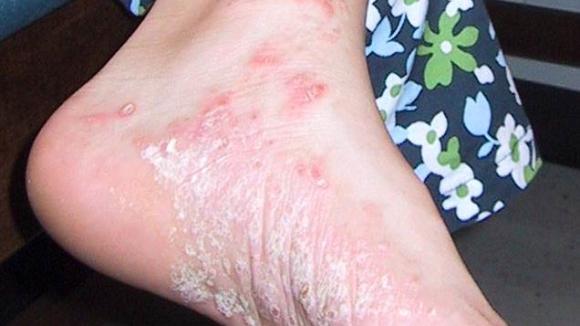
29 Patients with MDA-5+ Dermatomyositis compliated by ILD were treated with high‐dose steroids, tacrolimus, and IV cyclophosphamide +/- Plasmapheres. 6 mos survival was better (89% and 33%, respectively, P < 0.0001) compared to 15 pts not treated https://t.co/utPiaQlUZF
By downloading this material, I acknowledge that it may be used only for personal use and personal education and that I will accredit RheumNow.com as the source and owner of this material. Commercial use or mass reproduction of this material without permission from RheumNow (info@rheumnow.com) is prohibited.
