

All News

Day 3 EULAR Report
Day 3 was an interesting mix of posters, oral presentations, and review sessions on many practical subjects like osteoarthritis, large vessel vasculitis, systemic sclerosis, and pregnancy. Here are a few of my recommended abstracts from Friday at EULAR 2026.
Read Article
Biologic Class Determines PsA Risk in Psoriasis
At EULAR 2026, Dr Nikolaos Kougkas presented data from a unique real-world cohort built within joint dermatology–rheumatology university centers, following 394 patients with psoriasis on bDMARDs for up to 17 years. We sat down with Dr Kougkas to unpack the methodology, challenge the results, and draw out the clinical implications for everyday practice.
Read Article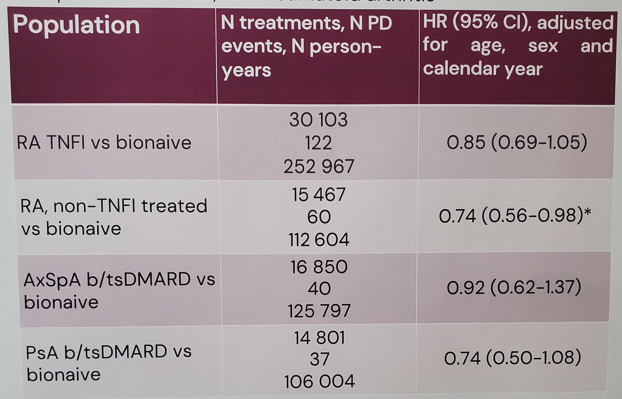
Risk of Parkinsons? RA patients have 28% lower Parkinson's risk vs general population (HR 0.72); axSpA had HIGHER risk (HR 1.29). Non-TNF biologics in RA reduced PD risk further (HR 0.74). No effect seen in PsA/axSpA. #EULAR2026 Abstr #POS1116 https://t.co/1vZoZGEu5Z
Dr. John Cush RheumNow ( View Tweet)

Do probiotics improve disease activity in PsA?
POS0290: no
MEDISPA RCT n=66
Multispecies probiotics not superior to placebo at week 12
#EULAR2026 @RheumNow https://t.co/1byJ1nB4GF
Nelly ZIADE 🍀 Nellziade ( View Tweet)

LB0001: Bimekizumab SUPERIOR to risankizumab on ACR50 in active #PsA 49.1% vs 38.4% (p=0.0078). First ever H2H biologic superiority on joints in PsA. #Bimekizumab @RheumNow #EULAR2026 https://t.co/6waepYs9RK
Antoni Chan MD (Prof) synovialjoints ( View Tweet)

#EULAR2026 LB0001 BOLD results in #PsA. First H2H RCT showing superiority of Bimekizumab (IL17A- & F-i) vs Risankizumab (IL-23-i) in primary endpoint, ACR50 49% vs 38% at WK16. The difference was seen from WK4 & sustained to WK24. May help inform choice of Tx @RheumNow #EULARBest https://t.co/s4zbFiepuP
Md Yuzaiful Md Yusof Yuz6Yusof ( View Tweet)

ACR50 at Week 4 was 19.9% (BKZ) vs 7.2% (RZB) nominal p<0.0001. Faster onset, higher sustained joint response. DAPSA LDA/remission 65% vs 55%. Dual IL-17A/F blockade outperforms IL-23 inhibition for joints in #PsA. Abstr LB0001 @RheumNow #EULAR2026 https://t.co/s4z8r1rKte
Antoni Chan MD (Prof) synovialjoints ( View Tweet)

First head-to-head trial to show #PsA joint outcome superiority
BE BOLD: Bimekizumab (BKZ; IL-17A/F dual blockade) beat Risankizumab (RZB: IL-23i) on ACR50 at wk 16 (49.1% vs 38.4%, p=0.0078). BKZ also faster: ACR50 at wk 4 already 19.9% vs 7.2%.
@RheumNow #EULAR2026 LB0001 https://t.co/YMQCpom5xD
Jiha Lee JihaRheum ( View Tweet)

Do GLP-1 agonists achieve meaningful weight loss in patients with RMDs?
RISE registry
Retrospective
N=60,206
Tirzepatide: lost 8%
Semaglutide: list 6%
At 12 months
PsA had the highest usage
OP0112 #EULAR2026 @RheumNow https://t.co/P3CTgiwqCr
Nelly ZIADE 🍀 Nellziade ( View Tweet)

One of the highlights of #EULAR2026 for me:
♀️The "This Is a Woman's World" session
I recapped 8 must-know abstracts (including our work from ARCH_ArLAR) in a new @RheumNow video🎬
https://t.co/3jwJIegGg4 via @YouTube
@ArLARheumatolog https://t.co/Azvkl2sjdu
Links:
Nelly ZIADE 🍀 Nellziade ( View Tweet)

Beyond the Scale: Do GLP-1RAs Offer More Than Weight Loss in PsA?
Over 70% of patients with psoriatic arthritis (PsA) struggle with excess weight, amplifying synovio-entheseal inflammation and blunting biologic response.
https://t.co/pAIXkdazci https://t.co/vQTn3BWv2r
Dr. John Cush RheumNow ( View Tweet)

Do probiotics help in #PsA? First RCT (MEDIPSA) says no. Multispecies probiotic vs placebo in 66 pts: 43% vs 65% achieved low disease activity at wk 12 (p=0.167). Gut-joint axis intriguing, but probiotics not the answer yet. @RheumNow #EULAR2026 POS0290
Jiha Lee JihaRheum ( View Tweet)
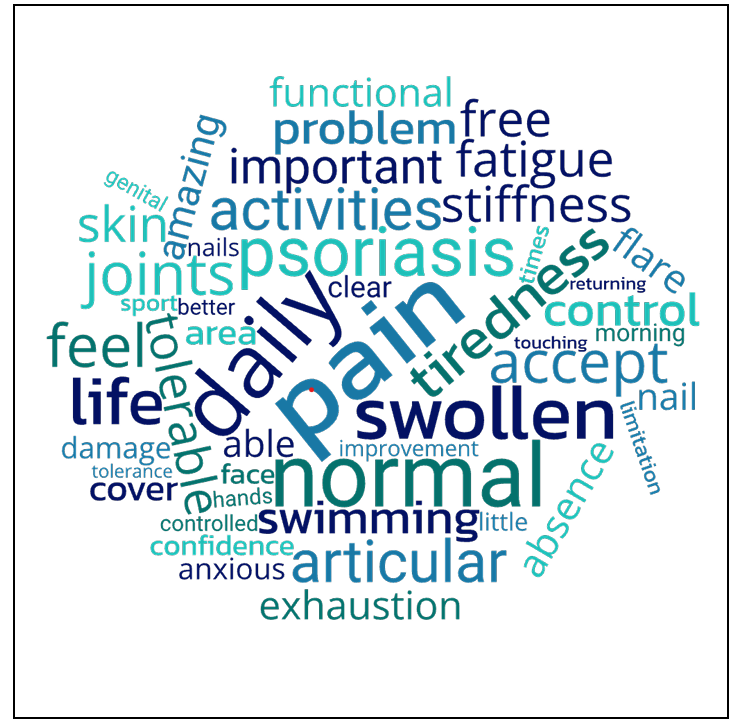
What does remission really mean to patients with #PsA? The RemiPPsA international qualitative study asked 123 patients across 11 countries. Pain-free + ability to resume daily life topped the list, not just composite scores. #EULAR2026 @RheumNow, POS0294 https://t.co/mEGpkewuTX
Jiha Lee JihaRheum ( View Tweet)

No big surprise here, deucravacitinib does as well without MTX
Pooled analysis of 52wk data of POETYK PSA
Same ACR20/50/70 and MDA response profiles also similar safety profiles
#POS0288 #EULAR2026 @RheumNow https://t.co/XqLfZstRuS
Aurelie Najm AurelieRheumo ( View Tweet)
Oral TYK2i deucravacitinib works for #PsA with OR without methotrexate. Pooled POETYK data (n=648): ACR20/50/MDA, enthesitis, dactylitis, skin responses, and PROs all comparable regardless of MTX use at wk 52. Good news for pts who can't tolerate MTX. @RheumNow #EULAR2026 POS0288
Jiha Lee JihaRheum ( View Tweet)

What does remission look like for people living with PsA?
Much more than the absence of swollen joints
Absence of pain
Skin management
Ability to resume daily activities
Sustained over time
A definition not always reflected in our disease activity scores
#POS0294 #EULAR2026 https://t.co/VCnMGAOVYm
Links:
Aurelie Najm AurelieRheumo ( View Tweet)

In this posthoc analysis of pooled data from BE MOBILE 1&2, BKZ showed ⬆️clinical imprvements vs. PBO at 1 yr regardless of age, BMI, HLAB27 status & CRP.
At wk 52, ASAS40/ASDAS <2.1 was higher in pts w/BKZ who were ≤35y, BMI ≥25–<30 or HLA-B27+
POS0949 @RheumNow #EULAR2026 https://t.co/9sfil6y5Qr
sheila RHEUMarampa ( View Tweet)

Double targeted therapy in refractory SpA/PsA.
76 patients, 17 Spanish centres, up to 6 years follow-up. Median 4 prior biologics.
Remission achieved in 55.6% during follow-up. 28.6% in remission at final visit.
ASDAS improved significantly from 3 months, sustained to 5 https://t.co/g1IPstYYuX
Antoni Chan MD (Prof) synovialjoints ( View Tweet)

10yr ffup data on 49pts from the OG CRESPA study (GOL vs PBO in very early pSpA):
81.6% (40/49) were in clinical remission
15 pts on drug-free remission
21 pts w/remission on meds still on GOL, no unSSAEs
Early aggressive tx is key!
AbsPOS0931 @RheumNow #EULAR2026 https://t.co/HrTF5XtAZt
Links:
sheila RHEUMarampa ( View Tweet)

PET-derived parameters in #PsA correlated with DAPSA, CRP and patient pain. Angiogenesis imaging may be a complementary biomarker of overall disease burden Abstr#OP068 #EULAR2026 #Imaging
Antoni Chan MD (Prof) synovialjoints ( View Tweet)

