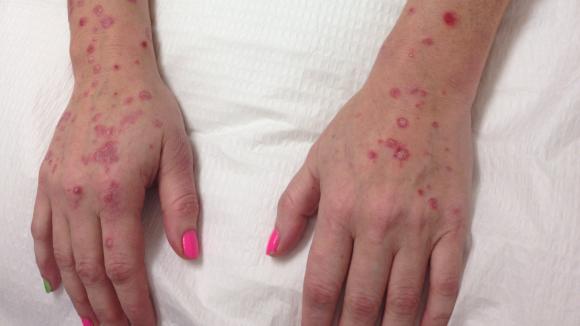
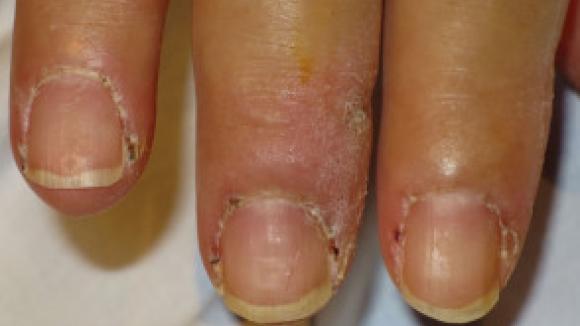
Lupus management is guided by assessment of both clinical and serologic features; but what happens with the patient with systemic lupus erythematosus (SLE) serologically active, but clinically quiescent (SACQ)? A large cohort study shows that nearly one-third of such patients may flare
All News
National Health Data from France examined biologic use in patients with moderate to severe psoriasis, and found the risk of serious infections (SIE) to be increased with some biologics (infliximab and adalimumab), but not others (etanercept, ustekinumab IL-17 and IL-23 inhibitors or apremila
Healthcare is a personal and individualized relationship between a provider and patient. Each patient is treated according to their particular symptoms and personal health characteristics.
Today I have a few questions: Is tramadol really a weak narcotic? Should we really still be doing placebo-controlled trials? What are we going to do about our patients who are smokers? This and more, in this week's review of the news and journal articles.
Stevens-Johnson syndrome (SJS) and toxic epidermal necrolysis (TEN) are among the most severe drug reactions, as they come with substantial mortality and morbidity. A review of European centers dealing with SJS and TEN shows that despite best treatment practices, the 6-week mortality rate was 21%.
Dr. Jack Cush reviews the FDA approvals, news and the latest journal articles from the past week on RheumNow.com.
A randomized controlled trial has shown that treatment of plaque psoriasis via costimulatory blockade ( CD28/B7) with abatacept did not prevent psoriasis relapse after withdrawal of ustekinumab.
Arthritis numbers are rising, and people are finally talking about osteoarthritis. Also, ACR 2021 is just a few weeks away - are you ready? Finally, I'll review cases and questions submitted by viewers in Ask Cush Anything (#ACA). This, and nearly a dozen news items and reports, are discussed in this week's podcast. Let's begin.
While myositis-specific autoantibodies (MSAs) and myositis-associated autoantibodies (MAAs) may have prognostic value through their clinical associations, many patients will not have them and overall, they are poorly predictive of a malignancy risk.