All News
Seronegative and Seropositive Rheumatoids Respond Equally Well
A cohort study of 241 DMARD-naive rheumatoid arthritis (RA) patients, meeting either 1987 ACR or the 2010 ACR/EULAR classification criteria for RA, compared the baseline status and long term outcomes of seronegative (SNRA) and seropositive (SPRA).
Read ArticleJAK Inhibition in Autoinflammatory Syndromes Interferonopathies
While many autoinflammatory syndromes are driven and managed with select inhibition of IL-1, IL-18 or IL-6, a subset are driven by type I interferon and are referred to as interferonopathies. These monogenic IFN–mediated disorders present in infancy with fevers, systemic inflammation, an IFN response gene signature, inflammatory organ damage, and high mortality.
Read ArticleThe Microbiome and Lupus Connection Reviewed
In the current issue of the New England Journal of Medicine, Drs. James Rosenbaum and Gregg Silverstein review the pathogenesis of systemic lupus erythematosus (SLE) from the viewpoint of a dysbiolsis.
Read ArticleLow Disease Activity in Lupus Limits Damage
Patients with systemic lupus erythematosus (SLE) who were assessed as being in a low disease activity state during more than half of clinical visits had a decrease in organ damage events of approximately 50%, a retrospective study found.
Read ArticleMPO Antibodies Predict Relapses in MPO-ANCA-Associated Vasculitis
A study of MPO-ANCA positive patients followed serially over 2 years shows that reappearance of MPO‐ANCA may predict relapse in patients with MPO‐ANCA positive AAV and that routine MPO‐ANCA monitoring is warranted.
Read ArticleAutoinflammatory Syndromes Show Dramatic Response to Canakinumab
The New England Journal of Medicine reports that the anti-interleukin (IL)-1β monoclonal antibody canakinumab (Ilaris) was effective in the treatment of three distinct autoinflammatory recurrent fever syndromes (FMF, TRAPS, HIDS) with responses that were far superior to what was see
Read ArticleEpigenetic Link in Rheumatoid Arthritis to Huntington's Disease
Researchers at University of California San Diego School and the Icahn School of Medicine have found a high-resolution epigenomic landscape of rheumatoid arthritis (RA) that overlaps with that seen in Huntington's disease, suggesting potentially new unanticipated pathways that could be devel
Read ArticleThe RheumNow Week in Review - Nonadherence and Astronomic Costs (5.11.18)
Dr. Jack Cush reviews highlights, news and journal articles from the past week on RheumNow.com.
Read ArticleMortality Risks Shift in Granulomatosis with Polyangiitis
Mortality remains high in granulomatosis with polyangiitis (GPA), but the causes of death tend to change over time, a researcher reported here.
Read ArticleThe RheumNow Week in Review – Why Comorbidity is Like the Weather (5.3.18)
Dr. Jack Cush discusses the news and journal articles from the past week on RheumNow.com.
Read ArticleTargeting IL-17A: A Winner in PsA
Psoriatic arthritis patients with inadequate response to tumor necrosis factor (TNF) inhibitors had improvements in their arthritis and psoriasis when treated with the interleukin (IL)-17A blocker ixekizumab (Taltz), according to a phase III study presented here at the
Read ArticleGenetic Breakthrough in Systemic JIA
The identification of a genetic susceptibility locus for systemic juvenile idiopathic arthritis (sJIA) has important implications for treatment of this severe, poorly understood illness, researchers reported.
Read ArticleTick, Mosquite-Borne Diseases Triple Since 2004
The Centers for Disease Control and Prevention has a new report showing that from 2004 to 2016, the number of Americans infected by mosquitoes, ticks or fleas tripled from 27,388 in 2004, to 96,075 in 2016.
From 2015 to 2016, these infections rose by 73 percent. This included new Zika and chikungunya virus infections, (41,680 in 2016), followed by Lyme disease (36,429 cases). This may be an underestimation as as many infections are not reported.
Read ArticleLupus Subgroup Responds to Anti-CD22
The monoclonal antibody epratuzumab showed promise as a B-cell depleting agent in patients with concomitant systemic lupus erythematosus (SLE) and Sjogren's syndrome, a post-hoc analysis of two phase III trials found.
Read ArticleFDA Review: Take Two for Baricitinib
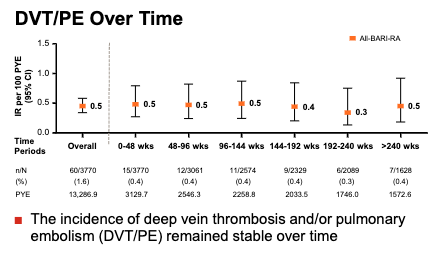
FDA staff remain worried about the safety of baricitinib, an oral JAK inhibitor intended for treatment of rheumatoid arthritis, according to briefing documents prepared for an advisory committee meeting on Monday.
Read ArticleThe RheumNow Week in Review – Vitamin D Snark Report (4.20.18)
Dr. Jack Cush reviews the news and journal reports from the past week on RheumNow.com. A second life for Syk kinase, Vitamin D talk, VTE, regulatory hearings and the Lupus clinic edge.
Read ArticleShared Epitope - Smoking Pathogenic Link Clarified
Proceedings of the National Academy of Sciences (PNAS) has published new research on the mechanistic link between the rheumatoid arthritis (RA) "shared epitope" (SE) risk alleles and environmental triggers such as cigarette smoke that leads to joint inflammation and bony destruction.
Read ArticleKineret Approved for Still's Disease in EU
SOBI has announced that Kineret (anakinra) has been approved by the European Commission (EC) for the treatment of Still’s disease (Systemic Juvenile Idiopathic Arthritis [SJIA] and Adult-Onset Still’s Disease [AOSD]), in all 28 European Union (EU) member states.
Read ArticleRheumNow Week in Review - Do you Dig Shingrix? (4.6.2018)
Dr. Jack Cush reviews the news and journal reports from the past week on RheumNow.com. Highlights includes manpower shortfalls, comorbidities in AA Lupus, certolizumab pregnancy safety, which Shingles vaccine is best and the power of combination biologics in severe refractory SLE.
Read ArticleSynBioSe: Combo Rituximab and Belimumab Succeeds in Severe Refractory Lupus
One of the driving pathogenic mechanisms in systemic lupus erythematosus (SLE) is the generation of immune complexes capable of inducing netosis (NET formation) and NET-derived DNA that may be an amplifying autoantigen and give rise to anti-nuclear autoantibodies (ANAs).
Read Article