




Looking for RA-ILD: 9 Clinical Clues from ANCHOR-RA Save

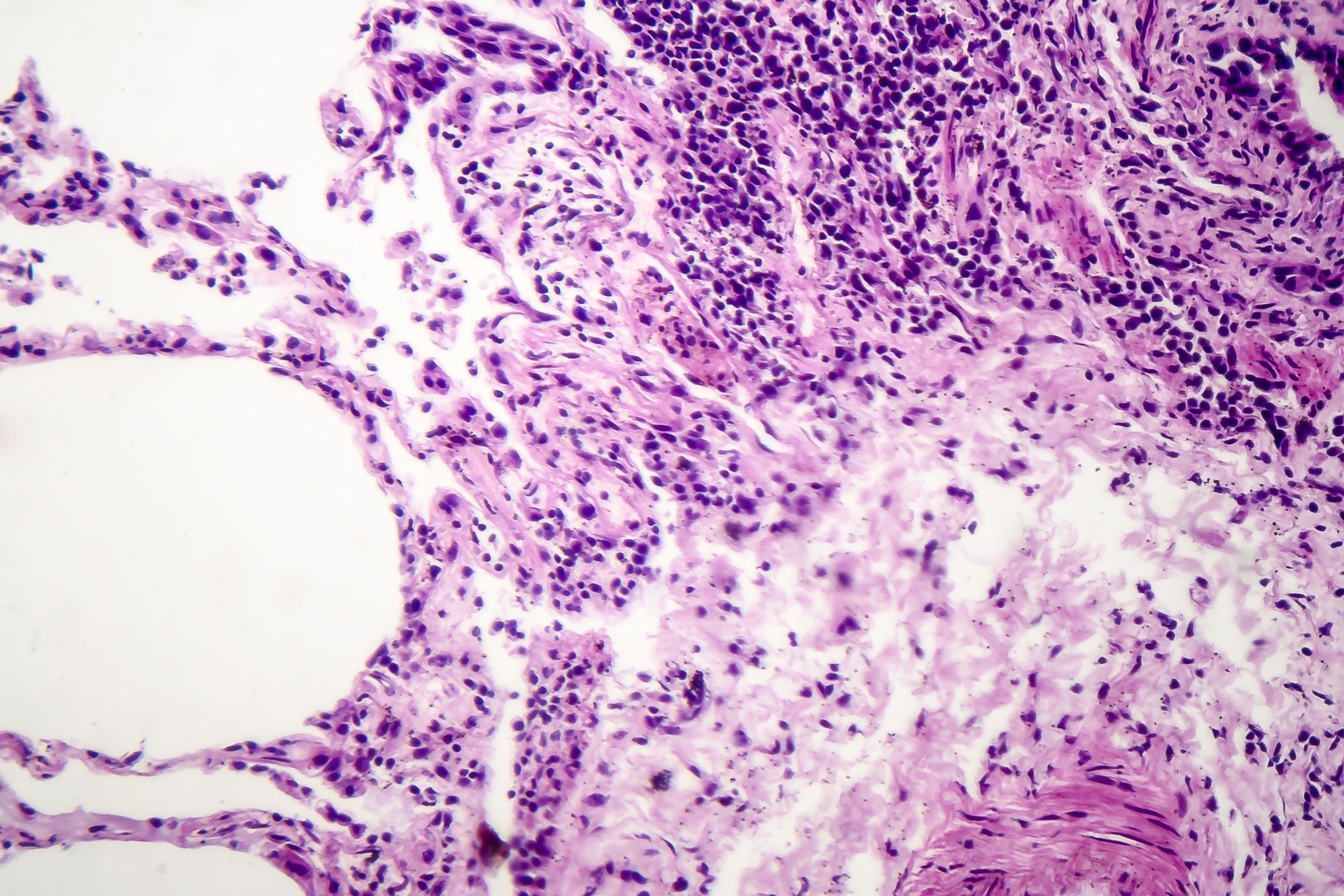
Which of our rheumatoid arthritis (RA) patients will develop interstitial lung disease (RA-ILD), and how can we better identify these patients? In abstract #2884 at 2026 ACR Convergence, Dr. Jeffrey Sparks from Massachusetts General Brigham/Brigham and Women’s Hospital presented findings from ANCHOR-RA trial, a large prospective cross-sectional study evaluating risk factors for interstitial lung disease in at-risk patients with rheumatoid arthritis without a known diagnosis. The goal was to identify the clinical characteristics that can guide screening for RA-ILD.
The study prospectively enrolled patients with at least two established risk factors for ILD including male sex, age of 60 years or older at diagnosis, current or prior smoking, seropositive (high titer rheumatoid factor and/or anti-CCP antibody at least 3x upper limit of normal), extra-articular manifestations (vasculitis, Felty’s syndrome, secondary Sjogren’s disease, cutaneous rheumatoid nodules, serositis, scleritis/uveitis), and high RA disease activity scores within the preceding 12 months. Patients with previously identified ILD or a chest CT within the past two years were excluded from the study. Other exclusion criteria included prior lung transplantation, treatment known to induce ILD (such as chest radiation), and overlapping autoimmune diseases other than secondary Sjogren’s disease.
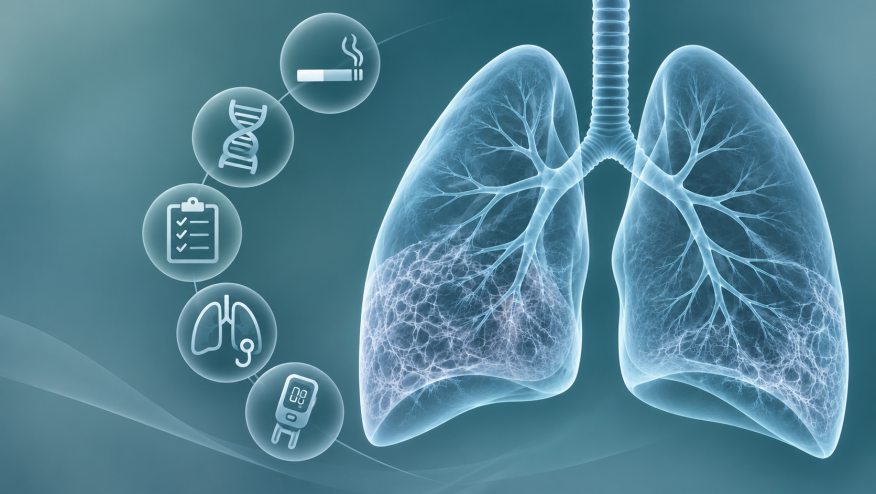
The study enrolled 1,169 patients at 27 sites across six countries in North America and Europe. All participants underwent standardized high-resolution computed tomography (HRCT) to assess for previously undiagnosed ILD. This intervention identified 106 patients (9.1%) with radiographic evidence of RA-ILD. Exploratory univariate analyses evaluated demographic, RA-related, genetic and respiratory characteristics associated with ILD, identifying nine categories of clinical findings.
- Age. Older age at RA diagnosis was associated with RA-ILD, both at time of RA diagnosis (odds ratio (OR) 1.02 per year; 95% confidence interval 1.01-1.03; p-value p=0.011). and at study screening (OR 1.03; 95% CI 1.01, 1.05; p=0.001).
- Male sex. Male sex was associated more than twice the odds of ILD compared with the female sex (OR 2.42; CI 1.60, 3.65; p<0.001).
- Smoking exposure. Cumulative smoking exposure in pack-years was associated with ILD (OR 1.02; CI 1.01, 1.03; p=0.01). Contrary to this finding, however, simple categorization between ever-smokers and never-smokers was not statistically significant.
- MUC5B rs35705950 genotype. Trial participants were offered genotyping for MUC5B, a previously established genetic risk factor for RA-ILD. Those with GT or TT variants had high odds of ILD compared with GG genotype (OR 1.99; CI 1.23, 3.24; p=0.005).
- Disease activity. Higher RA disease activity, as measured by DAS28-ESR score, was associated with ILD (OR 1.17; CI 1.0-1.37; p=0.048).
- High-positive rheumatoid factor. High-positive RF without the presence of anti-CCP antibody was associated with ILD (OR 2.66; CI 1.11, 6.37; p=0.028). Interestingly, neither high-positive anti-CCP alone or dual high-positive RF and CCP patients reached statistical significance copmared to seronegative patients.
- Low DLCO. A lower diffusing capacity of the lung for carbon monoxide (DLCO) was associated with ILD, (OR 0.98; CI 0.97, 0.99; p=0.001). Forced vital capacity (FVC) was not statistically associated with ILD.
- Lower resting oxygen saturation. Lower oxygen saturation on room air at rest was associated with ILD (OR 0.87; CI 0.76, 0.98; p=0.026).
- Crackles on pulmonary auscultation. The strongest association in the study was the presence of crackles on physical examination, which was associated with more than five times the odds of ILD (OR 5.20; CI 3.09, 8.76; p<0.001).
Several other characteristics did not demonstrate statistically significant associations with ILD, including the presence of at least one extra-articular manifestation of RA, first-degree family history of ILD, high-positive anti-CCP antibody, and FVC percent predicted.
The large international population is a major strength of the study, allowing investigators to evaluate multiple demographic, clinical and respiratory characteristics with statistical power. A substantial subgroup of patients also underwent MUC5B genotyping, further exploring this genetic predisposition. Another important strength was a standardized HRCT protocol with central interpretation by multiple radiologists. Several limitations, however, warrant consideration. The study population included only patients with at least two established ILD risk factors, limiting generalizability to the at-large RA population. Additionally, the cross-sectional trial design cannot provide information on ILD progression.
ANCHOR-RA highlights a number of clinical risk factors that should raise consideration for RA-ILD screening. The particularly strong association with pulmonary crackles reinforces the importance of a careful physical examination. As rheumatologists, we increasingly recognize the importance of identifying extra-articular disease prior to onset of irreversible organ damage. Although these findings do not provide a validated screening strategy, they provide useful clinical clues to help identify which patients may benefit from closer evaluation.
More ACR Coverage:
Related Content
People with rheumatoid arthritis are at risk of developing interstitial lung disease (RA-ILD), which is associated with high mortality. ANCHOR-RA is a large, international cross-sectional prospective study that will enable the development of a multivariable model to help detect RA-ILD.5…
RA-ILD remains one of the most serious extra-articular manifestations of RA, contributing substantially to morbidity and mortality. Two abstracts presented at EULAR 2026 add important insights into identifying patients at risk for RA-ILD and understanding the genetic mechanisms that may underpin disease development.




If you are a health practitioner, you may Login/Register to comment.
Due to the nature of these comment forums, only health practitioners are allowed to comment at this time.