


Progress in GCA and Takayasu's Arteritis Save

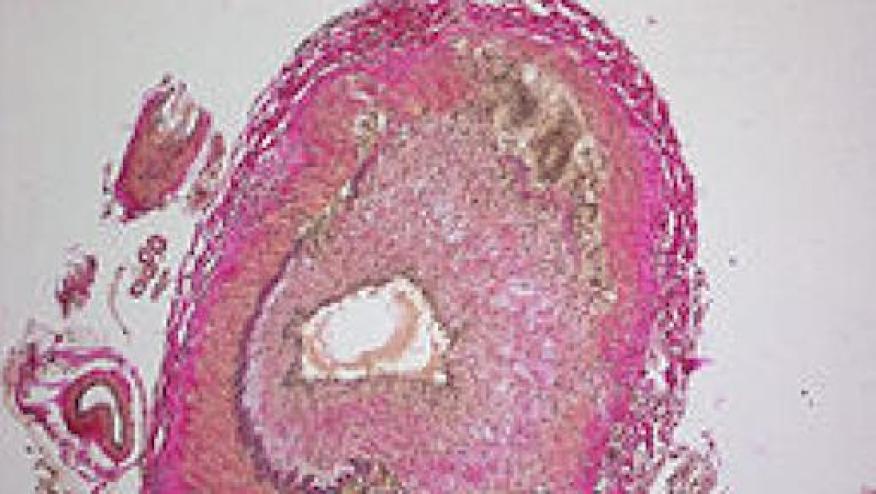
I recently attended a fascinating lecture by Dr. Anisha Dua on progress in the diagnosis and treatment of large-vessel vasculitis, with a focus on giant cell arteritis (GCA) and Takayasu's arteritis. She opened with what felt like the most honest “state of the union” slide you can show a room full of rheumatologists: steroid burden is still enormous.
Despite our best intentions and our carefully designed taper schedules, she cited data that roughly 75% of GCA patients are still taking glucocorticoids four years later and 74% of patients experienced steroid side effects. If you practice rheumatology, you don’t need to be convinced what that translates into clinically—steroid toxicity becomes less of a risk and more of an expectation when exposure stretches into years.
From there she transitioned into what we actually do about it. Tocilizumab remains the best-established steroid-sparing therapy in GCA. From the GIACTA trial, ACR’s current guidance conditionally supports pairing tocilizumab with glucocorticoids in new patients rather than relying on steroids alone. She also highlighted newer head-to-head data comparing methotrexate and tocilizumab, and the bottom line was that tocilizumab performed better than methotrexate for maintaining remission. The more sobering theme was that the benefit appears tightly linked to remaining on therapy, because the effect was lost after treatment discontinuation. That question—what happens when you stop?—kept resurfacing because it’s where real-world management gets messy. We may be replacing years of prednisone with years of biologic or targeted therapy, and we still don’t have perfect tools to know when the disease is truly quiet versus merely controlled.
That same “continuation matters” theme shows up again with newer options. Upadacitinib has now entered the GCA landscape, and she reviewed two-year data suggesting that continued therapy maintained remission better than withdrawing therapy. She also addressed the elephant in the room for every JAK inhibitor conversation—safety. She emphasized that the serious signals many clinicians fear most did not appear after a two year trial (no MACE or death, only one VTE), whereas zoster was predictably higher. Quality-of-life measures also appeared better in those who continued upadacitinib over the two-year period, and overall the data felt encouraging in terms of both efficacy and the ability to reduce steroid exposure.
In terms of imaging, we all know the four major modalities—ultrasound, CTA, MRI/MRA, and PET-CT—but their value depends heavily on who performs them, which vascular territories you care about, and what your payer will allow. Ultrasound is attractive but remains operator-dependent. For large-vessel and thoracic or aortic assessment in GCA, she described a leaning toward CTA, acknowledging the radiation tradeoff. For Takayasu—where patients are younger and longitudinal imaging is the rule rather than the exception—her preference leaned toward MRA to reduce cumulative radiation exposure. PET-CT can be a useful tool when the clinical story doesn’t fit—especially a patient in remission with rising markers or new symptoms where you need to confirm active vascular inflammation and simultaneously rule out underlying pathologies such as malignancy.
Her GCA take-home points were blunt and helpful: we need to keep pushing toward less steroids, but we also need to be honest that we’re not there yet. The way forward is not to taper more aggressively on paper; it’s to actually use effective steroid-sparing therapy early when appropriate, and to acknowledge that our monitoring tools still lag behind our therapeutic options. One of her final practical recommendations was to obtain baseline large-vessel imaging in GCA, to better define disease extent at the onset rather than discovering it later.
Switching gears to Takayasu's arteritis, she highlighted why it remains one of the hardest diseases we manage. The presentation of the condition is often nonspecific, biomarkers are unreliable, biopsies are rarely obtained, and diagnosis is frequently delayed until patients present with claudication or other late findings—essentially showing up after vascular damage has already accumulated. That diagnostic reliance on imaging is a requirement for ACR 2022 classification criteria, and in practice it means TAK is an imaging-driven disease from start to finish. She also emphasized how misleading inflammatory markers can be, with ⅓ of patients with active disease having a normal ESR and CRP. On the contrary 44% of patients with elevated markers are actually doing well clinically and in remission.
Where the talk got especially useful was how she handles imaging changes. She emphasized not overreacting to asymptomatic progression of a previously known lesion in the absence of inflammatory activity. But she drew a clear line when new vascular territories became involved. In that situation—clinical remission but imaging showing new stenosis or vessel wall thickening—the recommendation is to escalate immunosuppression, because that pattern is much harder to dismiss as old damage alone. She discussed repeating noninvasive imaging on a regular interval, often every 6–12 months, with closer intervals early in disease.
On therapeutics for Takayasu’s, she acknowledged the wide range we all use, starting with glucocorticoids, and she specifically cautioned against stopping too early, noting that a typical course may extend to about a year. She reinforced the classic DMARD backbone medications, but also encouraged rheumatologists not to be afraid of combination DMARD strategies such as methotrexate and mycophenolate in selected patients. For severe or refractory disease she urged consideration of biologics, particularly TNF inhibitors or tocilizumab. Once sustained remission is achieved, her approach is to continue the same therapy for at least two years. Beyond that, she noted the emerging and more experimental space, including JAKinibs and even IL-17i, which may continue to evolve for this very challenging disease.
If there was a single unifying thread through her entire talk, it’s that large-vessel vasculitis has moved from a “steroids and hope” era into a “steroids plus targeted therapy plus imaging” era. We’re getting better at inducing remission and sparing prednisone, but we still struggle to prove when the disease is truly off, and we still lack the biomarkers and predictive models that would make stopping therapy feel safe rather than like a gamble. The practical takeaway I’m carrying back into clinic is to take baseline large-vessel involvement seriously in GCA, to treat Takayasu's like the imaging-driven disease that it is, and to be honest that for both diseases the question is no longer just “how fast can I taper steroids?” but “how do I prevent relapse while minimizing cumulative toxicity over years?”





If you are a health practitioner, you may Login/Register to comment.
Due to the nature of these comment forums, only health practitioners are allowed to comment at this time.