



This ACR, we might have seen the future Save


Predicting the future is a hiding to nothing. Uncertainty is inherent to life. The unknown unknowns are nearly as bad as the known unknowns. Biomedical advancement is lumpy, unexpected, and filled with fortune. We are unlikely to be able to see the future in its entirety or with perfect detail, and you should be suspicious of anyone who claims to be able to.
In contrast, Alexis Ogdie delivered a brilliant Clinical Year in Preview on the final day (https://acrconvergence2026.eventscribe.net/fsPopup.asp?PresentationID=1…), which was deep and broad and balanced and clear. It is always a tricky job, but perhaps one that is easier to relish in the current moment in time - because the future of rheumatology is arguably bolder, firmer, and better defined than it has been in recent years. If we could ever be accused of being a specialty that was simply coasting on the victories of the biologic era, then ACR Convergence 2026 was a firm riposte.
This year, the big themes of the recent past have shown themselves to be living up to their promise. We will possibly look back at this time as a watershed of sorts, where some of the practice changes where potential has been talked about are advancing through their adolescence, growth spurt and all.
GLP-1 receptor agonists and incretin therapy as a whole have been talked about for so long as something that would inevitably affect rheumatology, as something out there that we couldn’t avoid. It has come to meet us where we live.
The TRIUMPH-4 and TRIUMPH-1-OA studies have shown that retatrutide, the triple GLP-1/GIP/glucagon agonist, can have the kind of unprecedented benefit in knee osteoarthritis that other therapies (with the possible exception of semaglutide on a good day) have only ever dreamed about. The TOGETHER-PsA study, which it is easy to forget was only released this year, showed 52 week data showing the sustained benefit of tirzepatide, the dual GLP-1/GIP agonist, as add-on therapy on top of a highly effective bDMARD for psoriatic arthritis.
While these trials were limited to overweight or obese patients - a substantial proportion of patients with either of these diseases - the hints of reduced tissue inflammation as a downstream consequence of metabolic change have led to substantial excitement. Even if this is merely a reduction of mechanical loading, we have not had a tool like this to effect change so consistently and deeply. Of course this should be part of broader change in weight loss, but the ease and the ubiquity is facilitating the conversations that need to happen, and giving patients belief.
Just the ACR before last, I went out on a limb in saying that this might be important for rheumatologists (Ozempic Will Change Rheumatology). This year, these results are so consequential, that we might look back on this year as the time when these therapies became central to the rheumatology conversation.
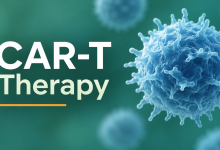
Cellular therapies have reached a level of maturity where we are now having serious conversations about how this will affect our future, not just how interesting this looks in a few selected patients. Not only are we seeing the start of proper clinical trials of CAR-T with more realistic patient selection, we are seeing the breadth of approaches to induction, delivery, and manufacture that might actually make this viable in the future. As importantly, we are addressing limitations seriously. We are better sensing what kind of diseases CAR-T will be beneficial in (not everything in rheumatology is an excess of aberrant B cells). We are also having the kind of discussions about current and future safety initiatives that therapies with a serious future should be having. It is critical that we scrutinize closely and demand data disclosure when things don’t go well, because that is the pathway from esoteric sideshow to serious event.
Even artificial intelligence, as it envelops the world as a whole, is being brought deep into rheumatology. We are not just understanding how we can use it to progress technical advances in our specialty, but understanding how we can be proactive in addressing the way our patients use it, too.
It is notable that all these advances have come about from studying other disciplines and being forward in embracing what they have to offer. We live in an interconnected research environment where information flows readily and rheumatologists, with their affable and collegiate approach to life, can benefit. It brings all sorts of optimism about the future.
Like many of you, I have been understandably reticent to predict what might be different in clinical practice in ten years’ time in our specialty. Often nothing changes, or future hopes are merely mirages or adjuncts. At this ACR, in contrast, we might have had a clear and confident view into the future.
More ACR Coverage:
Related Content
Dr. Antoni Chan and Dr. Johannes Knitza | Abstract 2959 | ACR 2026



If you are a health practitioner, you may Login/Register to comment.
Due to the nature of these comment forums, only health practitioners are allowed to comment at this time.