
Article
Patients with rheumatoid arthritis (RA) who had a history of cancer did not have an increased risk of new or recurrent cancers if treated with biologic therapies, a meta-analysis found.

Search for Terms or Answers
Patients with rheumatoid arthritis (RA) who had a history of cancer did not have an increased risk of new or recurrent cancers if treated with biologic therapies, a meta-analysis found.

Almost three years ago to the day, I did a podcast entitled, "I wanna new drug." As I go over this week's podcast, I want to say it again. I want a new drug safe enough to use during pregnancy, for PMR, for GVHD, and more. I'm going to cover these, and other topics including lupus, COVID breakthrough infections, and statin use and the risk of RA, as I review the news and journal articles from the past week on RheumNow.
Pooled analysis of the DISCOVER-1 and DISCOVER-2 trials have shown that guselkumab, an IL-23 inhibitor, was effective and safe in psoriatic arthritis (PsA) patients with axial involvement and imaging-confirmed sacroiliitis.
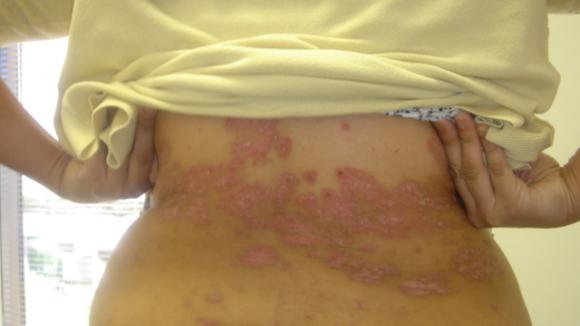
This is the #1 question I get from new consults: “How did I get arthritis?”
But as the aching are asking, they are really thinking these joint complaints must be due to something.

A small, single-center cohort analysis of difficult, refractory systemic sclerosis (SSc) patients showed that treatment with tocilizumab (TCZ), an interleukin-6 inhibitor, resulted in significant improvement in joint and skin involvement, regardless of SSc disease duration or subtype.
Smartphones and diet; COVID-19 and the numbers - reassuring or not, and what about masks?; and do more drugs mean more switching, less persistence, and patient adherence goes up...or down? All this and more news and journal reports in this week's episode.
CARRA (Childhood Arthritis and Rheumatology Research Alliance) has compared 3 different treatment strategies for polyarticular JIA to identify the optimal time to biologic regimen.
This week: high science that affect future treatments; breakthrough infections in our patients, and what's up with that; and soon your radiologist is going to be replaced by AI. This and more in our review of the news and journal articles from the past week.
Among patients with rheumatoid arthritis (RA), the strongest risk factors for the development of lymphoma were disease activity and severity, French researchers found.
In a multivariate analysis, having a high Disease Activity Score in 28 joints (DAS28) at baseline conferred twice the risk for lymphoma, with an odds ratio of 2.09 (95% CI 1.41-3.38), according to Gaetane Nocturne, MD, of Hôpital Bicêtre in Ile-de-France, and colleagues.
Analysis of records from the Mass General Brigham healthcare system in the Boston area, shows that breakthrough infections (after receiving SARS-CoV-2 vaccines) in patients with systemic autoimmune rheumatic diseases (SARDs) are not uncommon, and may be severe or fatal.
Wow! I hope you read part I of yesterday's “Greatest Rheumatologist” article. So many big names and yet, other names and stories that were equally inspirational.
If you read the comments of the part I article you can clearly see several themes emerge.

Who is the greatest rheumatologist? What makes for a great rheum? Is it clinical acumen, scientific achievement, educational prowess or years of unrivaled service or mentoring? Rheumatologists are quite opinionated on this subject and very nostalgic about their mentors and leaders. When I’ve posed this question in small groups, it’s plain to see how moved they become when discussing mentors or peers who influenced them. Thus, I posed this question to many of our leaders and mentors: who do you think of as the greatest rheumatologist?

FDA JAK inhibitor warnings and what it means (also: what do you think?); other news released this week; and, two questions submitted from listeners. Dr. Cush discusses this and more in this week's podcast.
Dr. Jack Cush is joined by Drs. Roy Fleischmann (Dallas), Allan Gibofsky (NYC), and Artie Kavanaugh (San Diego) to discuss the 9/2/21 FDA Drug Safety Communication regarding the cardiovascular and cancer risks arising from the Pfizer 1133 (ORAL Surveillance) tofacitinib study, but also applied to baricitinib and upadacitinib.



By downloading this material, I acknowledge that it may be used only for personal use and personal education and that I will accredit RheumNow.com as the source and owner of this material. Commercial use or mass reproduction of this material without permission from RheumNow (info@rheumnow.com) is prohibited.
