
Article
Dr. Jack Cush reviews the news and journal reports from the past week on RheumNow.com. How to handle COVID19 Vaccine issues, IL-6 inhibition in COVID, Comorbidites in RA, IVIG in dermatomyositis, & more...

Search for Terms or Answers
Dr. Jack Cush reviews the news and journal reports from the past week on RheumNow.com. How to handle COVID19 Vaccine issues, IL-6 inhibition in COVID, Comorbidites in RA, IVIG in dermatomyositis, & more...

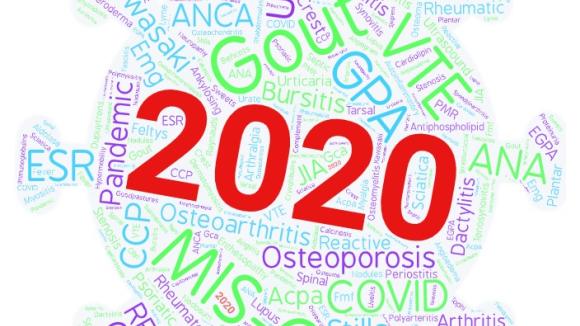
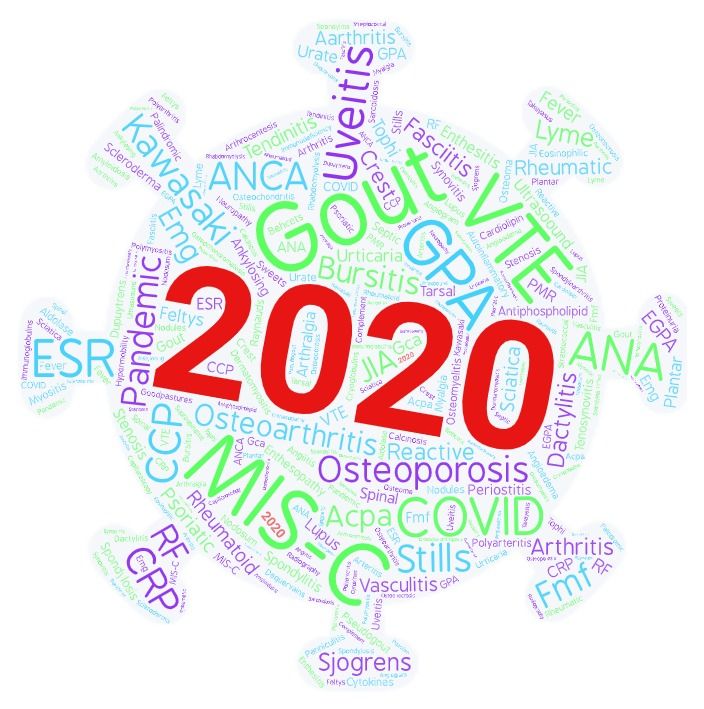
2020 was historic, memorable and game-changing. Under the cloud of COVID-19, there were many significant and memorable advances and setbacks for the rheumatology world. In our accounting of most read articles for 2020, (not surprisingly) 17/20 were COVID-related.
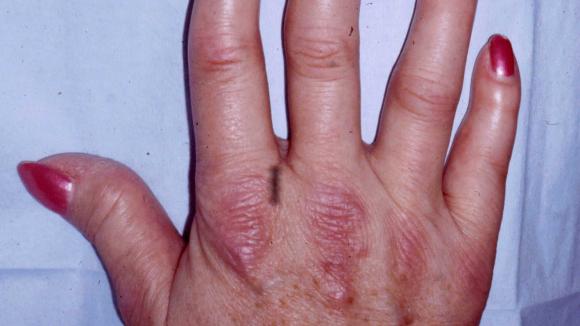
The ProDERM study design and outcomes are previewed in Medicine; and as promised the results were revealed at ACR Convergence in November 2020 showing that IVIg is safe, effective and superior to placebo i(PBO) in patients with dermatomyositis (DM).
The diagnosis of axial spondyloarthritis (and anklylosing spondylitis) (axSpA) is often delayed and usually not diagnosed by rheumatologists; a recent metanalysis shows that longer delays were attributable to lower education levels, younger age at onset and absence of extra-articular manifes
Dr. Jack Cush reviews the news, journal articles and favorite blogs from this past week on RheumNow.com.

Non-adherence may be the single most untold risk to suboptimal outcomes in the care of musculoskeletal disease. It has been estimated that 30-80% of patients with rheumatic and musculoskeletal diseases (RMDs) are nonadherent to prescribed regimens. EULAR has commissioned a task force

Secukinumab (Cosentyx) was effective for axial manifestations of psoriatic arthritis in a 52-week multicenter phase III study, investigators reported.

JAMA has published a clinical update of recent studies on GCA. While PET/CT scanning are novel means of demonstrating activity, they have not changed the diagnostic approach to GCA or PMR and although there are no new proven treatment strategies for PMR beyond glucocorticoids, the FDA has approved tocilizumab as a first-line glucocorticoid-sparing agent.
The ACR has published guidelines to manage reproductive health issues in rheumatic disease (RMD) patients before, during and after pregnancy. In this second excerpt from their guidelines articles, we present recommendations (and good clinical practice statements) for paternal rheumatology medication use by men with RMD and on conventional rheumatology medications and biologic use in pregnancy for women with RMD.

In this third excerpt from the ACR guidelines on managing reproductive health issues in rheumatic disease patients, we present recommendations regarding the use of glucocorticoids and guidance on lactation and medication use post-partum.

The American College of Rheumatology established a guidelines committee that consisted of both patients, rheumatologists and maternal-fetal health experts. After a a systematic review of the medical literature regarding contraception, assisted reproductive technology, fertility preservation, hormone replacement therapy pregnancy, lactation, and medication use in rheumatic disease patients, they published 12 good practice statements and 131 recommendations for reproductive health care in RMD patients.

After years of bemoaning the challenges of telemedicine, our rheumatology clinic transition entirely to a remote clinic in the space of a week. One of the few good things to come out of this crisis is that we may learn that in-person visits are not as critical as we thought, which may in turn help our specialty’s access issues. The only thing we can’t do remotely, however, are infusions.

What started out as online tweets and sharing newsfeed and case reports, has progressed to the formation of the COVID-19 Global Rheumatology Alliance, whose mission is to create an international rheumatology registry of patients affected by the disease in order to better understand the disease and guide clinicians in assessing and treating patients.

We are in the early stages of trying to limit the morbid and mortal consequences of the corona virus pandemic of 2020. Not surprisingly, the recommendations designed to limit exposure and damage continually highlight the fact that the elderly and immunosuppressed may be amongst the most severely affected should they become infected with this virus.
This has led to a great deal of uncertainty by patients and providers about how rheumatic diseases and their treatments need to be specifically addressed.




By downloading this material, I acknowledge that it may be used only for personal use and personal education and that I will accredit RheumNow.com as the source and owner of this material. Commercial use or mass reproduction of this material without permission from RheumNow (info@rheumnow.com) is prohibited.
