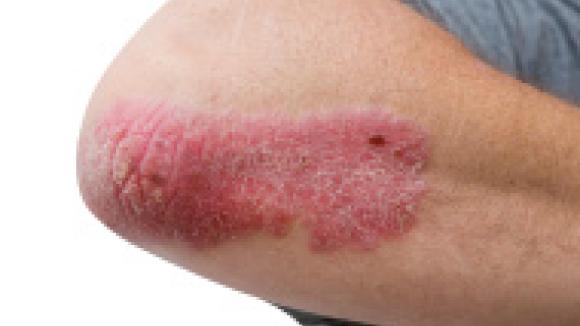
Psoriatic arthritis (PsA) affects approximately 30% of patients with psoriasis (PsO), and diagnostic delays are associated with worse prognosis, making early detection crucial. At EULAR 2025, several studies highlighted progress in prediction strategies. Here's my review of three of them.
All News
Article
Article
As earlier diagnosis and treatment of rheumatoid arthritis (RA) have resulted in greatly improved clinical outcomes, the focus of current research has now shifted to preventing the development of RA altogether. At EULAR 2025, several oral presentations explored this objective, highlighting data from three key prevention trials: APIPRA, ARIAA, and TREAT EARLIER. Each trial targeted individuals considered to be “at-risk” for developing RA, investigating whether early immunomodulatory interventions could delay or prevent progression to classifiable RA.
Article
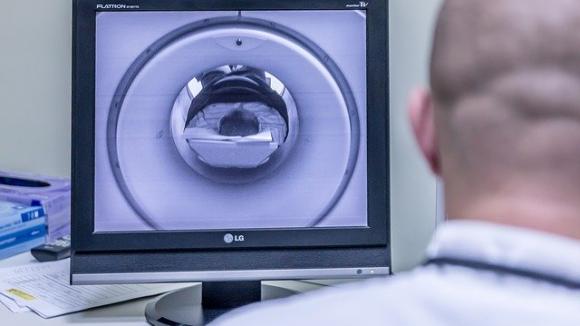
At EULAR 2025, there have been new developments in imaging in PsA.
The Value of Kidney Biopsy in Autoimmune Diseases
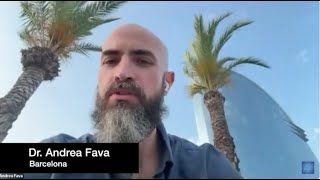
Dr. Andrea Fava shares his perspective from the EULAR 2025 meeting in Barcelona, Spain.
https://t.co/CA6Ak2scKb https://t.co/EK5wdpbzrl
Vector borne diseases that result in arthritis will rise with climate change/ flooding risk
- Chikungunya
- Dengue
- Zika
- West-Nile Virus
@RheumNow #EULAR2025 @bella_mehta https://t.co/CCOYqTjaXE
EULAR 2025 – Day 3 Report
Highlights from Day 3 included presentations on imaging in vasculitis, a debate on treating high-risk pre-clinical RA, and EULAR Recommendations on ILD treatment, physical activity for arthritis, the EULAR disease activity score for antiphospholipid https://t.co/FAaj443wPX
Imaging and Early Detection in Psoriatic Arthritis
At EULAR 2025, there have been new developments in imaging in PsA. Two key poster presentations (POS0104 and OP0179) provide important insights into the role of imaging in the management and early detection of psoriatic https://t.co/41fgXj5WnN
Clinical and Therapeutic Challenges in Connective Tissue Disease and ILD
Connective tissue diseases (CTDs) and interstitial lung disease (ILD) represent a challenging intersection of systemic autoimmunity and progressive respiratory impairment. Research presented at EULAR 2025 https://t.co/jPAai9FLkb
Nailfold Capillaroscopy correlated w/ cardiac ECHO in Systemic Sclerosis. NFC & ECHOs studied in 30 SSc pts. Systolic & diastolic dysfunction most common in late SSc NFC patterns. Cardiac dysfunction seen w/ low capillary density, avascular areas, cap neoangiogenesis https://t.co/M6uU6i5cW4
#EULAR2025 Abstr#POS0318 Single timepoint assessment may not show true picture of #SLE control. Data from BILAG-BR registry using machine learning showed 6 trajectories with clinical meaning:
-Nonresponse with high activity: dsDNA-ve & RNP+
-Response-flare: active MSK @RheumNow https://t.co/VrI8e4ONtM
Psoriatic Arthritis at Risk for Interstitial Lung Disease
A TriNetX EHR study shows that psoriatic arthritis (PsA), but not Psoriasis (PsO), patients are at increased risk for interstitial lung disease (ILD).
https://t.co/2zuxF1PY3Q. https://t.co/Icck4qE76X
Janet Pope
Tweet
#CAR-T in active #scleroderma #diffuse
open label
@sclerodermaUM presented improvement in
#nailfold #capillary patterns
Suggesting #vascular recovery
Hope is for lungs, skin and survival to improve but
These are ▶️
Early days ?risk
OP0338
#EULAR2025. @RheumNow @eular_org https://t.co/QhmO6gekXk
David Liew
Tweet
Genicular artery embolisation is like so many interventions in MSK medicine:
early promise with smaller RCT & observational data, but the later, more robust data doesn’t show the same benefit.
If you do meta-analyses of all these data, you mix good with bad
#EULAR2025 @RheumNow https://t.co/K1tN9KX8rq
EULAR Classification criteria for hemachromatosis, presented by Prof. Kiely shows clinical pearls in diagnosis - Hook osteophytes @MCP 2/3, & Iron Fist sign w/ elevation of MCPs 2&3. #EULAR2025 https://t.co/S8iA0C4pwG
Antoni Chan MD (Prof)
Tweet
In clinical practice, not all US enthesitis findings are SpA-specific. Enthesophytes/calcifications common in healthy pts. Inflammatory lesions (PD signal, erosions) at Achilles, distal patella & greater trochanter better distinguish PsA/axSpA. Target key sites to improve US https://t.co/jO61QjKfQp
Antoni Chan MD (Prof)
Tweet
In 581 PsA pts (EuroSpA), MRI showed axial SpA features in 31%: BME (69%), erosions (68%), fat lesions (58%). MRI-axPsA pts: younger (41y vs 46y), male (70%), HLA-B27+ (55%), ↑CRP (13 vs 7 mg/L). Radiographs identified sacroiliitis in 29%. MRI adds key detection. POS0297 https://t.co/nAw0BDAH22
Aurelie Najm
Tweet
Are we missing axial/SIJ lesions in PsA or are we misdiagnosing AxSPA + PSO pts for PsA?
5 register studies including 580+ pts w/ PsA/AxSPA+PSO
1/3 PsA routine care patients had SIJ MRI = SPA
29% Rx SII r-mNY criteria+
of which 38% MRI lesions AxSPA
@RheumNow #EULAR2025 https://t.co/DJljlm7T9m
Adela Castro
Tweet
‼️Diagnosis of axSpA is clinical
-MRI is a tool but still has a lot of limitations.
-Improve reports by directly communicating with radiology and be specific on pt clinical info.
-Unified algorithms are needed to apply AI in dx of SIJ inflammation on MRI.
#EULAR2025 @RheumNow https://t.co/9GR6FsgIcL
Adela Castro
Tweet
🔍MRI lesions in early axSpA vs non axSpA with chronic back pain:
-Data from SPACE cohort
-n 318 (214 axSpA vs 108 non-axSpA).
-Baseline imaging (CR and MRI) and at 2y f/u
-Minimal progression on CR in both early axSpA and non-axSpA CBP.
-On MRI, significant increase in the https://t.co/m5YOAiFUz1
What's the difference between PIPsA & NIPsA?
(Persistent Inflammatory confirmed by IMAGING
vs. Non inflammatory PsA)
🔹️Cross-sectional study
🔹️517 pts under b/tsDMARDs
🔹️10.3% D2T
🔹️57% PIPsA / 43% NIPsA
👇 Distinct phenotypes 👇
OP0176
#EULAR2025
@rheumnow https://t.co/YGHpbeE6ws