

All News
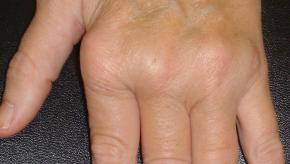
Trends in Rheumatoid Arthritis Disabililty, Despite Biologics
Disability claims in the U.S. related to rheumatoid arthritis (RA) were just as common in 2015 as in 1999, a government researcher found, against expectations that the advent of biologic therapy would have led to a steady decrease.
Read Article
Upadacitinib FDA Approved for Ankylosing Spondylitis
Abbvie has announced the US Food and Drug Administration has approved upadacitinib (Rinvoq or UPA) for use in adults with active ankylosing spondylitis, who have not responded or been intolerant of one or more TNF blockers. The recommended dose is 15 mg per day.
Read Article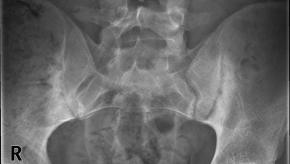
Prolonged TNF Inhibitor Use Delays Sacroiliac Progression
While tumour necrosis factor inhibitors (TNFi) have been shown to alter/retard X-ray outcomes in peripheral inflammatory arthritis, the inhibitor effects of TNFi on axial skeletal progression in spondylitis has been difficult to prove, owing to difficulties in study design, identifying best cohorts and a presumed slower rate of change in the spine.
Read Article
PsA Journal Club - Fecal Transplant & H2H IXE vs ADA
Playback now available! Watch our Tuesday Nite Rheumatology, held April 26th, 2022, which featured a Journal Club panel discussion about two important studies.
Read Article
Biologics for JIA? Not So Fast, Say Insurers
It's not a simple matter to prescribe tumor necrosis factor (TNF) inhibitors for patients with juvenile idiopathic arthritis (JIA), at least those with insurance, a single-center study found.
Read Article
Arthritis Predicts Hepatic Fibrosis in Hemochromatosis
Mayo Clinic Proceedings reports the results of a retrospective, cross-sectional of patients with HFE hemochromatosis showing that advanced hepatic fibrosis is primarily seen in those with arthritis due to HFE hemochromatosis.
Read Article
COVID-19 Vaccination Uptake and Perceptions in Rheumatic Patients
Putman et al has reported vaccine survey results from the COVID-19 Global Rheumatology Alliance (C19-GRA) in Lancet Rheumatology showing the uptake and vaccine hesitancy among people with rheumatic diseases (RMD).
Survey data from 7005 vaccinated and unvaccinated, adult RMD respondents from 102 countries was analyzed.

Evusheld as Protective Therapy in High Risk COVID-19 Patients
A single dose of the monoclonal-antibody AZD7442 (combination of tixagevimab and cilgavimab) has been shown to be safe and effective as prophylaxis against COVID-19 infection in high risk individuals who tested positive for COVID-19.
Read Article
TNR - Controversies in PsA
Held on April 19, 2022, Tuesday Night Rheumatology: Controversies in PsA, featured a lively and informative panel discussion, moderated by Dr. Jack Cush.
The PsA Expert panelists included:
Read Article
Faith in Exercise Benefit Boosts Actual Benefit in SpA
Patients with axial spondyloarthritis (SpA) got more bang for their exercise buck in a randomized trial when they had good opinions about their workout program, with better persistence with exercise at 1 year relative to a control group, researchers said.
Read Article
Dietary Improvement in Psoriatic Arthritis
The results of the DIETA trial showed that dietary changes may control psoriatic arthritis (PsA) disease activity, independent of weight loss.
Read Article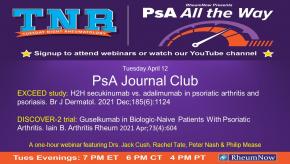
Now Available: TNR - Psoriatic Arthritis Journal Club
A recording of this week’s Tuesday Night Rheumatology is now available. This outstanding webinar featured a robust discussion of the EXCEED study and Discover-2 trial, with Drs. Philip Mease, Peter Nash, Jack Cush and Rachel Tate.
Read Article
Male vs. Female Responders (4.15.2022)
Dr. Jack Cush reviews the news and journal Reports from the past week on RheumNow.com - including fellowship COVID-19 concerns, the limits of T2T in gout and the real odds of RA remission with your first biologic.
Read Article
No Benefit to More Intensive Urate Lowering in Gout
While treat-to-target (T2T) is commonly advocated in gout management, it is unknown if T2T (or more intensive T2T) may result in less bony erosions in gout.
Read Article
Consensus Best Practices for Virtual Care in Rheumatology
The Canadian Rheumatology Association’s (CRA) Telehealth Working Group (TWG) has developed a series of best practice statements for the virtual care in adult and pediatric rheumatology patients.
Read Article
ACR Fellow Training Subcommittee Report on Pandemic Experiences
Arthritis & Rheumatology has publish an ACR Subcommittee report on how the COVID-19 pandemic affected fellows and their training.
Read Article
RheumNow Podcast – What You Do For & What You Do To the Patient (4.8.2022)
Dr. Jack Cush reviews the news and journal articles from the past week and discusses the use of fibroscan in RA, steroid hip injections in OA and famous quotes from a famous cardiologist.
Read Article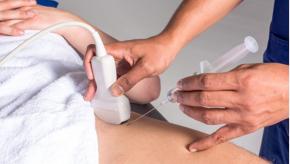
Short-Term (not Long-Term) Benefits to Intraarticular Hip Steroid Injection
A single ultrasound guided intra-articular hip corticosteroid injection can be quite effective in patients with hip osteoarthritis (OA).
Read Article
Tanmayee Bichile, MD BichileT ( View Tweet)

Links:

