
Article
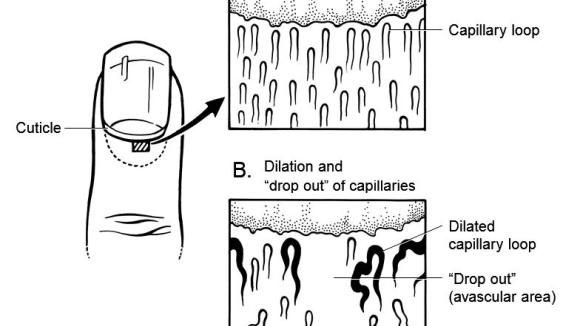
Two reports underscore the importance of nailfold capillaroscopy (NFC) in scleroderma and have shown that nailfold capillary drop out was significantly associated with mortality in systemic sclerosis.

Search for Terms or Answers
Two reports underscore the importance of nailfold capillaroscopy (NFC) in scleroderma and have shown that nailfold capillary drop out was significantly associated with mortality in systemic sclerosis.
The 11th annual meeting of the Rheumatology Winter Clinical Symposium (RWCS) begins today (2/7) and runs through Saturday (2/10) and features a premiere faculty delivering state-of-the-art lectures.
Dr. Jack Cush reviews highlights, news and recent research published this week on RheumNow.com. This week's report includes rising epidemiologic numbers, vaccine updates for H.

Researchers from Hong Kong assessed the clinical associations seen with the anti-melanoma differentiation-associated gene 5 antibody (anti-MDA5 Ab) assay in consecutive patients with dermatomyositis (DM) and polymyositis (PM).

EUSTAR study results published in Arthritis Research & Therapy show the current state of immunosuppressive use in systemic sclerosis patients with interstitial lung disease (SSc-ILD) to be ill-defined, but that liberal use of glucocorticoids (GC) in SSc-ILD should be discouraged

In the past 2 decades, mortality from end-stage renal disease (ESRD) among U.S. patients with granulomatosis with polyangiitis (GPA) has declined significantly, a nationwide study found.
The RheumNow Week in Review discusses the past week's news, journal articles and highlights from RheumNow.com. This week's report covers the price of biologics treatment in psoriasis, comorbidities in myositis, bronchiectasis with MPO antibodies, and the risk of secondary TNF failure with anti-drug antibodies.

Like their adult counterparts, psoriasis in children is an independent risk factor for comorbidity, but not as much as obesity.

Is your patient’s refrigerator the problem with the inefficacy of biologic therapies? Studies show most patients don't store their biologics correctly, which may be a source of limited drug efficacy.

In 2016 the WHO set out to eliminate HBV infection as a public health threat by 2030. So far, we are far from this goal as vaccine implementation has been suboptimal in a number of important patient populations, including patients with rheumatologic diseases, as well as other immunocompromising diseases like HIV.

A study from Nature Neuroscience shows that a high salt diet may mediate neurovascular disease by altering microbiome and the expansion of TH17 cells in the small intestine, thereby increasing plasma interleukin-17 (IL-17) and its subsequent effects on endothelium in the brain.
The most common cerebrovascular events (CVEs) seen among a large cohort of patients with systemic lupus erythematosus (SLE) were stroke and transient ischemia, and the majority of these events were attributable to the disease itself, a multinational study determined.

The Journal of Clinical Investigation reports results of a study showing that increases in CD21lo B cells and plasmablasts following that combination checkpoint blockade preceded the onset of immune-related adverse events.
While some have postulated that IRAEs are thought to be T cell mediated, B cells have also been implicated. Investigators studied 39 melanoma patients undergoing treatment with either anti-CTLA4 or anti-PD1, or combination CCB therapy. They analyzed changes in circulating B cells before and after the first cycle of therapy of immune checkpoint blockade (23 received combination therapy, 8 received anti-CTLA4, and 8 received anti-PD1).

Myeloablative autologous stem cell transplantation was significantly more effective than 12 months of cyclophosphamide among patients with severe scleroderma, an open-label multicenter study found.

Arkema et al has published in Annals of Rheumatic Disease a study showing that ischaemic and haemorrhagic stroke (CVA) is elevated in systemic lupus erythematosus (SLE) compared with the general population, especially in the first year.

The Annals of Internal Medicine reports that despite improving trends in mortality, death rates from systematic lupus erythematosus (lupus) remain high compared to those in the general population, and disparities persist between subpopulations and geographic regions.

Despite large randomized trials failing to show the efficacy of RTX in SLE (LUNAR, EXPLORER), uncontrolled observational data suggests possible efficacy and safety of RTX in refractory SLE.
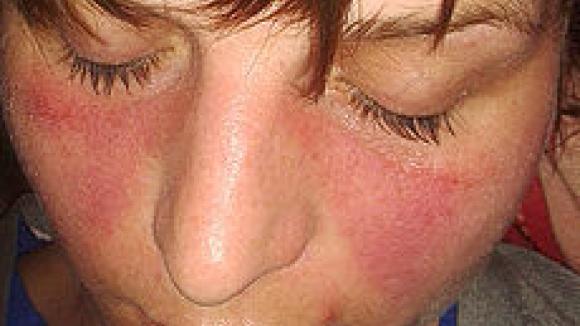
Researchers from the Nottingham University Hospitals have analyzed the efficacy and safety of oral (PO) and intravenous (IV) cyclophosphamide (CTX) in ANCA-associated vasculitis (AAV) patients and demonstrated a trend for fewer relapses, better 1 year survival and less toxicity w
Dr. Jack Cush reviews the news from the past week on RheumNow.com. Subscribe to the podcast on iTunes and SoundCloud.com.
The Cochrane Database has published its review of calcium channel blockers (CCB) in Raynaud's phenomenon, showing CCBs may be useful in reducing the frequency, duration, severity of attacks, pain and disability associated with Raynaud's phenomenon, especially with primary Raynaud's.

By downloading this material, I acknowledge that it may be used only for personal use and personal education and that I will accredit RheumNow.com as the source and owner of this material. Commercial use or mass reproduction of this material without permission from RheumNow (info@rheumnow.com) is prohibited.

