Annals of Internal Medicine has published the updated 2025 U.S. Department of Veterans Affairs and U.S. Department of Defense Clinical Practice Guidelines on adult Overweight and Obesity management. Here is a review of the guidelines, including five key takeaways for rheumatologists.

All News
Dr. Jack Cush reviews the news and journal reports from this past week on RheumNow.com.
Obesity and Psoriatic Disease
Obesity is a clinically important comorbidity in psoriasis and psoriatic arthritis. Excess adiposity contributes to systemic inflammation and cardiometabolic risk and may adversely affect disease severity and response to some systemic therapies. Intentional weight loss should be considered an adjunct to appropriate dermatologic and rheumatologic treatment.
A real world analysis of drug use in giant cell arteritis (GCA) patients shows that despite intending to taper patients off glucocorticoids (GC) by 24 months, 75% remained on GCs forββ₯β48 months.
The Endocrine Society has published a scientific statement reframing obesity as a heterogeneous, chronically dysregulated fat-mass disorder, the biology of which is being tested effectively by GLP-1/GIP receptor agonists. Is this precision-medicine? We await long-term safety data, while assessing the outcomes in rheumatic and musculoskeletal disorders.
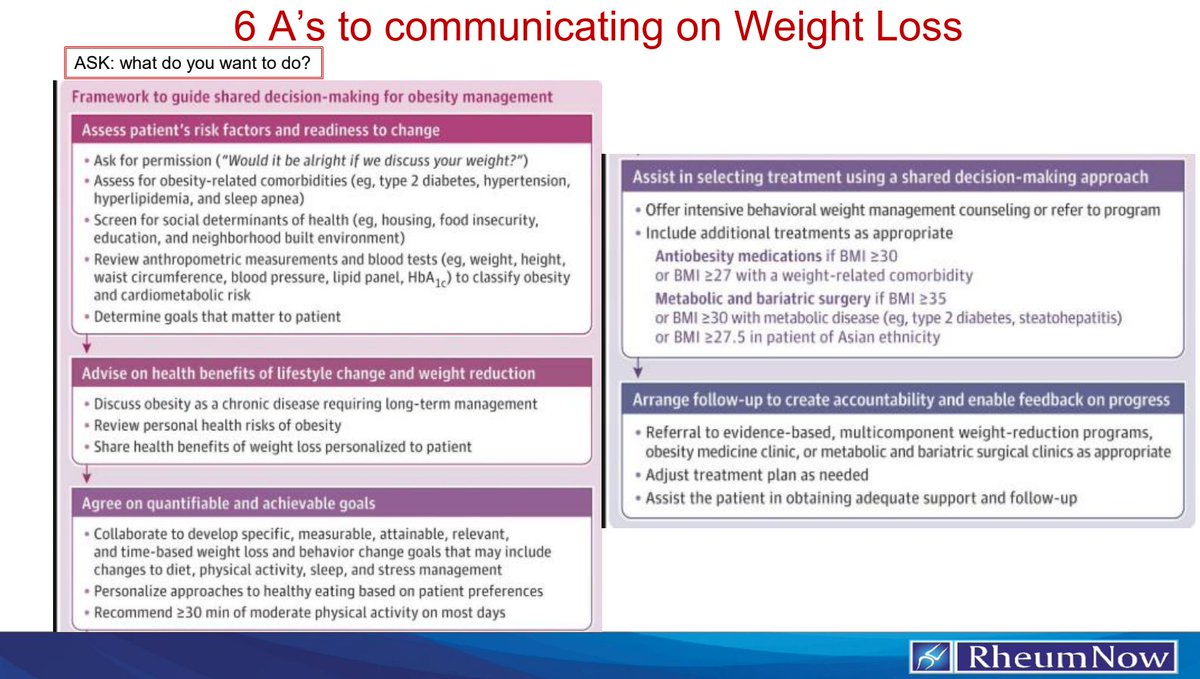
As GLP-1/GIP receptor agonists become standard co-management tools for obese patients with RA, PsA, axSpA, and gout, this JAMA Insights perspective by Kushner, et al. reframes lifestyle counseling as an adjunct to pharmacotherapy - a reversal of the traditional model. This has with direct implications for how we counsel obese patients we start or co-manage on these agents.
Dr. Jack Cush reviews the news and journal reports from this past week on RheumNow.com
The American College of Rheumatology (ACR) has released updated clinical guidance for the treatment and management of osteoarthritis (OA) of the knee, hip, and hand. The evidence-based recommendations update the 2019 ACR/Arthritis Foundation guideline and are designed to support individualized, shared decision-making between patients and clinicians.
An outcomes study from the Leiden Early Arthritis Clinic (EAC) has shown substantially less diagnostic delay and better long-term outcomes when patients are referred to EAC compared to usual referrals.
Weight loss with lifestyle changes alone is difficult to sustain for most people. One reason for this is the weight loss associated endocrine milieu, which can decrease energy expenditure and increase the drive to eat. Therefore, we frequently use medications and/or bariatric surgery.