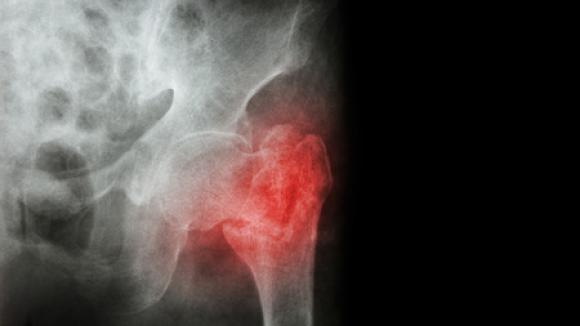
The American College of Rheumatology has updated its 2010 guideline for the prevention and treatment of glucocorticoid-induced osteoporosis. The guideline provides recommendations on assessing fracture risk and treatment for adults and special patient populations, including women of childbearing potential, adults treated with very high-dose glucocorticoids, adults with organ transplants, and children ages 4-17.
All News
Manpower in rheumatology is about to be a major problem for the next several decades: not enough trainees, a "tsunami of retiring older white rheumatologists", and an aging baby-boomer, arthritis-primed population will strain current resources and manpower. Moreover, necessary services will not likely be available to those in need and there may be a significant maldistribution of adequate rheumatologic care.
Biosimilars continue to command a great deal of research, development and attention given the promise of significant cost savings and potentially wider use for those in need. Biosimilar Reports is an ongoing series dedicated to advances, discussions and developments in biosimilar agents intended for use by rheumatologists.
The Journal of the American Geriatric Society has reported that older women receiving bisphosphonate therapy for greater than 10-13 years were more likely to suffer from fractures.
Dr. Jack Cush reviews highlights from the past week on RheumNow.com.
Ohio is suing five major drug manufacturers, accusing them of misrepresenting the risks of prescription opioid painkillers that has resulted in the current opioid epidemic.
The British Society for Rheumatology/British Health Professionals in Rheumatology first published a guideline for the management of gout in 2007. They have just updated and published their new guideline, largely because of new therapies, an increasing incidence of gout, low penetrance of urate lowering therapies, and the inability to achieve a target serum uric acid level.
Kimme L. Hyrich, MD, PhD, of the University of Manchester in the United Kingdom, and colleagues point out that because of the lack of consensus in diagnostic criteria, "the same child could be classified as 'in clinically inactive disease' or having active disease at the same time point between clinicians or hospitals."
Stepping up to biologic therapy when methotrexate (MTX) monotherapy fails was not shown to be cost effective, compared to first trying triple therapy, in a rheumatoid arthritis (RA) study published in Annals of Internal Medicine.
Dr. Jack Cush Reviews highlights from the past week on RheumNow.com:
About one-third of ankylosing spondylitis patients who cut their etanercept (Enbrel) dose in half maintained responses over 4 years, compared with two-thirds who stayed on standard therapy, researchers reported.
Ixekizumab (Taltz) is currently approved for use in plaque psoriasis and is being developed for use in psoriatic arthritis (PsA). New results show IXE to be highly effective at skin and joint outcomes in PsA patients who have failed a TNF inhibitor (TNFi).
The NEJM reports success when using mepolizumab (anti-IL-5 monoclonal antibody) in a 52 week study of patients with eosinophilic granulomatosis with polyangiitis (EGPA).
The FDA has approved sarilumab (Kevzara), a new IL-6 inhibitor co-developed by Regeneron and Sanofi's, for use in adults with moderate to severe rheumatoid arthritis (RA).
Reuters reports that FDA approval of romosozumab (brand name Evenity) may be held up because of higher rates of cardiac events seen in a late-stage clinical trial.
The DANBIO registrys has demonstrated that switching from infliximab (Remicade) to biosimilar CT-P13 (Inflectra in the U.S., Remsima in Europe) does not appear to have any negative effect on inflammatory arthritis disease activity, Danish researchers reported.
Treat-to-target education through group-based quality improvement sessions can result in wider use of treat-to-target in practice, according to researchers.
Lancet reports the results of the NOR-SWITCH study - a trial performed in Norway as biosimilars were being introduced.
Treatment of knee osteoarthritis (with synovitis) with an injection of a corticosteroid every three months over two years resulted in significantly greater cartilage volume loss and no significant difference in knee pain compared to patients who received a placebo injection, according to a study
A retrospective study shows that rituximab treatment of RA-related interstitial lung disease may improve or forestall ILD progression.