

All News

Trends in Inflammatory Arthritis Care in Germany
The German National Database (NDB) has reviewed their experience in the care and quality of life of inflammatory rheumatic disease patients snce 1993, showing improved use of metrics, improved outcomes and a changing profile of biologic and anti-rheumatic drug use.
Read Article
War on RA – Part 4: Desperado – Time to Open the Gate
Do you know what the best-selling album of all time is? Could it be Bing Crosby? U2? Fleetwood Mac? AC/DC? I know, it’s Michael Jackson’s “Thriller” right?
Actually it’s the Eagles Greatest Hits – it surpassed Jackson’s Thriller in August 2019 as the best-selling with a total of 36 million copies sold since it was released in 1976. Wait! Are we not Rheumatologists? Aren’t we supposed to be discussing rheumatoid arthritis?

Enbrel Patent Battle Won by Amgen
The ugly, legal, financial underbelly of US biosimilar drug development showed up in court last Friday, when a U.S. judge upheld two of Amgen's patents for Enbrel, thwarting a legal challenge by Novartis/Sandoz over its etanercept-szzs biosimilar, Erelzi.
Read Article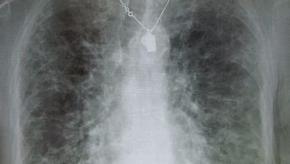
RA Disease Activity Drives Lung Complications
A longitudinal study from the BRASS registry shows that increase rheumatoid arthritis disease activity increases the risk of RA-associated interstitial lung disease (RA-ILD).
RA patients without RA-ILD at baseline, enrolled in the Brigham RA Sequential Study (BRASS, 2003–2016), were followed from 2003-2016 with serial clinical, DAS28, serologic and imaging assessments.

NSAIDs Mediate Cardiovascular Risk in OA
NSAIDs have been linked to an increased risk of cardiovascular disease, but does this also hold for osteoarthritis (OA) patients.
Read Article
RheumNow Podcast – Tricked Up Lupus Criteria (8.9.19)
Dr. Jack Cush reviews the news and journal reports from the past week on RheumNow.com, including new SLE criteria, ULT in gout and MSU reductions, IVIG in ANCA vasculitis and non-TNF biologics outperform the TNF inhibitors.
Read Article
Increasing Lung Disease in Systemic JIA
A single-center cohort analysis shows that lung disease is increasingly seen in children with systemic juvenile idiopathic arthritis (SJIA), especially those complicated by macrophage activation syndrome.
Prior to 2013, reports of pulmonary disease in SJIA were rare, but since there have been increasing reports of alveolar hypertension, interstitial lung disease and pulmonary alveolar proteinosis; often with a high mortality rate.
As such, since 2014, the Cincinnati Children’s Hospital Medical Center has seen an increase in lung disease and severe lung disease in SJIA.
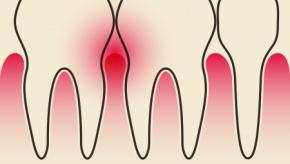
Periodontal Disease and P. gingivalis Increased in CCP+ Pre-Clinical RA
A cross-sectional study 48 CCP–positive "at risk" individuals (without arthritis) were shown to have an increased prevalence of periodontitis and P gingivalis when compared to 26 early RA (ERA) and 32 controls.
Read Article
War on RA - Part 3: Useless Drugs
We have options that are endless – we have 28 biologics in rheumatology; 19 approved for RA in the last 20 years, but 15 of these are me-too copies or biosimilars. We currently have 2 JAK inhibitors and may have 3 or 4 by year end. But what we really need is the right drug, at the right time, in the right patient – but how will we know.
Read Article
Are Non-TNF Biologics Superior to TNF inhibitors?
Current ACR and EULAR guidelines list TNF-inhibitors (TNFi) abatacept, rituximab, and tocilizumab as being equally effective after methotrexate or as second line therapies when treating rheumatoid arthritis.
Read Article
RheumNow Podcast – More Than a Spot of Tea (8.2.19)
Dr. Jack Cush reviews the journal articles and news reports from the past week on RheumNow.com:
MMP-7 and Myositis-ILD; Post-surgical gout attacks; CV events and testosterone; and a Boxed warning for tofacitinib.

Top Rheumatology Centers Led by Johns Hopkins
Medscape has reported the results of the US News & World Report's annual ranking of the best adult rheumatology hospitals nationwide has again honored Johns Hopkins Hospital, with runner up status going to the Cleveland Clinic, Hospital for Special Surgery, NewYork-Presbyterian Unive
Read Article
War on RA - Part 2: It's All About You
Part II of this series is a direct message to rheumatologists. If we’re doing such a great job in RA, then why do we need a war on RA? Why is this conflict being laid at the feet of good soldier rheumatologists, those who toil daily at winning therapeutic battles one patient at a time? The reasons are blunt and true.
Read Article
Tofacitinib Gets a New Boxed Warning for Blood Clots and Death with Higher Doses
The U.S. Food and Drug Administration has approved new warnings about an increased risk of blood clots and of death with the 10 mg twice daily dose of tofacitinib (Xeljanz, Xeljanz XR), which is used in patients with ulcerative colitis.
Read Article
Efficacy of Maintaining or Switching to Baricitinib Monotherapy
A post hoc analysis of baricitinib use in rheumatoid arthritis (RA) patients shows that while many patients respond well to baricitinib monotherapy or to switching to baricitinib monotherapy, those with less disease control respond well to the addition of methotrexate (MTX) to baricitinb.&nb
Read Article
FINCH2: Filgotinib in Biologic Refractory Rheumatoid Arthritis
The FINCH2 study has shown that filgotinib, an oral once daily JAK 1 inhibitor, is highly effective in rheumatoid arthritis (RA) patients who failed to respond to prior biologic therapy.
Read Article
War on RA - Part 1: Walk on the Moon
It’s a great time to be a rheumatologist and to manage RA. But, if you keep doing what you’re doing, you’re going to keep getting what you’ve got.
Read Article
Partial or Total Knee Replacement for Osteoarthritis?
Lancet has reported on a clinical trial comparing total knee replacement (TKR) and partial knee replacement (PKR) in late-stage isolated medial compartment knee osteoarthritis patients finding that both TKR and PKR are equally effective, PKR should be considered the first, because of lower costs
Read Article
RheumNow Podcast – Don’t Take My Advice (7.19.19)
Dr. Jack Cush reports the news and new journal articles from the past week on RheumNow.com.
Read Article
Intraarticular Capsaicin in Knee Osteoarthritis
A novel compound, synthetic trans‐capsaicin (CNTX‐4975), has been studied as an intraarticular injection and shown to significantly reduce pain in patients with chronic moderate‐to‐severe osteoarthritis of the knee.
A phase II, multicenter, double‐blind study enrolled 172 knee OA patients between the ages of 45–80 years. Patients were randomized to receive either intraarticular placebo, or a high‐purity synthetic trans‐capsaicin CNTX‐4975 0.5 mg, or CNTX‐4975 1.0 mg.

