
Article
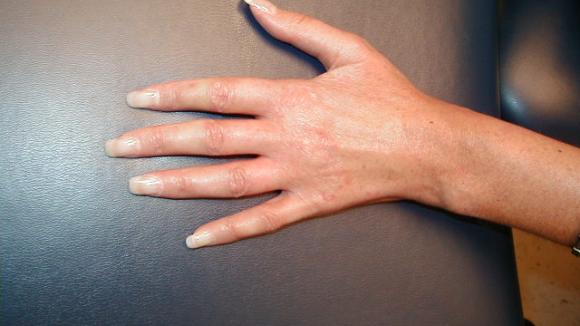
Systemic sclerosis is more common in the United Kingdom than previously reported, a nationwide population-based study determined.

Search for Terms or Answers
Systemic sclerosis is more common in the United Kingdom than previously reported, a nationwide population-based study determined.
Dr. Jack Cush reviews selected news and journal reports from the past week on RheumNow.com.

"Can stresss be the cause of my autoimmune disease?" is an often launched question met with shrugs of uncertainty or strongly held beliefs rooted in bias moreso than fact.
Swedish investigators have analyzed a large registry cohort and shown that exposure to stress-related disorders yields a significantly increased risk of autoimmune disease. They analyzed 106,464 patients with stress-related disorders, with 126,652 full siblings, and over a million non-stressed matched controls to assess a future risk of autoimmune disease.

The EULAR 2018 wound down on Saturday with fewer oral presentations but many posters. In my last report I put together a collection of impressions and some thematic highlights not covered in previous reports.

Day 3 highlights include Behcet’s responds to apremilast and that biologics do not differentially affect TKR/THR post-operative infection rates. Be sure to check out today's podcast as well.

While many autoinflammatory syndromes are driven and managed with select inhibition of IL-1, IL-18 or IL-6, a subset are driven by type I interferon and are referred to as interferonopathies. These monogenic IFN–mediated disorders present in infancy with fevers, systemic inflammation, an IFN response gene signature, inflammatory organ damage, and high mortality.

While the risk of neoplasia with tumour necrosis factor inhibitor (TNFi) use has been largely nullified in most inflammatory disorders, this risk in children is less certain. However a recent study shows no risk of increased cancer in children treated with TNFi for juvenile idiopathic arthritis (JIA), pediatric inflammatory bowel disease (pIBD) and pediatric plaque psoriasis (pPsO).

The development and progression of interstitial lung disease in systemic sclerosis can be an ominous finding.
Treatment of refractory giant cell arteritis (GCA) with ustekinumab (Stelara) showed therapeutic promise as a steroid-sparing agent in a small, open-label study, Irish researchers reported.
A study of MPO-ANCA positive patients followed serially over 2 years shows that reappearance of MPO‐ANCA may predict relapse in patients with MPO‐ANCA positive AAV and that routine MPO‐ANCA monitoring is warranted.

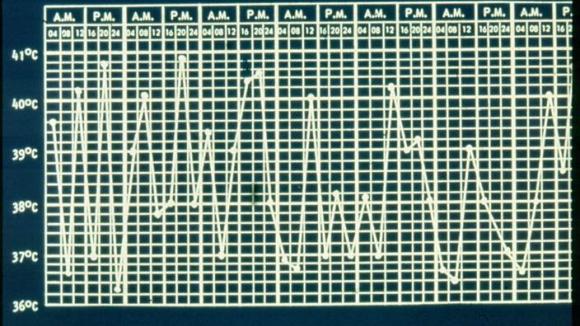
The New England Journal of Medicine reports that the anti-interleukin (IL)-1β monoclonal antibody canakinumab (Ilaris) was effective in the treatment of three distinct autoinflammatory recurrent fever syndromes (FMF, TRAPS, HIDS) with responses that were far superior to what was see
Dr. Jack Cush reviews highlights, news and journal articles from the past week on RheumNow.com.

Acthar is in the news again. Previously a New York Times article lambasted the drug as the "single most expensive drug per patient", based on it costing Medicare $16,2371 per patient for nearly 3100 patients. Overall, costing Medicare a half-billion US dollars per year.

Dr. Jack Cush discusses the news and journal articles from the past week on RheumNow.com.

The identification of a genetic susceptibility locus for systemic juvenile idiopathic arthritis (sJIA) has important implications for treatment of this severe, poorly understood illness, researchers reported.
The Centers for Disease Control and Prevention has a new report showing that from 2004 to 2016, the number of Americans infected by mosquitoes, ticks or fleas tripled from 27,388 in 2004, to 96,075 in 2016.
From 2015 to 2016, these infections rose by 73 percent. This included new Zika and chikungunya virus infections, (41,680 in 2016), followed by Lyme disease (36,429 cases). This may be an underestimation as as many infections are not reported.

The French Vasculitis Study Group has published the results of the MAINRITSAN2 trial designed to compare individually tailored versus fixed-schedule rituximab (RTX) reinfusion for remission maintenance in patients with antineutrophil cytoplasm antibody (ANCA)-associated vasculitides (AAVs).

Dr. Jack Cush reviews the news and journal reports from the past week on RheumNow.com. A second life for Syk kinase, Vitamin D talk, VTE, regulatory hearings and the Lupus clinic edge.

SOBI has announced that Kineret (anakinra) has been approved by the European Commission (EC) for the treatment of Still’s disease (Systemic Juvenile Idiopathic Arthritis [SJIA] and Adult-Onset Still’s Disease [AOSD]), in all 28 European Union (EU) member states.
One of the driving pathogenic mechanisms in systemic lupus erythematosus (SLE) is the generation of immune complexes capable of inducing netosis (NET formation) and NET-derived DNA that may be an amplifying autoantigen and give rise to anti-nuclear autoantibodies (ANAs).

By downloading this material, I acknowledge that it may be used only for personal use and personal education and that I will accredit RheumNow.com as the source and owner of this material. Commercial use or mass reproduction of this material without permission from RheumNow (info@rheumnow.com) is prohibited.