Dr. Jack Cush reviews the news and journal articles from the past week on RheumNow.com. Fateful outcomes in Rheumatology, what happens to Seronegatives, IL-23 fails, MRI progression, Not all inflammatory back pain becomes SpA:

All News
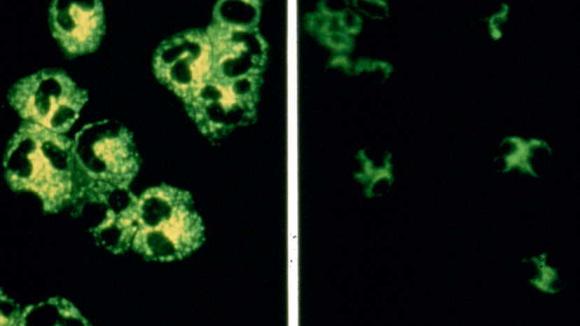
Pisetsky and colleagues have reported in the Annals of Rheumatic Disease that ANA tests done on established SLE patients may yield surprisingly disparate results.
While ANA negative lupus was a problem of old assays and the loss of ANA positivity may be seen with chronicity or age, most rheumatologists believe that ANA positivity is an absolute requirement for the diagnosis of systemic lupus erythematosus.
A pattern of increased primary care visits and joint complaints during the 2 years before rheumatoid arthritis (RA) was diagnosed were predictive of the diagnosis, a British case-control study found.
A recent Deloitte analysis of the biosimilar market in the USA suggests there are defined obstacles to biosimilar use that must be dealt with, especially as the current administration is seeking to lower drug prices and reduce out-of-pocket costs for US consumers.
A cohort study of 241 DMARD-naive rheumatoid arthritis (RA) patients, meeting either 1987 ACR or the 2010 ACR/EULAR classification criteria for RA, compared the baseline status and long term outcomes of seronegative (SNRA) and seropositive (SPRA).
While many autoinflammatory syndromes are driven and managed with select inhibition of IL-1, IL-18 or IL-6, a subset are driven by type I interferon and are referred to as interferonopathies. These monogenic IFN–mediated disorders present in infancy with fevers, systemic inflammation, an IFN response gene signature, inflammatory organ damage, and high mortality.
In the current issue of the New England Journal of Medicine, Drs. James Rosenbaum and Gregg Silverstein review the pathogenesis of systemic lupus erythematosus (SLE) from the viewpoint of a dysbiolsis.
Patients with systemic lupus erythematosus (SLE) who were assessed as being in a low disease activity state during more than half of clinical visits had a decrease in organ damage events of approximately 50%, a retrospective study found.
A study of MPO-ANCA positive patients followed serially over 2 years shows that reappearance of MPO‐ANCA may predict relapse in patients with MPO‐ANCA positive AAV and that routine MPO‐ANCA monitoring is warranted.
The New England Journal of Medicine reports that the anti-interleukin (IL)-1β monoclonal antibody canakinumab (Ilaris) was effective in the treatment of three distinct autoinflammatory recurrent fever syndromes (FMF, TRAPS, HIDS) with responses that were far superior to what was see
Researchers at University of California San Diego School and the Icahn School of Medicine have found a high-resolution epigenomic landscape of rheumatoid arthritis (RA) that overlaps with that seen in Huntington's disease, suggesting potentially new unanticipated pathways that could be devel
Dr. Jack Cush reviews highlights, news and journal articles from the past week on RheumNow.com.
Mortality remains high in granulomatosis with polyangiitis (GPA), but the causes of death tend to change over time, a researcher reported here.
Dr. Jack Cush discusses the news and journal articles from the past week on RheumNow.com.
The identification of a genetic susceptibility locus for systemic juvenile idiopathic arthritis (sJIA) has important implications for treatment of this severe, poorly understood illness, researchers reported.
The Centers for Disease Control and Prevention has a new report showing that from 2004 to 2016, the number of Americans infected by mosquitoes, ticks or fleas tripled from 27,388 in 2004, to 96,075 in 2016.
From 2015 to 2016, these infections rose by 73 percent. This included new Zika and chikungunya virus infections, (41,680 in 2016), followed by Lyme disease (36,429 cases). This may be an underestimation as as many infections are not reported.
The monoclonal antibody epratuzumab showed promise as a B-cell depleting agent in patients with concomitant systemic lupus erythematosus (SLE) and Sjogren's syndrome, a post-hoc analysis of two phase III trials found.
FDA staff remain worried about the safety of baricitinib, an oral JAK inhibitor intended for treatment of rheumatoid arthritis, according to briefing documents prepared for an advisory committee meeting on Monday.
Dr. Jack Cush reviews the news and journal reports from the past week on RheumNow.com. A second life for Syk kinase, Vitamin D talk, VTE, regulatory hearings and the Lupus clinic edge.