
Article
Articular manifestations of Crohn's disease affects a significant number of patients with either oligoarticular or RA-like polyarthritis or spondyloarthritis.

Search for Terms or Answers
Articular manifestations of Crohn's disease affects a significant number of patients with either oligoarticular or RA-like polyarthritis or spondyloarthritis.

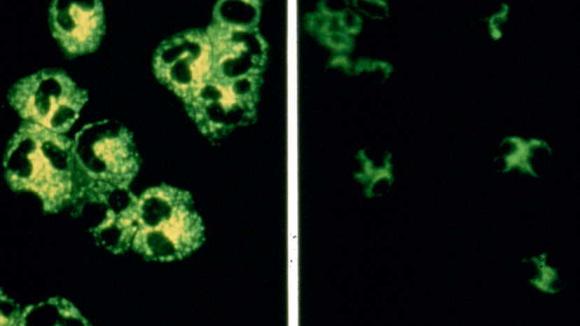
Patients known to be autoantibody positive (e.g., anti- Jo1) for the anti-synthetase syndrome were assayed by indirect immunofluorescence (IIF) for other reactivities, showing antinuclear staining (ANA) or cytoplasmic staining (Anti-Cyt Ab+).
US and UK researchers have identified a unique subset of helper T-cells called ‘peripheral helper’ T-cells in the synoviums that may be linked to the pathogenesis of rheumatoid arthritis.
Curbside Consults are cases submitted by our rheumatology colleagues as challenging therapeutic or safety issues. Answers are based on experience, with added evidence from the medical literature and published guidelines.

Infection is a major cause of morbidity and mortality in RA patients and thus vaccinating against preventable infections is a top priority for rheumatologists.

Neuropsychiatric lupus (NPSLE) is a diagnostic challenge as its clinical manifestations are protean and the pathophysiology is poorly understood.

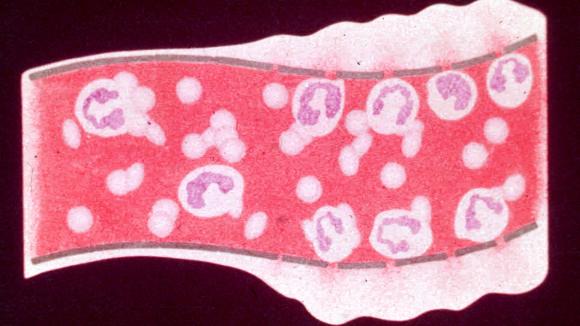
Researchers from the Massachusetts General Hospital (MGH) have studied the initial steps in an animal model of inflammatory arthritis and found that complement C5a is critical to neutrophils migration into joints.
Dr. Jack Cush reviews highlights from the past week on RheumNow.

The 2017 Crafoord Prize from the Royal Swedish Academy of Sciences has been awarded to a Japanese scientists and two American scientists for their discovery and research on T regulatory cells (TRegs).

Research from Johns Hopkins reports that rheumatoid arthritis (RA) patients with periodontitis exhibited patterns of autoantigen hypercitrullination similar to that seen in RA. Results published in Science Translational Medicine showed that Aggregatibacter actinomycetemcomitans can produce hypercitrullination of patient neutrophils, indicating its possible role in triggering RA. (Citation source: http://buff.ly/2hZTBG8)
Researchers from Manchester, UK have reported the results of their BRAGGSS study showing that certolizumab (CZP) random drug levels and anti-drug antibody (ADAbs) levels can predict optimal outcomes in CZP treated rheumatoid arthritis patients.

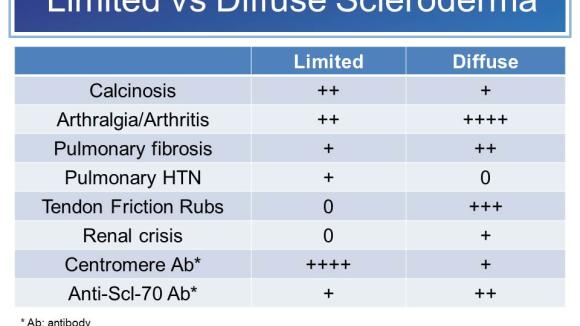
Diffuse cutaneous systemic sclerosis (dcSSc) is one of the most difficult autoimmune diseases to treat. In case of major organ involvement (lung, kidney), prognosis is poor and treatment options are limited.
It is well known that ANCA-associated vasculitides can be hard to control and relapses are common. The choice of maintenance therapy is rather limited and therapies are not always effective.
The offspring of women with rheumatoid arthritis (RA) may be at greater risk for the development of epilepsy, according to a recent report in the journal Neurology, suggesting that epileptogenic triggers may begin during pregnancy and may be wors

Diffuse cutaneous systemic sclerosis (dcSSc) is one of the most difficult autoimmune diseases to treat. In case of major organ involvement (lung, kidney), prognosis is poor and treatment options are limited.
It is well known that ANCA-associated vasculitides can be hard to control and relapses are common. The choice of maintenance therapy is rather limited and therapies are not always effective.
Ixekinumab (IXE) is an IGG4 monoclonal antibody bindings with high affinity to IL -17A. Currently marketed at Taltz and approved for use in chronic plaque psoriasis, the agent is also being developed for use in psoriatic arthritis.
Dr. Jerome Greenberg from UCLA has published 10 tips and pearls (based on years of teaching and experience) on immunizations in an out-patient practice:

Flu season is upon us. While we try our best to vaccinate as many patients as possible, at times it can be challenging for reasons ranging from patient’s perceptions that the vaccine gives them the flu to others stating they are allergic to vaccine components.
Dr. Jack Cush reviews highlights and reports from this week on RheumNow.com, including drug-induced cutaneous lupus, pediatric lupus being worse, new gout drug SEL-12, Gut microbiome and IgA plasmablasts, and the weakly-received new ACP guidelines on gout.
By downloading this material, I acknowledge that it may be used only for personal use and personal education and that I will accredit RheumNow.com as the source and owner of this material. Commercial use or mass reproduction of this material without permission from RheumNow (info@rheumnow.com) is prohibited.

