


Legislative Issues Affecting APPs Save

APRN Compact and Interstate Licensing Held Up
Major interstate “compacts” allow for cross state licensing for physicians. However, compacts for Advanced Practice Registered Nurse (APRN) are fewer and currently on hold - thereby limiting healthcare manpower and patient care.
Physicians can practice across state lines in 39 states thanks to the Interstate Medical Licensure Compact (IMLC). Likewise, Registered Nurses and Licensed Practical/Vocational Nurses are permitted to practice in 40 states, because of the Nurse Licensure Compact (NLC).
The Advanced Practice Registered Nurse Compact is an interstate agreement that allows APRNs (including nurse practitioners, certified registered nurse anesthetists, certified nurse midwives, and clinical nurse specialists) to obtain one multistate license that enables them to practice in all participating compact states, both in person and via telehealth. APRNs need at least 2,080 hours of practice experience (approximately one year of full-time work) to qualify for a compact license.
But the APRN Compact is being held up:
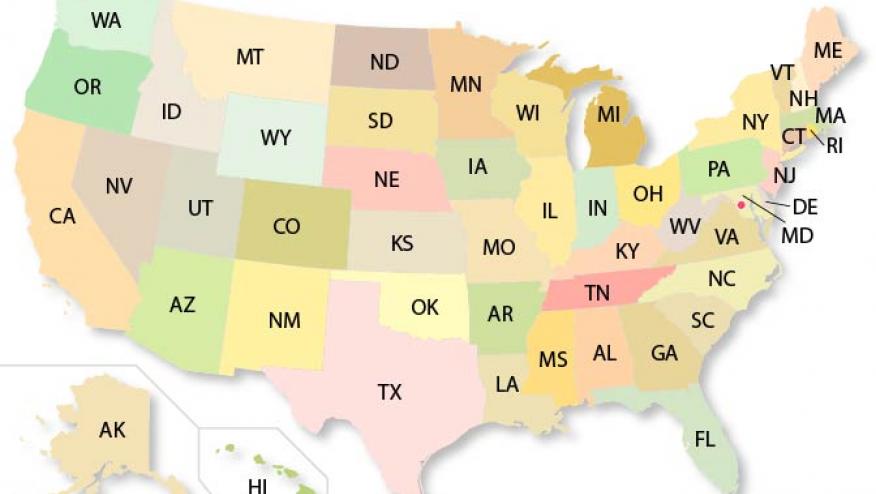
- Only four states (Delaware, North Dakota, South Dakota, and Utah) have joined the APRN Compact, with five more considering participation. This compact will not go into effect until seven states have joined the compact.
- The AMA opposes the compact, claiming it would allow APRNs to practice independently, even in states requiring physician supervision or collaboration. Also, this compact uniquely preempts state scope of practice laws, unlike other health professional compacts.
- The American Association of Nurse Practitioners (AANP) strongly opposes the compact's requirement of 2,080 practice hours. The AANP also insists the compact must include an APRN advisory committee to address practice complexities.
- Legislative: Seven states defeated the APRN Compact in 2023, and three additional states defeated it in 2024. Several states have pending legislation, but progress has been slow.
Despite these obstacles, a 2024 survey found that 86% of APRNs supported the compact, with increased patient access being the most cited reason, though the 2,080-hour requirement was the most frequently mentioned concern.
Scope of Practice
- In 2025 there are 34 states (plus DC) that have granted full practice authority to nurse practitioners. In 2025, five states—Michigan, Alabama, Louisiana, South Carolina, and Wisconsin granted full practice authority to nurse practitioners.
- In 2024, an AMA report noted 80 bills that defeated efforts to allow nonphysicians (APPs) to practice independently.
- California's Senate Bill 1451 (January 2025) streamlined the transition-to-practice framework by simplifying documentation requirements, recognizing doctoral-level clinical hours, and clarifying disclosure obligations. Also, California's Assembly Bill 1501, signed in October 2025 increases the permissible physician-to-PA supervision ratio from 1:4 to 1:8. New York extended its NP autonomy model in 2025, exempting NPs with at least 3,600 hours of qualifying practice from maintaining written collaborative agreements with physicians through July 2026 ATA.
- Texas Senate Bill 1318 extended noncompete agreement restrictions to healthcare practitioners like dentists, nurses, and physician assistants, in addition to physicians. (Specific requirements include a one-year maximum duration, a five-mile geographic limitation, a buyout option not to exceed one year's salary).
Reimbursement Hassles
Medicare pays NP and PA services at 85% of the physician fee schedule when billed under the APPs own NPI, compared to 100% for physicians. "Incident to" billing allows services to be billed at 100% under a physician's ID but requires strict direct supervision requirements.
"The author discloses that artificial intelligence was used to research and organized this content"






If you are a health practitioner, you may Login/Register to comment.
Due to the nature of these comment forums, only health practitioners are allowed to comment at this time.