


Notch and TGFβ Signaling in Refractory Rheumatoid Arthritis Save
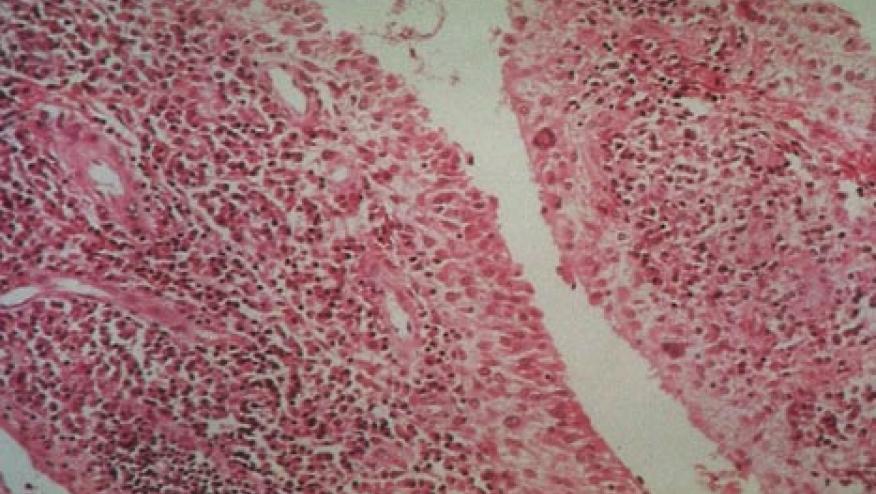
Spatial transcriptomic profiling of rheumatoid arthritis (RA) synovial biopsies (pre- and post-treatment) has revealed new insights into the pathobiology or treatment resistent RA.
The following transcript comes from an interview on this paper that appeared in Nature Immunology, “Spatial patterning of fibroblast TGFβ signaling underlies treatment resistance in rheumatoid arthritis.”
Rheumatoid arthritis (RA) is a common autoimmune disease where the body's immune system mistakenly attacks the lining of its own joints, causing chronic pain, swelling and stiffness.
While there have been remarkable advancements in the treatment of RA with an array of therapies that target inflammation, a large subset of patients (approximately 6-28%) continue to experience difficult-to-manage symptoms of disease even after receiving multiple lines of treatment. There is a critical need to identify new therapeutic approaches for patients who are refractory to existing treatment options.
Researchers focused on discovering why some people with rheumatoid arthritis don't respond well to standard treatments, by looking closely at the biology of their joint tissue. They leveraged cutting-edge spatial transcriptomics to profile over 30 joint biopsies from patients before and after they received treatment, providing us with a highly detailed “map” of joint tissues. We then asked which features within these joint tissue “maps” corresponded to a lack of adequate treatment response.
They observed an exaggerated wound healing response (fibrogenesis) in the joints of patients who failed to achieve remission. Though the treatments were effective in depleting immune populations and reducing joint swelling, they were not adequately effective at alleviating joint pain in non-remitting patients, which was linked to increased tissue scarring.
They also discovered that the buildup of scar tissue in joints happens because the normal communication between blood vessels and endothelial cells with nearby support cells, called fibroblasts, gets disrupted. If we can find ways to help these cells talk to each other properly again, we might be able to stop or even reverse the harmful scarring that leads to ongoing joint problems.
This study identified Notch and TGFβ signaling as key drivers of treatment-refractory RA. This mechanism remains unaddressed by the current therapeutic landscape and offers a novel, targetable pathway for patients resistant to existing treatments.
Advances in technology are speeding up the deep molecular profiling of patient samples, ushering in an exciting era of precision medicine for autoimmune diseases where treatment is tailored to a patient's unique molecular characteristics (such as protein levels, enzyme activity, and more). This targeted approach promises to replace the current trial-and-error treatment methods with more effective interventions, significantly improving patient outcomes and quality of life.
Authors were affiliated with the Accelerating Medicines Partnership RA/SLE Network, Accelerating Medicines Partnership: Autoimmune and Immune-Mediated Diseases Network (AMP-AIM), and the Colorado Interdisciplinary Joint Biology Program (CUIJBP) Consortium.
ADD THE FIRST COMMENT
Disclosures
Disclosures
The author has no conflicts of interest to disclose related to this subject





If you are a health practitioner, you may Login/Register to comment.
Due to the nature of these comment forums, only health practitioners are allowed to comment at this time.