


Treatment goals in gout: aim for remission! Save


Rheumatologists are used to the concept of disease remission as this is a treatment goal we use for many chronic rheumatic diseases in our clinical practice. Recently, G-CAN (the Gout and Crystal Arthritis Network), endorsed a definition of remission in gout. This work was led by Dansoa Tabi-Amponsah, a PhD student at the University of Auckland, New Zealand.
Gout remission is defined as:
- Absence of gout flares in the last 12 months, and
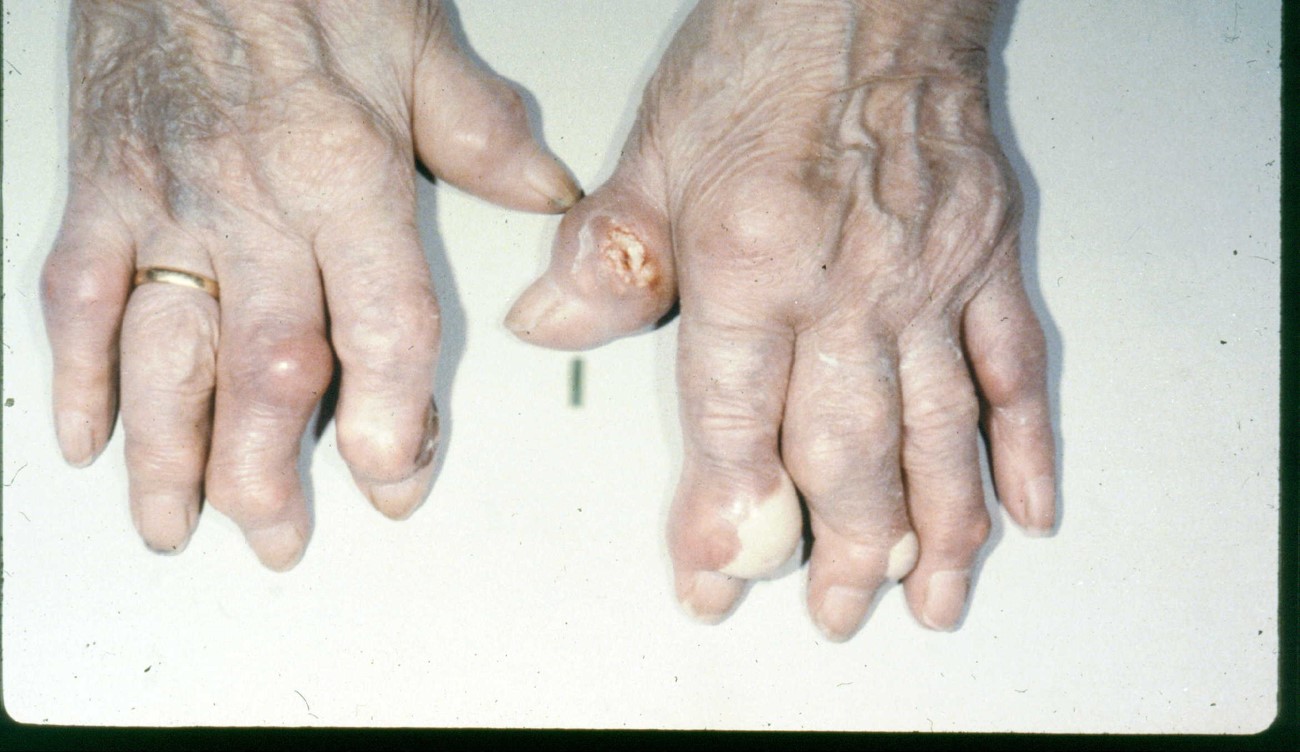
- Absence of subcutaneous tophi, and
- Serum urate <0.36mmol/l (6mg/dl)*
*measured at least twice in the last 12 months with no values ≥ 0.36mmol/l (6mg/dl)
A major strength of this definition is that it considers aspects of the disease that are important to people with gout, specifically gout flares and tophi. It also includes the serum urate target that is required for long-term dissolution of monosodium urate (MSU) crystals.
In developing this definition, we interviewed people with gout, and they described their experience of remission as minimal or no gout symptoms with freedom from dietary restrictions. Patients used a range of management strategies to maintain remission (including regular urate lowering therapy, exercise, and healthy eating). Notably, those in remission described the absence of ‘mental load’ about gout, without constant fear of having a gout flare.
The G-CAN gout remission definition was validated in a range of gout clinical trials and cohorts. It was found to have high sensitivity for identifying people in remission. More recently, in the GO TEST Overture trial of adults with gout and hyperuricaemia, who were not taking urate-lowering therapy, remission using the G-CAN definition in the second year of follow-up was achieved in 58% of those receiving treat-to-target care and 31% of those in symptom-drive care; p<0·0001 (refs). Similar findings were observed when serum urate was not included in the remission definition.
The findings of the GO TEST Overture trial indicate that remission is possible for most people with gout who are starting urate-lowering therapy. Unfortunately, achieving remission is difficult for some people, particularly those with tophi and high volumes of deposited MSU crystals. Earlier treatment with urate-lowering therapy, before development of tophaceous gout, is needed to achieve good outcomes for people with gout.
The G-CAN gout remission definition is simple to use in clinic and captures both inflammatory disease activity and MSU crystal burden. Remission is possible for the majority of people with gout, and this is the treatment goal we should be aiming for in gout management.
Key reference: Tabi-Amponsah AD, Stewart S, Stamp LK, Taylor WJ, Terkeltaub R, Dalbeth N. The Gout, Hyperuricemia and Crystal-Associated Disease Network (G-CAN) definition of clinical remission in gout. Ann Rheum Dis. 2026 Jan;85(1):186-194. doi: 10.1016/j.ard.2025.05.017.
Editor's note: For more content like this, visit our "Gout: More than Flares" page.
Related Content







If you are a health practitioner, you may Login/Register to comment.
Due to the nature of these comment forums, only health practitioners are allowed to comment at this time.