


A Tribute to Daniel L. Kastner, MD, PhD (1951–2026) Save
The Father of Autoinflammatory Disease
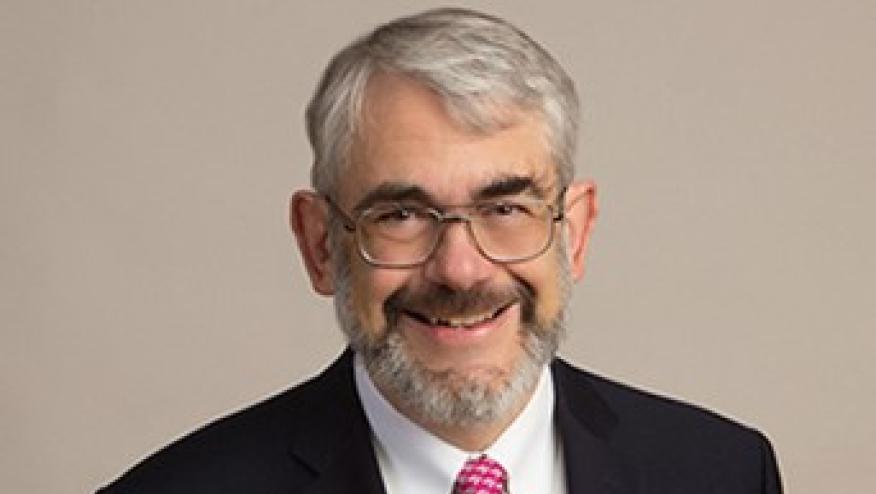
The rheumatology, genetics and NIH communities mourn for Dr. Daniel L. Kastner, who died on July 28, 2026, in Bethesda, Maryland, at age 74.
Born July 8, 1951, in Lockport, New York, Kastner earned his A.B. summa cum laude in philosophy from Princeton University in 1973, followed by combined Ph.D. and M.D. degrees from Baylor College of Medicine by 1982. After internal medicine residency and chief residency at Baylor, he joined the National Institutes of Health in 1985, where he launched a stellar career in medicine, genetics and rheumatology.
Early in his NIH fellowship, Kastner encountered an adult patient with lifelong, unexplained recurring fevers and arthritis. One patient led this inquisitive mind to an entirely new category of disease and discovery. He forged an international consortium, mapped and then cloned the gene for familial Mediterranean fever in 1997. Dr. Kastner identified the defect - pyrin and named its consequence "autoinflammatory disease."
Kastner's laboratory and dedicated collaborative researchers at the NIH went on to define the genetic basis of TRAPS, NOMID, PAPA syndrome, SAVI, CANDLE, DADA and, in 2020, VEXAS syndrome as belonging to this spectrum of autoinflammatory diseases.
He obtained his A.B. summa cum laude in philosophy from Princeton University in 1973 and a Ph.D. and M.D. from Baylor College of Medicine by 1982. After completing Internal Medicine residency and chief residency at Baylor, Dan moved to the National Institutes of Health (NIH) in 1985. At NIH, he was an NIH Distinguished Investigator, Chief of the Inflammatory Disease Section, and Scientific Director Emeritus of the Division of Intramural Research at the National Human Genome Research Institute (NHGRI; 2011–2021), and previously as Clinical Director of NIAMS and Chief of the Laboratory of Clinical Investigation.
Dr. Dan Kastner's lifelong dedication to research, discovery, mentorship, teaching and patient care brought him numerous honors, including the 2022 Crafoord Prize in Polyarthritis; the George M. Kober Medal (2024); election to the National Academy of Sciences (2010), the NIH Director's Award; the Paul Klemperer Award; the Lee C. Howley Prize for Arthritis Research; Ross Prize in Molecular Medicine (2019); and the 2018 Service to America Medal ("Sammie") as Federal Employee of the Year.
Dan leaves a gigantic legacy. Innumerable colleagues declare Kastner as not only a brilliant scientist but as a deeply humble, generous mentor—a "Renaissance physician" whose empathy for patients rivaled his scientific rigor. He leaves behind a novel field of medicine, a generation of physician-scientists, and thousands of patients whose lives were transformed by his will and influence.
The accolades and emotions attributed to Dr. Kastner are effusive. His lab, team and coworkers at NIH are profoundly sad with his passing. The online comments (largely from patients) are equally heartbreaking. One labeled him as a "Healer, Mentor and Master of Kindness".
The following are declarations, tributes, and memories dedicated to this mensch of a man, titan of science, memorable mentor and humble physician.
- Raphaela Goldbach-Mansky, MD, MHS (NIAID/NIAMS): Dan Kastner transformed medicine by establishing the field of autoinflammatory diseases, but those of us who knew him will remember much more than his extraordinary scientific accomplishments. He was a visionary physician-scientist whose intellectual brilliance was matched by his humility, generosity, wit, and unwavering dedication to his patients, trainees, and colleagues. Beyond being a visionary mentor and collaborator, Dan was a cherished friend. Every Christmas, we looked forward to hearing his familiar "Ho, ho, ho" as he appeared as Santa at his holiday party. It is hard to imagine the holidays without that joyful greeting. I will miss bringing him Stollen each Christmas and the quiet conversations we shared. Above all, Dan's legacy will live on through the field he created, the countless lives he touched, and the many of us who were privileged to know him.
- Anthony Fauci, MD (Former Director National Institute of Allergy and Infectious Diseases): With the passing of Dr. Daniel L. Kastner the scientific community and the entire world have lost one of the most impactful physician/scientists of our era. When I came to the National Institutes of Health in 1968 as a Clinical Research Fellow in training, we studied a number of “autoinflammatory diseases” such a Familial Mediterranean Fever (FMF) among others. The etiologies of these diseases were completely unknown at the time. Dr. Kastner joined the NIH in 1985 and over a period of four decades he brilliantly unlocked the mysteries of many of these diseases by his discovery of the genetic bases of FMF, TRAPS, DADA2, VEXAS syndrome and other autoinflammatory diseases. In addition, Dr. Kastner was a treasured mentor to so many young trainees who went on to important positions in academic medicine. He will be sorely missed.
- Frederick Miller, MD (NIH/NIEHS): Dan and I joined NIH as trainees about the same time, and we formed a lifelong connection and friendship lasting over four decades. I learned so much immunology and clinical medicine from him listening to his entertaining, magical talks and during our patient rounds. His enormous contributions to the field of autoinflammation are legendary, but I will remember him most for his wisdom and calm, insightful, and considerate demeanor and advice that I relied on heavily for some of my most difficult decisions over my career.
- Amanda Ombrello, MD (NIH): We all know and have read about Dan’s brilliance, his mentorship, his enthusiasm and his kindness to all with whom he interacted. I worked alongside him, leading his clinical team for 17.5 years as he had ascended to executive status at the NIH. Some of my favorite memories are when Dan and I would be discussing patients. Rather than him connecting the patients by the mutations they had, their disease name, or specific clinical features, I found that he shared a love for the “little things”, much like I do. So, we would connect the patients by the fact they worked at a deli, wore tie dyed socks at their visit, lived in Fredericksburg, Texas or had a sister who was a DJ for a radio station, to name a few. As you can imagine, our conversations with patients strayed from the typical outlined patient/physician visit, to include our dallying into these more mundane aspects of their lives, connecting with them on a level that gave them an identity to us outside of their autoinflammatory disease. And the patients noticed and loved to talk about these aspects of their lives at our visits. Dan was more to them than the brilliant scientist. In a way, by connecting with them, he became a friend. And that is a feature our team strives to maintain going forward, in his absence.
- Francis S. Collins, MD, PhD (Former Director National Institutes of Health): I can present a personal example of how inspired and inspiring Dan’s research has been. In 2014, I was invited to provide a one-on-one tutorial to President Barack Obama in the Oval Office about advances in genetics, and how they were leading to significant clinical benefits. I chose a case of a young girl with neonatal onset multisystem inflammatory disease (NOMID), and how Dan’s discovery of the genetic cause, and his determination to go from bench to bedside, led to a dramatic therapeutic advance -- anakinra. The President was quite taken by the story, and this interaction contributed to his growing interest in precision medicine.
- Ivona Aksentijevich, MD (NHGRI/NIAMS): on Dr. Kastner’s life and legacy, I would like to express my thoughts on working with Daniel for the past 35 years. I was his first postdoc, and we worked together in the lab and clinic. I learned so much from him in the best way possible! Dr Kastners scientific legacy is extraordinary, bit for those of us who had the privilege of learning from him, his greatest gift was making us believe that we, too, could succeed. Daniel’s mentorship was never about demonstrating how much he knew; it was about helping others grow. His positive spirit and unwavering belief in the potential of others created an environment where learning felt exciting rather than intimidating.
- Scott Canna, MD (CHOP): Bright, warm, and illuminating, Dan was a star. Those of us who ventured into his orbit left it moving faster and in an exciting new direction.”
- Michelle Petri, MD (Johns Hopkins): The voice!! The big booming voice!! We knew Dan was in the room before we could see him.
- Artie Kavanaugh, MD (UCSD): I remember first meeting Dan in the winter of 1984. At the time, I was interviewing for internal medicine residency. When I got to Baylor Medical School in Houston, Dan, who was chief resident at the time, was leading a tour for interviewees through the old Ben Taub hospital. The tour was great; Dan was so positive and upbeat, and seemed like he was really trying to get all the applicants excited about possibly coming to do internship at Baylor. I remember during the tour, Dan taking us into an elevator - talking the whole time about the hospital and the program. When the elevator stopped, there was a man laying on the floor apparently having a severe generalized seizure! Dan was the only one who didn't seem troubled; - he kept on with his tour highlights and stepped over the man walking backwards. As he did, he interrupted the tour for just a second, looked down at the man convulsing, and said "Hi Sweetcakes". Immediately, the man stopped shaking, raised his head slightly, and smiled up at Dan saying, "Oh hi, Dr Kastner". Then, just as quickly, he put his head back down and started shaking again! The dozen or so applicants, all in our gray flannel suits, were stunned. But Dan kept on with the tour, pointing out where the ICU was, where the call rooms were, and other details. He never missed a beat! Of course, I did my internship and residency at Baylor! The patient was an incredibly nice if somewhat eccentric 'frequent flier' in the ER and wards at Ben Taub. What shone that day was how all of the patients... and the staff... and the other trainees... and the faculty... all loved and respected Dr Kastner. Thereafter, during residency, I would see Dan again, as he did his rheumatology fellowship at Baylor, with Dr Martin Lidksy. I think Dan really took to heart all of the great attributes Dr Lidsky offered all of us; his professionalism, his dedication, his intense focus on the patients. It was always a pleasure to work together with and learn from him. From Baylor, he went on to achieve further greatness as one of the truly outstanding rheumatology researchers at the NIH. Vaya con Dios, Dan. You will be missed.
- Dennis McGonagle, FRCPI, PhD: Nature reviews Rheum asked me to do a 20th anniversary from PLoS Med 2006 paper that I did with Michael McDermott who found TRAPs gene in Dan’s lab that lead to new word that Dan coined -“autoinflammation”. Below you will see the message that Dan sent me. That was last contact but our paper with Dan as middle author makes me so proud -to be on the same page -if only in text! Comment below- “Autoimmunity dominated the late 19th and all the 20th century, and many great names have contributed to the concept. In the late 20th century and henceforth, the genetic discoveries and insights of one man, that is Dan Kastner, has transformed the understanding of innate immune driven diseases. Dan and his team, who discovered multiple genes for innate immunopathology under the rubric of “autoinflammation” and this has facilitated great strides in clinical medicine and therapeutics. Thanks to Dan, the “horror autoinflammaticus” concept shares a square footing with “horror autotoxicus" leading to a global view of immune mediated disease." Thanks for asking my opinion. I was humbled by Dan’s great warmth towards me and my family in early 2026 in the face of such adversity and agreeing to co-author an article on the implications of his life’s work.
- Eldad Ben-Chetrit MD (Hadassah - Hebrew University Medical School): He dedicated his life to identify and cool the fire of autoinflammatory diseases with brilliant logic, yet he left our hearts burning with the eternal warmth of his modesty and kindness.
- Ron Laxner, MD (Toronto Hospital for Sick Children): In addition to Dan’s brilliance, creativity, curiosity, visionary and joyful personality, I want to comment on his mentshlichkeit, a Yiddish word describing humaneness, decency and kindness. He gave generously of his time and spirit, and one always felt uplifted after meeting him. He changed the course of my career and so many others and through all these people improved the lives of tens of thousands of people the world over.
- Arthur Weinstein, MD: Dan was a brilliant physician who epitomized the "bedside to bench and back to bedside" rubric with extraordinary benefit for patients with autoinflammatory diseases and for rheumatology.
- Peter E. Lipsky, MD (AMPEL BioSolutions): Dan Kastner was a brilliant and productive scientist, the father of the field of autoinflammatory disorders. Despite his scholarliness and enormous productivity, he approached science with an enviable humility but also remarkable bravery. As Carl Sagan noted, “Modern science has been a voyage into the unknown with a lesson in humility waiting at every step. Many passengers would rather have stayed home.” Dan would never choose to shrink from the challenge. He never lost the sense of wonder at scientific discovery, never lost his sense of humility at the complexity of science and always maintained the bravery to follow new discoveries to their logical conclusion, even when that meant learning a whole new area of biology. From FMF to VEXAS, Dan identified causative genes of numerous autoinflammatory conditions and looked forward to finding causes and treatments for the many other patients with recurrent inflammation of unknown causes he followed. Without cynicism or arrogance, he pursued research with a child-like enthusiasm that should be an inspiration and model for all young people beginning careers in science and established scientists as well.
- Mary K. Crow, MD (HSS): Dan was an extraordinary scientist, but more than that, he was a rare and special human being. I’ll mention my two most frequent recollections – very distinct memories, both reflecting Dan’s humanity. Every time I think of Dan, I remember the ACR meeting many years ago when he brought his young son to accompany him to the lecture room. Dan’s son was spirited and stood out for his gold shoes – white bucks that he had spray-painted gold. Dan, the proud father, and son, the creative and unique adolescent, represented the joyfulness of what was clearly a wonderful family. The second memory is of the email note Dan sent to some of us the week he received his fateful diagnosis. What was remarkable was his sense of responsibility. The note was apparently sent to those to whom he had made a commitment to complete a task – work on a chapter, manuscript, or some other assignment. He had such presence of mind and sense of duty that could break through what were surely more compelling priorities in order to communicate with his colleagues. But even more striking and a measure of the person Dan was, was his honesty and transparency about the significance of the news that he had received that week. Dan was the best of us.
- James O'Dell, MD (Univ. of Nebraska): Dan was obviously a truly brilliant scientist, but what made him so special was his passion for his patients with rare diseases and their families. So many patients and so many of us Dan’s colleagues are far better off and smarter because of Dan. The world has lost a truly remarkable scientist and humanitarian.
- Michael J. Ombrello, MD: For nearly two decades, Dan Kastner shaped the way I think about science, medicine, mentorship, and ultimately, life. He had an extraordinary ability to see patterns that others missed, but what I will remember most is not his brilliance; it will be his unwavering commitment to the people he trained and the way he made them feel. He expected rigor, intellectual honesty, and your very best work, but he also gave his time generously and made even junior investigators feel that their ideas were worthy of serious consideration. I cannot count the number of times I walked into his office convinced that I was facing an insurmountable scientific problem and walked out believing not only that it was solvable, but that I was the person who could solve it. That was one of Dans greatest gifts. He instilled confidence without lowering expectations, and he made those around him believe they were capable of more than they imagined. Many of us will continue to hear his voice asking one more question, pushing us to think a little deeper or design a better experiment. His scientific legacy is immense, but for those of us fortunate enough to have trained and worked with him, his greatest legacy is the way he changed how we think, how we mentor, and how we aspire to care for our patients.
- Philip J. Hashkes, MD (Jerusalem): Like many others, I was inspired by Dan professionally and personally and mourn the loss of a close friend and colleague I've known for more than 20 years. I will sorely miss his wisdom, wit, and humanity. It is impossible to write about Dan many achievements in one paragraph, but I wish to emphasize a perhaps less known aspect of his life, his connection and love for Israel demonstrated by his actions more than by his words. Dan's career in autoinflammation started in Israel during the late 1980s, spending several months collecting samples from Prof. Pras's patients with FMF. He visited Israel many times, mostly professional, but also personally. In one of these professional trips in 2018, he gave the keynote address in the PReS educational meeting on autoinflammation organized by Prof. Uziel and me, directly across from the Old City walls in Jerusalem. In perhaps his last visit to Israel, several months before the October war, we hosted Dan’s family for a holiday dinner during Passover. Dan's discoveries, especially on FMF, PFAPA and DADA2, directly benefited tens of thousands of patients in Israel, proportionally greater per population than probably any country in the world. I wish to conclude with an anecdote regarding the historical implication on the Jewish people of one of Dan's important discoveries into the function of the pyrin inflammasome. Dan discovered that common pathogenic MEFV (FMF) mutations are protective against the Yersinia bacteria which caused the “black” plagues and death in medieval Europe and were likely "born" in the Middle East about 2500 years ago, around the time of the destruction of the first temple in Jerusalem. The Jews, many of whom survived (and thanks to Dan, we know why), were often blamed for causing this epidemic and underwent persecution, torture, pogroms, and expulsions throughout Europe. In retrospect, I believe his discovery explains, at least partially, the background for the calamity suffered by the Jewish people.
- Elaine F. Remmers, PhD (NIH): When Dan Kastner made me a part of his rheumatic disease genetic research group, he convinced me to take on identifying genetic variants that contribute to genetically complex rheumatic diseases. At the time, genome-wide association studies were just becoming possible. With his forward-looking support, motivation, and encouragement, we successfully identified disease-associated variants in rheumatoid arthritis, systemic lupus erythematosus, Behçet’s disease, juvenile rheumatoid arthritis/Still’s disease, and scleroderma. He was a truly inspiring mentor and colleague who leaves a lasting legacy.
- Dr Guilaine Boursie (Infevers & SAID Genetics team): Dan Kastner was a guiding force for our team. His support for Infevers and his dedication to advancing the understanding of autoinflammatory diseases inspired and shaped our work over the years. We will remember him with deep gratitude.
- Susan Shenoi, MBBS (Univ. of Washington): Dan Kastner is a true giant of modern rheumatology—not only as the undisputed father of autoinflammatory diseases, but as an extraordinarily kind, and generous mentor/ physician. I first met Dan in 2007 when I was a rheumatology fellow in Seattle. As he was teaching us, our nurse leaned over and whispered, "Susan, look at his eyebrows!" From that exact moment on, all I could focus on was how wonderfully expressive and emotive his big, bushy eyebrows were as he spoke with such infectious passion. Beyond his brilliant mind and transformative scientific discoveries, that have helped so many patients and families, Dan has always been remarkably accessible—always willing to lend his wisdom and help us navigate our most complex, challenging autoinflammatory patients. He leaves an incredible legacy of genius, humanity, and heart. RIP.
- William Harvey, MD (Tufts; ACR President): Dr. Kastner was a brilliant physician scientist, responsible for a body of work that transformed both adult and especially pediatric care. The lives and health of countless children have been improved by his seminal discoveries in periodic fevers. Though he will be sorely missed, his work and legacy will live on through the work of his lab and the investigator’s he’s trained.
- Jonathan Kay, MD (U. Mass): Dan Kastner made foundational contributions to understanding the clinical presentation of autoinflammatory syndromes and their genetic basis. He was a very kind and generous person who was always willing to help other rheumatologists manage patients with these conditions. He was very helpful by performing genetic testing for patients with recurrent febrile illnesses. Dan’s signature feature was his prominent eyebrows, which were a tribute to his mentor at NIH, Dr. John Decker. Once when I was riding to the airport in a car in which Dan had ridden before me, the driver asked: “What’s up with that guy’s eyebrows?“ immediately, I realized that he was talking about Dan and I told him about Dan's important clinical and scientific contributions.
And oh, those spectacular eyebrows!
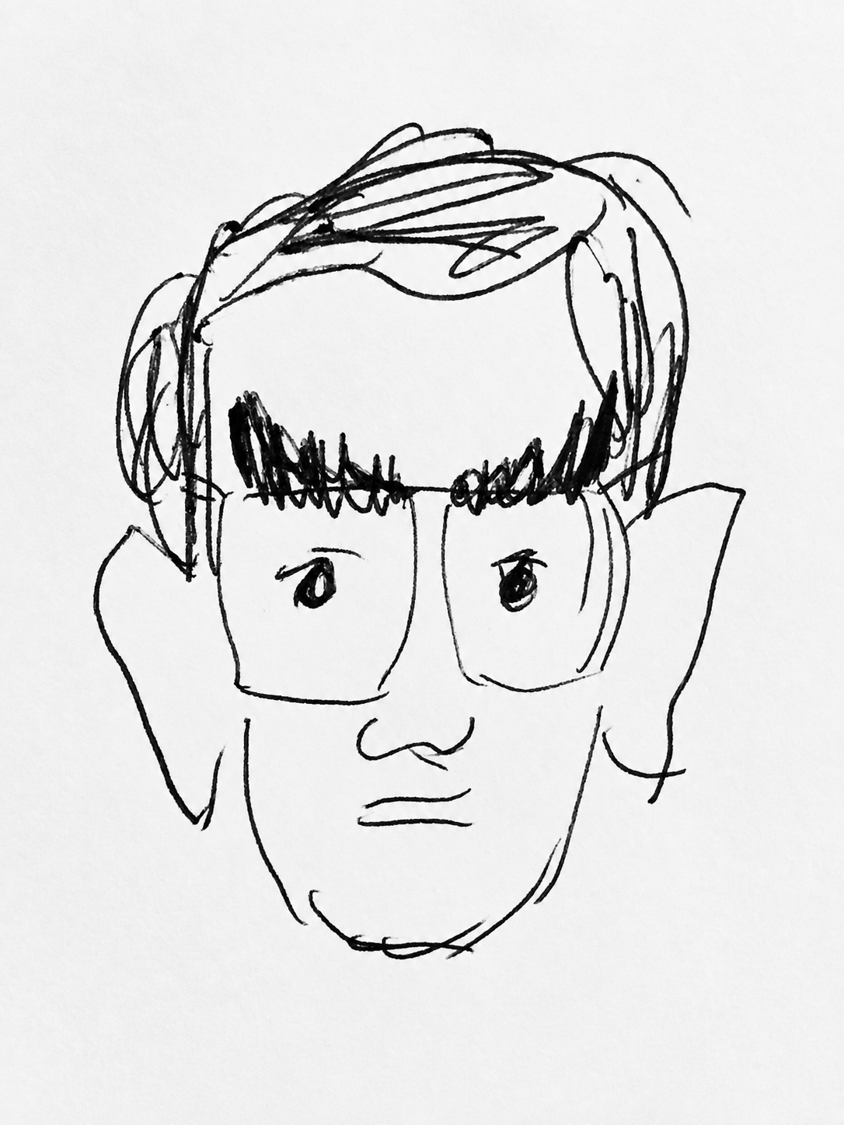
Caricature by Dr. Jonathan Kay
Related Content
ADD THE FIRST COMMENT
Disclosures
Disclosures
The author has no conflicts of interest to disclose related to this subject





If you are a health practitioner, you may Login/Register to comment.
Due to the nature of these comment forums, only health practitioners are allowed to comment at this time.