RheumNow Podcast- Half-Empty Flu (2.21.20)
Dr Jack Cush reviews the news and journal articles from the past week on RheumNow.com

Search for Terms or Answers
Dr Jack Cush reviews the news and journal articles from the past week on RheumNow.com
Fourteen cases reported from mainland China suggest that tofacitinib (TOFA) may be effective in patients with refractory adult-onset Still’s disease (AOSD), further adding to a growing list of potential use of JAK inhibition in managing inflammatory, and now autoinflammatory, disease.
Although the overall incidence rates of rheumatoid arthritis (RA) have remained stable over recent decades, there has been a significant increase in seronegative cases, a retrospective study showed.
Science Translational Medicine has a report on how the use of Janus kinase (JAK) inhibitors may boost osteoblasts to battle bone erosions in conditions like rheumatoid arthritis (RA).
A national claims-based analysis has shown a consistent decline, by commercially insured adults (18-64 yrs), in primary care physician visits from 2008 to 2016; with nearly one half having no PCP visits in a given year by 2016.
A report from The National Databank for Rheumatic Disease addressed the impact of alcohol on disease activity and mortality in rheumatoid arthritis (RA) and found that alcohol use was not associated with changes in disease activity or mortality, after addressing confounders.
Recent research from the Lown Institute reports that 750 older Americans are hospitalized daily because of serious side effects from and the core problem is that of polypharmacy, especially in the elderly.
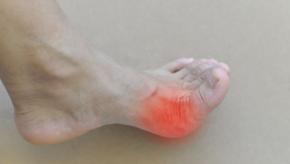
Both allopurinol and febuxostat (Uloric) were associated with an increased risk of hypersensitivity reactions among new users of these urate-lowering therapies, a large U.S. study found.
A registry study of metric use (primarily RAPID3 and CDAI) in the treatment of rheumatoid arthritis (RA) patients shows that, even in the face of moderate or high disease activity, treatment changes by rheumatologists were relatively low (35.6–54.6%).
By downloading this material, I acknowledge that it may be used only for personal use and personal education and that I will accredit RheumNow.com as the source and owner of this material. Commercial use or mass reproduction of this material without permission from RheumNow (info@rheumnow.com) is prohibited.