CDC Updates Arthritis Numbers
The Centers for Disease Control and Prevention (CDC) routinely surveys the population prevalence of certain chronic disorders, including arthritis.

Search for Terms or Answers
The Centers for Disease Control and Prevention (CDC) routinely surveys the population prevalence of certain chronic disorders, including arthritis.
Interchangeability is a major issue that will determine the success of biosimilars.
Idiopathic inflammatory myopathies (IIMs) may be complicated with life-threatening conditions requiring intensive care unit (ICU) admission. The outcomes of such complications may be dire, but there are few series addressing the outcomes of those admitted to the ICU.
Silverman and a panel from the IOF Fracture Working Group reviewed the data and trials to develop guidelines for the use of osteoporosis medications after incident fractures or to treat delayed fracture healing.
Doshi and colleagues have conducted a retrospective claims analysis (2009 through 2012) of psoriasis patients on Medicare to examine the use and adherence to those initiating treatment with either infliximab, etanercept, adalimumab, or ustekinumab.
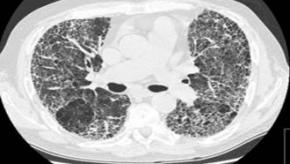
Like other extraarticular manifestations, rheumatoid (RA) or connective tissue disease (CTD) related interstitial lung disease (ILD) is difficult to identify early and equally challenging to treat.
It is important to know where you’ve been, as it will most certainly color where you are going. Hence, in honor of our 1st year anniversary, we have taken note of our most popular articles.
Doctors have an interesting problem. They have an ingrained professional obsessive-compulsive habit; they fixate on the care of individual patients and on the science of healing. This is an admirable trait; it results in high-quality care. However, when physicians need to change their attention from healer to leader, from medicine to the business of medicine, from healthcare to the healthcare system, they falter. Stuck in silos, they fail to adjust their focus. They resist systemic innovation. Because they cannot flip, they flop.
Watch Dr. Jack Cush cover ten highlights from this week on RheumNow.com.
Numerous guidelines (ACR, ACIP/CDC, ATS, NICE) all call for timely vaccinations in patients with rheumatoid arthritis (RA) and those receiving immunosuppressives or biologics.
Alpha defensins are released following apoptosis, necrosis, or netosis of human neutrophils. They are taken up by other cells and microbes, wherein they permeablize membranes and kill microbes and host cells. Thus, they augment the antimicrobial capacity of macrophages and at the same time inhibit the biosynthesis of proinflammatory cytokines.
Posterior reversible encephalopathy syndrome (PRES) is a rare neurological disorder with many associations or causative factors that rarely includes autoimmune disorders and lupus.
Amidst a stringent regulatory environment, and with the rising use and abuse of narcotics and increasing regulation limiting narcotic analgesic use, the FDA approved (August 2015) the use of extended-release oxycodone in children (11 to 16 years old) with severe, "around-the-clock" pain
Markusse and investigators from The Netherlands have reported their 10 year results of treating early rheumatoid arthritis (RA) patients using targeted treatment strategies.
Harvey and coworkers reported the results of subjects followed in the Reykjavik study, demonstrating that a first osteoporotic fracture was followed by an increased risk for a second fracture, both immediately and over time.
By downloading this material, I acknowledge that it may be used only for personal use and personal education and that I will accredit RheumNow.com as the source and owner of this material. Commercial use or mass reproduction of this material without permission from RheumNow (info@rheumnow.com) is prohibited.