

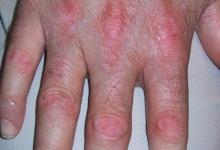
Virtual Biopsy in Cutaneous Lupus
Dr. Sheila Reyes reports on abstract OP099 presented at the 2026 EULAR meeting in London
Transcription
Hi, I'm Sheila Reyes from the Philippines reporting here in London for EULAR 2026. In this video, I will be sharing a study I found interesting that was presented on day one during the clinical abstract sessions on diagnostic tools in lupus. It's abstract OP099 presented by Dr. Rebecca Ventura.
So they did a pilot study using line-field confocal OCT to characterize features of cutaneous lupus. And they also explored whether this novel imaging technique can distinguish between acute cutaneous lupus and rosacea, which is one of the common differentials with acute cutaneous lupus.
Their study included 45 participants, a small sample size. 30 patients with cutaneous lupus varying from acute, subacute to chronic lupus. And 15 were patients who had rosacea, and also a control group who underwent clinical and LC-OCT imaging.
Based on the results, the LC-OCT was able to characterize layer-specific patterns in cutaneous lupus. So the results show that number one, in the epidermis, compact hyperkeratosis and epidermal atrophy were more present in chronic cutaneous lupus, while the civatte-like bodies were more abundant in both the acute and subacute lesions. Meanwhile, in the dermo-epidermal junction, findings of DEJ disruption, basal cell vacuolization and interface dermatitis were characteristic of acute and subacute LE lesions. Inflammatory infiltrates in the dermis were seen in all CLE types, while fibrotic changes were observed more in the chronic lupus subtype.
And when comparing acute cutaneous lupus with rosacea, DEJ disruption, band vacuolization, interface dermatitis and civatte-like bodies were strongly associated with acute cutaneous lupus. While in rosacea, dilated vessels, perivascular infiltrates and the presence of the mites were characteristic of rosacea.
These results highlight a potential role for non-invasive imaging such as the LC-OCT in cutaneous lupus disease activity, which may provide an alternative option to skin biopsy, especially considering that skin biopsy is an invasive technique. Although the population is small, there is still a need for more robust data and more studies long-term, and probably randomized, to elucidate its impact on disease activity monitoring and prognostication.
Follow me on X at RheumNow and tune in to RheumNow for more updates on EULAR 2026.
So they did a pilot study using line-field confocal OCT to characterize features of cutaneous lupus. And they also explored whether this novel imaging technique can distinguish between acute cutaneous lupus and rosacea, which is one of the common differentials with acute cutaneous lupus.
Their study included 45 participants, a small sample size. 30 patients with cutaneous lupus varying from acute, subacute to chronic lupus. And 15 were patients who had rosacea, and also a control group who underwent clinical and LC-OCT imaging.
Based on the results, the LC-OCT was able to characterize layer-specific patterns in cutaneous lupus. So the results show that number one, in the epidermis, compact hyperkeratosis and epidermal atrophy were more present in chronic cutaneous lupus, while the civatte-like bodies were more abundant in both the acute and subacute lesions. Meanwhile, in the dermo-epidermal junction, findings of DEJ disruption, basal cell vacuolization and interface dermatitis were characteristic of acute and subacute LE lesions. Inflammatory infiltrates in the dermis were seen in all CLE types, while fibrotic changes were observed more in the chronic lupus subtype.
And when comparing acute cutaneous lupus with rosacea, DEJ disruption, band vacuolization, interface dermatitis and civatte-like bodies were strongly associated with acute cutaneous lupus. While in rosacea, dilated vessels, perivascular infiltrates and the presence of the mites were characteristic of rosacea.
These results highlight a potential role for non-invasive imaging such as the LC-OCT in cutaneous lupus disease activity, which may provide an alternative option to skin biopsy, especially considering that skin biopsy is an invasive technique. Although the population is small, there is still a need for more robust data and more studies long-term, and probably randomized, to elucidate its impact on disease activity monitoring and prognostication.
Follow me on X at RheumNow and tune in to RheumNow for more updates on EULAR 2026.





If you are a health practitioner, you may Login/Register to comment.
Due to the nature of these comment forums, only health practitioners are allowed to comment at this time.