


Seeing more or seeing too much? Ultrasound vs MRI in preclinical RA Save

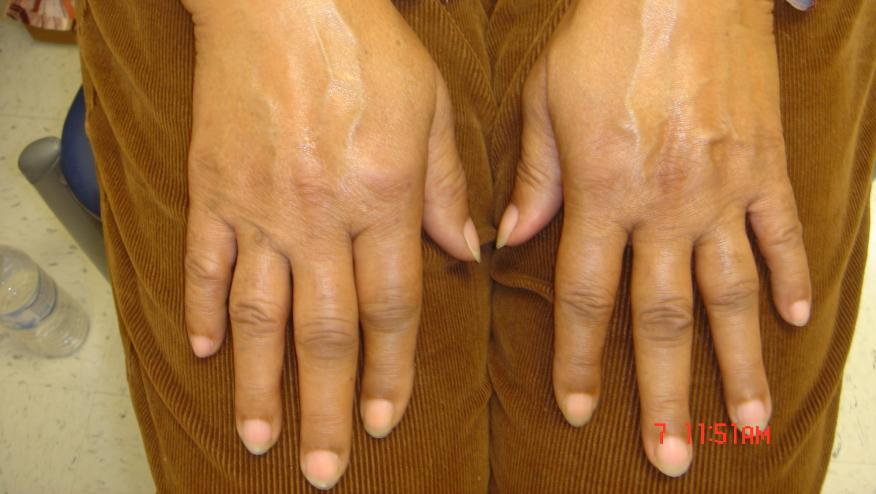
Imaging in the preclinical phase of RA is moving fast—arguably faster than our ability to interpret what we are actually seeing. Across EULAR 2026 abstracts, a consistent theme emerges: we are improving detection of subclinical inflammation, but still struggling to determine what level of detection is clinically meaningful.
Here is a summary of what these studies collectively add to the ongoing debate around US versus MRI in at-risk RA patients.
In abstract OP0346, van der Kaaij and colleagues compared modified Dixon MRI with ultrasound for detecting tenosynovitis in individuals with clinically suspect arthralgia (CSA). Using a same-day head-to-head design across 975 tendon sheaths in 65 patients, they demonstrate a clear discrepancy between modalities. A 5 minutes non contrast mDixon MRI sequence identified substantially more tenosynovitis than US, particularly in MCP flexor and wrist extensor compartments. When MRI is taken as reference, US sensitivity was low (as little as 0–33% depending on tendon group), although specificity remained consistently high at 100%. This raises the question of whether current US-based definitions of tenosynovitis underestimate early inflammatory burden.
To answer this, Di Matteo and colleagues looked into prognostic value of these abnormalities OP0347. They examined MRI-detected tenosynovitis in CCP-positive at-risk individuals and its relationship to progression to inflammatory arthritis. In a prospective cohort of 130 patients followed for a median of three years, MRI abnormalities were highly prevalent in both US-positive and US-negative groups. While US positivity remained the strongest independent predictor of progression (HR 2.8), MRI-detected hand tenosynovitis also independently associated with risk of progression (HR 1.2). However, a key observation was that in ultrasound-negative individuals, MRI features did not add meaningful predictive signal. In other words, MRI detects more inflammation, but its added value appears context-dependent rather than universal.
Together, these studies suggest our challenge is not simply choosing between US and MRI, but determining what level of imaging sensitivity is clinically informative and a helpful tool for our practice.





If you are a health practitioner, you may Login/Register to comment.
Due to the nature of these comment forums, only health practitioners are allowed to comment at this time.