

Upgrading & Maximizing the Classics Save

Panelists: Dr. Angelo Gaffo Dr. Lisa Stamp Dr. Michael Pillinger Dr. Ted Mikuls Dr. Jack Cush (moderator)
Transcription
Hello everyone. Welcome to Tuesday night rheumatology. Another great session on gout. Tonight we talk about updating and maximizing the classics. We're not talking about your record collection. We're talking about your use of gout therapy, mostly on your urate-lowering therapy, but all things will be considered in this session. I want to thank our support from Sobi in sponsoring our gout campaign month in July. We've had a lot of great content that's been up on the website. If you haven't read some of these articles, they're really, really great, like why you get attacks at night, and advice on dosing. And really it's a never-ending stream. I think you'll enjoy the content we've done.
Now this is the third Tuesday night rheumatology webinar on gout. We have one more next week that we'll close with and talk about. Tonight I want you to know that your involvement and the audience is important to us. Hence we want you to use that Q&A box on Zoom. Click on that when you have a question and we'll interject that into the discussion with our panel of experts.
With that said, let me introduce our panel of experts. I'm Jack Cush from Dallas, Texas. I'll ask them to introduce themselves. Angelo.
Good. Hello, Jack, and thanks for bringing me here. I'm Angelo Gaffo. I'm from UAB, University of Alabama at Birmingham, at the Birmingham VA Medical Center.
And Michael.
Hi everybody. It's great to be here. My name is Michael Pillinger. I am at NYU Grossman School of Medicine right here in New York City, and I am thrilled to be with this particular group of great goutologists.
Ted.
Hi. Thanks again for inviting me, Jack. It's very nice of you. Ted Mikuls at the University of Nebraska Med Center in Omaha.
And from the other side of the world where it's nice and warm. Lisa.
Thanks, Jack, and thanks for inviting me. It's great to see my US colleagues online. And I'm Lisa Stamp. I'm a rheumatologist at the University of Otago, Christchurch, and Health New Zealand. And even though it looks like I'm in the nighttime, it's actually 11 o'clock in the morning here.
Excellent. Okay. So as the audience knows, we prepare these discussions with a survey of rheumatologists — it's a one-time email invite. We had 220-plus responses that came in within a few hours from 41 countries, about 58% from the US. Our respondents were, as in the past, 88% rheumatologists, 6% nurse practitioners and physician associates, and a few fellows and a few others. Don't you want to know who the others are? When we ask them where they practiced, we have an even split between private practice at 46% and academic centers and hospital-based physicians at 44%. About 6% of our colleagues are retired, and again we have about five or six percent who are in training.
So we asked them right off the bat — or I asked all of you right off the bat — what drugs, as far as gout management, do you have concern about? The question was: which gout drug has the greatest toxicity risk, asking you to declare amongst these five choices. The runaway winner on toxicity was steroids, according to our colleagues, at 49%. At 18% it was allopurinol, 13% probenecid, and febuxostat at 6%.
I find this a little surprising. The one thing that I found really kind of interesting was probably not much difference as far as toxicity between — I think it's colchicine and allopurinol and probenecid, actually. I think it's allopurinol and probenecid at 13% and colchicine at 19%. Allopurinol is felt to be more risky than febuxostat, 13% versus 6%. What does our panel think about this? I'll ask each of you just to pick one of these responses and share what strikes you, starting with Lisa.
Yeah, I'm surprised by the allopurinol-febuxostat issue as well. I'd have far more concerns about febuxostat than allopurinol, but that probably reflects the amount that we use allopurinol and, you know, I don't see that many problems with it. But I know there are a lot of people out there who remain really concerned about its use and the toxicity syndrome, despite the fact that it's really rare.
Angela, what do you think?
Yeah, I share Lisa's comment. There's a perception that allopurinol is more problematic than febuxostat, especially sometimes when you add the context of the high frequency of chronic kidney disease — people tend to get more worried sometimes. And allopurinol was initially commercialized as a very safe medicine, in the context of advancing. Now the STOP-Gout study that Ted and his colleagues led demonstrated very well that the incidence of adverse events between allopurinol and febuxostat was completely comparable, even in advanced CKD. So we have practice experience — many of us use a lot of allopurinol — and now we also have very good data supporting that both medicines are probably equally safe. Equally safe.
Michael, what strikes you about this answer?
Um, so
in terms of the discussion of allopurinol, I think I have an insight here, which is that the term "greatest" maybe needs to be unpacked a little bit, because it can be most common or it can be most fearsome. And I imagine that many of our participants here who answered this question are worried about allopurinol hypersensitivity syndrome, which is indeed very fearsome but also extremely rare. So that needs to be balanced, and I think, you know, if time permitted, one of the things that I would want to talk about is the issue of how do you actually lower the risk of that down to almost nil.
Lisa helped guide us with that with a seminal paper a number of years ago about the idea of titrating allopurinol from a low dose to a higher dose. That is where that comes from. So thank you, Lisa. Which also prevents inadvertent overdose, and then there is the genetic issue, which is again something we can do in high-risk patients. So that by the time you conscientiously get to starting allopurinol, if that was the concern, you can get that down to — I can't say zero, but pretty darn close to a 0% risk if you just pay attention. But I have seen a couple of horrific examples that would make me think that allopurinol has a great toxicity risk when it happens.
So Ted, you can comment on this as well, but I want to go ask about steroids. Does that predominant answer of steroids being maybe the greatest toxicity risk indicate maybe why they don't use steroids? Or does it indicate that it's what they observe and they still use it? What's your feeling on the steroid issue as well?
Well, I mean, I think steroids — as rheumatologists, we use a lot of steroids and we all have great respect for what we can do adversely with steroids, and we spend a lot of our time trying to dance around that and minimize that risk. And you know, when you think of gout, you can't help but think about cardiometabolic morbidities, and we're certainly not helping that when we use lots of steroids. So I understand that risk, and I think generally most of us try to use it as sparingly as possible, but it's still a very effective and very important drug for the arsenal. So I get why it's there.
Since it came up, can you give us a brief summary of the Stop Gout trial that you led? Oh, the Stop Gout trial, sorry. Yeah. So we did a study comparing allopurinol and febuxostat with both drugs dosed in a treat-to-target fashion. It was a non-inferiority study, and the drugs indeed proved to be non-inferior to each other. And as was mentioned by Angelo, the toxicity profiles of those agents, when they're used that way to target a goal, had very similar toxicity profiles. And what Angela was talking about is that a third of the study population had moderate CKD, CKD stage three. And those patients actually did quite well — there was really not a big safety signal difference in those patients between allopurinol and febuxostat, which I think is notable, because that's a patient population that I think many people have tried to stay away from with allopurinol because of perceived risks. And I think it fits quite well with data that Lisa's group had published earlier, that you can use allopurinol safely in that patient population.
Yeah. So I think this concern about allopurinol versus febuxostat stems from the febuxostat development trials and everything that ensued after that — you know, there was the FAST trial, the CONFIRMS, the Stop Gout, and more recently CARES. And so we asked the audience about this issue of what drug should they be using in the face of ischemic heart disease, and sort of the runaway answer on this was allopurinol at 86%, with 8.6% choosing febuxostat.
Now again, if you followed this data, there was a seesaw effect in that — oh, there is more worry with febuxostat; oh no, there isn't with febuxostat and it's more with allopurinol; no, it swings back, and whatnot. So let's ask our panelists here. Is this answer well-founded? And let me start with Ted. What do you think? Is this well-founded?
Surprised by this, to see this, honestly. I'll just go against the audience — I don't think it's well-founded, because I really think the data suggests — so the CARES study, which showed this difference in cardiovascular risk, has been picked apart quite extensively in editorials and literature. The vast majority of cardiovascular events that were seen with febuxostat occurred well after patients were off study drug. There were a lot of issues with that study. And the FAST study, as you mentioned, was done afterwards and was really quite reassuring. And I think the thing that's missing here, Jack, is I don't see a piece of the pie for placebo. And I say that because we're making a decision about urate-lowering therapy. And I would argue — I don't have the
data to back it up, but I would argue that treating someone with nothing is far worse. You know, so I I I I don't understand sort of the discrepancy in this answer.
I will say if I might, Jack, to support Ted, that there was a recent targeted emulation study by uh Abhishek's group um which didn't distinguish between allopurinol and febuxostat. Most of the patients were on allopurinol uh and and treatment and urate lowering uh clearly looks like it goes with at least some lowered cardiovascular risk, which again in none of these other head-to-head studies was there in fact a placebo. Uh so we we didn't know the difference. It it it may just bear noting that unless it's changed, to my knowledge, the black box warning still exists from the FDA on the package insert. So I suppose from a medical legal point of view, perhaps you would be justified saying, I'd rather not, you know, fight what the package insert uh says if I ever had to go to court. But I I think the data has been overwhelming that um that the story just doesn't stand with allopurinol versus febuxostat.
So the Abhishek paper was covered in the first week and it showed a really small difference um if you uh achieve target versus those who didn't achieve target. But that small 1% or 10% depending on how you look at the data um means a tremendous amount when you consider worldwide 55 million people who have gout and um so that's why it is gigantically important. Uh Angela, what's your your take on this and um what people and maybe you could explain the um the package insert comment that Michael brought up.
Yeah. Um so my my my overarching take is a kind of a little bit rephrasing what Ted said. Uh there is nothing worse for uh ischemic heart disease risk in gout patients than having poorly controlled gout. Uh the the uh the it looks like the risk of cardiovascular gout is driven by flares and inflammation and and the period post flare seems to be particularly risky uh in in in patients with gout and and in a in a very obvious way patients who have poorly controlled gout with not with underutilization of urate lowering therapies are going to have more flares. So this issue of allopurinol versus febuxostat, it's an interesting question but but I think that again the issue that there never was a placebo control to to tell us you know like the risk of actually not being treated is even worse, it's it's probably a very very good point.
Uh now when when febuxostat was was being developed there was this kind of very minor safety signal that that the the FDA asked uh at that time Takeda pharmaceuticals to to continue to do a phase 4 study to look at the cardiovascular safety of allopurinol versus febuxostat and this they they did it comparing it with allopurinol with no placebo arm. Of course, you know, you cannot keep gout patients on placebo for years and years. That's probably might be unethical. Uh and in general, the the the the whole kind of black box warning was tied around a a secondary result because the primary outcome was was not different. Uh and most of the secondary outcomes was not were not different. And I think the total number of deaths uh were were somewhat different statistically significant in a study that had I think 5,000 patients per arm. Uh and that's what led to the black box warning.
Now all the caveats and limitations that Ted pointed out, that most of the events happened after patients had already stopped the drug and probably were having flares after stopping the drug. Uh and so then we had the European FAST study that that had a much better uh pattern of following patients consistently and having patients stay on drug and this study did not show uh any any difference between the two arms and maybe with some — I know I don't like to speak about trends — but maybe a trend for febuxostat being a little superior in in cardiovascular protection. But in general I think both drugs are are are very safe. I I I I have seen patients who are a little anxious about febuxostat because of the cardiovascular risk and I think that's the major the major damage that this black box warning brings, that that you know again you have someone that is probably hesitant or maybe not adherent because of this concern and it's even it's much worse not to not to be on good treatment and to experience flares for cardiovascular risk.
Yeah. Lisa, do you think the answer to this question would be any different for you if instead of ischemic heart disease we're talking about significant CKD? No, the answer would be the same. I'd far rather use allopurinol in CKD than I would febuxostat at this stage. And I think it's really interesting if you compare this to the first slide where you know people uh were far thought that uh allopurinol had more toxicity than oxypurinol. You know, this has just kind of flipped it around based on one single potential toxicity vastly. Um, which is kind of interesting, I think. So, I'd definitely still use allopurinol first up in CKD. Yeah. You know, uh,
in the first week because we were talking about two different papers that were target emulation trial. One looking at cardiovascular outcomes, the other one looking at renal outcomes when you did or did not achieve target. We asked the audience about the use of allopurinol in the setting of CKD and as many as 40% of our respondents said that you would dose adjust based on the creatinine. Um anybody want to tackle that? Well my life's failing [laughter] say that again Dr. Yeah, I said I feel my life's work is failing if we're not getting that message out there. [laughter] Michael. You know. Yeah. Well, I think, you know, I think some things are probably true, which is probably that allopurinol clearance or oxypurinol clearance, which is the active metabolite of allopurinol, is probably reduced in bad kidney failure. But that just means that you have to use common sense. And so the idea of titrating to a target covers that — it really tells you how much allopurinol your body needs. And you know some of the problems that people used to get into in the old days was when they just started with 300 milligrams that weren't necessary, that led to the handy equation where dose was adjusted and under-adjusted and then the drug didn't work. So the idea of titrating lets you align the use of the drug with the renal function, is how I see it. ACR guidelines say that no matter what your renal function is your final target can be — not should be, but can be — as high as 800 milligrams a day. The Europeans say 900 milligrams a day. Very very few people need that. Most people though, the average dose seems to be about 380 milligrams a day. So make a note of that. That means that something like half of the patients who go on allopurinol need a little more than the average practitioner thinks is okay. Maybe they need 400. But it's okay to go beyond that as long as you're watching the urate level, doing what doctors are supposed to do and taking good care of your patient and making sure that they're not having any adverse events. And by the way, most of the adverse events come in the first month if they're going to come. So you really want to pay attention early, but to get to stability, these patients do really well on allopurinol.
Well, I'm glad you bring up the issue of dosing. Um, oh, before we get into dosing, I wanted to ask a really hard question of our panel because you won't see this much gout brain power together in a long long time. Um, everyone points to one of the biggest problems that we have is the issue of non-compliance — either non-compliance with medicines, not taking them, stopping them without advice, not coming to clinic. My answer to this issue of non-compliance is because most patients with gout are men and men are the imbeciles of health care. I didn't put that down in my survey responses for fear that I could be brought to court or something. But anyway, when asked about what is the issue underlying non-compliance, the audience said it's education in 44%. 32% the intermittent nature of the disease allows for people to say, well, I don't need to do that or whatever. 10% blame it on youth. 8% blame it on misconceptions about it being a dietary management disease. And then a few people thought well it might be aversion to pills or doctors. And then when I asked the same audience what can you do about this, the vast majority — 78% — point to education, and then you know, know your numbers, treat for the patient, different kinds of clinics run by nurses or pharmacists, more frequent visits. I don't know that anybody really has a grasp on this issue. So I'm going to ask each of you to tackle this issue. And maybe it will start with Dr. Mikuls. Um so Jack, that's really mean of you to make me start because I don't know that there's an easy answer. I think depending on the patient, it's a bit of all of these things. And I think the audience is right kind of across the board.
Um, little anecdote from the STOP-Gout study we mentioned earlier. We did a follow-up of that study to see, you know, after patients had got through the study do they stay on urate-lowering therapy after having a successful outcome in the 72-week trial. We followed patients out two years and a full third of the patients are off ULT within two years. And when you look at factors that drive that, there are what I think are main socioeconomic factors, but one of the important things — the strongest predictor of adherence or continued use of ULT — was seeing a rheumatologist. And I think what's different in rheumatology, and I'm guessing a little bit, but I think what's different is we're seeing patients for their gout — we're concentrating on that as the problem at hand — and you know our patients when they see their primary care doctor they're seeing them for a myriad of issues.
and I think it's I think gout gets lost in the shuffle a little bit maybe not surprisingly um so I think if we could emulate sort of what happens in a rheumatology clinic in practice because I I'm pretty sure we can't see all the gout in the world as you mentioned 55 million patients but I think if we could emulate what's happening in rheumatology clinics in primary care through the use of maybe nurse run clinics or pharmacist run clinics that could go a long way but you know we can't do that probably everywhere either Angela how do you handle non-compliance in your um well I I was very pleased by these answers I think most of them are correct but but I I think uh the issue of education is fundamental I think a lot of the gout non-compliance or adherence confusion stems from the fact that that many patients do not understand what the medicines do. They do not understand what medicine is for lowering urate. They do not understand what medicine is for prophylaxis for flares and and there is a misconception about gout how gout happens. There continues to be a misconception that diet is that diet is the primary and fundamental factor. There there continues to be a misconception that that it's a disease associated with behaviors and and habits that you know we know it can be in a small proportion of cases but most patients have factors that include genetics and comorbidities that they have no control on. So once the a little bit of the shame is is removed and and and there is a clear explanation of of of of how this happened to you and how the medicines work and what's the role of each medicine. I think that that anchors the message better. Uh I also have a feeling that pill burden is important in many patients. Uh I try to avoid uh complicated uh dosing and getting trying to get them to target also is another factor like trying to get them to target soon quickly tends to be associated with a reduction in flares sooner and and better experience long term and hopefully better adherence and then having more trust on you. So those are my kind of my little pearls on this.
Lisa, do you do something different in your clinic? Yeah. Yeah. Well, look, I think this is really interesting. Uh and you know, these are the key things I would pick out, but I I agree with Ted. You know, like us, there are so many um systemic barriers uh to patients getting access to seeing a physician, to seeing their GP, to getting their medicines. You mentioned, Jack, this is a disease of young men. They're usually working. Getting time off work, at least here, they're often in manual um or labor type jobs means they lose income. Uh you know one of the things New Zealand has done recently we've gone to 12-month prescribing so if the practitioner feels it's safe and appropriate to do so we can prescribe 12 months worth of medication and for me allopurinol is an ideal candidate if you've got someone who's stable on allopurinol doing well at target why not give them 12 months worth of drug you know they're more likely to be adherent if they don't repeatedly have to be going to a doctor. Certainly for those who aren't at target, it's a different story. Uh but you know, I'm going to be it's going to be interesting to see for us if this improves uh long-term adherence for patients who are at target having 12 month prescribing.
Um Michael, I'm going to give you a difficult question because you've had too easy so far. Uh and that is there's um 55 million worldwide. There's 12.1 million in the United States who have gout and only 1.3% are seen by rheumatologists. Yet, we're all calling for education as a big issue. Who's going to do this education? It certainly isn't going to be primary care who's carrying the the bulk of the heavy lifting here. It's even difficult in rheumatology practices. Yeah. Well, certainly fir I I think you're right. I think one can only hope that things like this that we're doing here right now might sway a few people who might sway a few people. Um Ted talked about um nurse run clinics and pharmacist run clinics and those have genuinely shown to be of potentially enormous value and might be more doable than asking our very busy primary care friends to uh to do this. But uh I I have another um another um evil player here uh in terms of education. And um and I hope they'll forgive me because they're nice people, but there's also the American College of Physicians. Um and I want to take some exception here. I am a card carrying member of the American College of Physicians, but for those of you who don't know, about 7 years ago now, the ACP came out with explicit recommendations that they do not support urate lowering as a routine matter in gout patients. And so that trickles down into the primary care world. We have to ask, well, why did why on earth did they say that? Uh we are all sitting here saying we know exactly what to do. Well, they they're not stupid people. They they had a few points that they made that I think most of
us would disagree with. One was that oftentimes their patients may be not quite as sick with their gout and they were completely focused on flares and frankly we're probably focused on the larger cardiometabolic picture. We think we're treating gout not just as an occasional swollen toe but as a chronic disease. So I think that's one difference but they made a methodologic case which was that we didn't have the data, we didn't have prospective studies to prove to them what we knew biologically and by experience, which is that urate lowering makes flares go away and makes tophi go away and gets people better.
So there's a large American study going on right now, the TRUST study, that's basically been created to generate that data. There's another European study that just published that shows that treating to target does indeed work better than not treating to target. But I think until we can clear the area and get that kind of miasma out from the primary care clinics, out from the nurse practitioner clinics, we're going to be fighting this over and over again. So it's not just patient education, it's also physician education.
You know, we have been talking — a group of us who've been developing the content and curriculum for this month — about goals that we should have for this month. I think a goal that we could do for this month would be to make a proposal that every academic center, every teaching hospital have a nurse- or pharmacist-run gout clinic that everybody refers to, that's managed by protocol. And the protocol — we can provide a national protocol; certainly there are guidelines to do that — and they can be modified locally depending on whether the renal person or the rheumatologist or the chief of medicine wants to manage that. And with that, again, more people would do better, more people would be at target, and that's clearly the benefit of this.
But let's talk about urate lowering therapy and questions that we gave. Lisa, we alluded to your involvement in the start low, go slow approach to allopurinol dosing. When we asked the audience your starting dose, 87% said 100 milligrams. There are a few out there that are starting at 300 milligrams — that looks like about 4% — and about 5% saying 50 milligrams, they're very conservative. And maybe about 6% or so who are unwilling to commit and want to say it has to be individualized. So this is evidence that your education, teaching, and research has not been for naught, Lisa.
Yeah, I mean, my heart did little spins around this one. It's great to see that most people are saying 100. Sad to see some people still say 50, but you know where I would answer is in the orange, which is it must be individualized. And it flips for me between the 100 and the 50 depending on their GFR. So I think it's really good that we've gotten away from everyone starting at this high dose. But 100 milligrams is not my go-to starting dose — it must be individualized depending on GFR.
Okay. I think that's a smart point. And then is there anybody who definitely can start with 300, or is that really a no-no?
I don't think anybody should be started on 300. Although you look at some of the cardiovascular trials, they start people on 300. So people out there do do it. But I think from the point of view of gout, we're far better off to start lower — it might produce less flares if we start lower. I think if we can engage the patients we can get them through that difficult period of starting where they have lots of flares. But I fully accept that the titration protocol is hard work. It's hard work for the patients, it's hard work for their health care team. So this is not easy.
So that brings the next question: what's the protocol for going from 100 up to your target dose? When titrating the dose, how often can you increase the dose? 72% said monthly. 18.5% said weekly. About 5% said it's got to be based on absence or presence of flares. And very few — about 4% — want to wait for the creatinine to come in. I believe, Lisa, the package insert, or according to the FDA, you can make dose adjustments weekly, but that's not always what guidelines say. What should be the rule here?
So we say monthly. All of our dose titration studies have been based on monthly. The presence or absence of gout flares I think brings huge confounders. We know that dose increases can be associated with flare, so if you're going to keep increasing based on flare, you might end up going up and up and up unnecessarily. Absence of flares — well, they might still have a urate of 0.4 or 0.5 and have an
absence of flares but in the long term they will get flares back. So I don't see presence or absence of flares as any indicator. The indicator is have they achieved target serum urate. Creatinine's all over the place. Creatinines go up and down like a lemon yo-yo particularly in our patients who have got multi-multi-comorbidities. And so I'm not too worried about whether the creatinine's wobbling around. And absolutely go for monthly. Yeah, I think Jack that the weekly recommendation is, if I'm correct, is strictly based on the question of how quickly can you see the net result of the dose change, which may not be how quickly you want to make the next dose change, but after somewhere between a week and, you know, 10 days, you've probably seen the effect on the urate. And I think that's where that came from. Yeah. Angela, what do you think about the dosing and whatnot? You have any different approach?
Well, I usually I'm somewhere in between. I usually adjust — the protocol we have that we're running with in our VA is a nurse practitioner pharmacist-based clinic. We do those adjustments every more or less every two to four weeks. We try to align those rechecks in urate and labs with other visits that the patient may be having in the center to simplify their lives. But the argument is probably against weekly, as Michael said, that the number of half-lives that allopurinol needs to go through to get to a steady state is not there in one week. So if you want to make a decision based on efficacy of where you want it to have been, you may not see that final result in one week. You need to wait at least two weeks for that.
And my concern — you can do it every month. It will, if you have someone who needs like three or four steps of those adjustments to get there, you're talking about four months. I like to cycle it a little faster. Now that always needs to be kind of checked against the realities of the patient. Where do they live? How often can they come for labs? You know, telemedicine and virtual clinics lend themselves very well for this. We have a very active telemedicine operation in our VA where patients in the local clinics — we can have labs and urates checked very often and do those adjustments. So no, we try to get to target as soon as we can. When they are in prophylaxis, you know, if they cannot take prophylaxis — I know that's your next question, I think, we'll come to that. You may want to be a little bit more conservative with those increases because again, dose adjustments can lead to more flares and if you cannot prophylax well you may need to adjust to that reality. But in a patient well prophylaxed, I like to increase it about every two to four weeks, two weeks if possible.
Ted, we got — you can address this issue of dosing and changing dosing, but we also have a question. Once someone goes on either febuxostat or allopurinol, should it be for life or when do you stop?
I think for the vast majority of patients, it's an indefinite therapy. And that's, you know, something you talk to people about. There have been studies where patients very well controlled at goal have not had flares for a period of time, they've withdrawn therapy, and over follow-up a significant proportion of those patients redeveloped gout flares, and had they followed those patients up longer the rates would have been higher. So I think unless there's been a major physiologic change — a patient has a new kidney or something major has happened — for the vast majority of patients, I believe it's going to be a lifelong therapy.
Yeah. And to go to Angela's point, you know, when I was looking this up as I was writing the question, a lot of guidelines say you can change every two to four weeks. I also like the one month because it seems to coincide with either visits or repeat labs and whatnot.
One more issue on allopurinol — HLA-B*58:01 is linked to the hypersensitivity reaction with allopurinol that can be quite severe. Obviously it's a big issue in Southeast Asian, Han Chinese, Vietnamese, etc. But when the audience said 40% Asians, 30% say I don't do it. Only a few are doing this in African-Americans exclusively. And 5.4% say they seldom do it. 22% say it's Asians and African-Americans. Michael, does it sit well with you?
It could sit better. So first of all, what does HLA-B*58:01 testing tell us? Well, it raises the relative risk of an allopurinol hypersensitivity reaction by something like 250- to 500-fold compared to patients who don't have 58:01. It's huge. Why aren't we seeing everybody getting hypersensitivity reactions? Because it's very rare and because 58:01 is not an absolute risk factor either. And I've had a few people on allopurinol who've come in
after years and something compelled me to check their 5801 and it was positive and I kept them on the allopurinol because they were they were just fine. But I think that it gives one the opportunity to risk reduce. ACR guidelines suggest that this should be done in those Southeast Asian patients you mentioned and in African-American patients. Why does this HLA type not convey risk in other groups? It probably does, but it's quite rare in other groups. It's about 10% prevalence in the Asian patients, about 4% prevalence in the African-American patients. More recently, South Asian patients have been shown to be somewhere in between there. And ACR guidelines kind of reflect that the risk benefit there is — these are people who have a pretty good chance of having it and given that we have alternative therapies like febuxostat we're not committed to allopurinol and I generally will test these groups and I generally will not use allopurinol if I have a positive patient. I just don't see any reason why I need to. So I think some people are missing a bet on how to make their patients a little bit safer. And again, this is an exceedingly rare phenomenon, but catastrophic when it happens. So why not avoid it for the cost of a lab test as far as I'm concerned?
So if Dr. Stamp had a really good arm, she could throw a rock and hit Southeast Asia. I'm thinking this might be a bigger issue for her. How do you handle this, Lisa?
Yeah, I definitely do it in my patients from Southeast Asia. And if it's positive, I don't use allopurinol. We've got an alternative. We've got probenecid. We've got febuxostat. So I definitely do it. I've seen one case of allopurinol hypersensitivity syndrome and I'd like to avoid seeing another in my practicing lifetime if I can.
I've seen two deaths, Lisa, not that I had anything to do with, but that I helped pick up the pieces on and they were completely avoidable. If I can, you know, tell the story because I think about it all the time. In this case, a patient who did not have 5801 testing, who was Southeast Asian, who also had renal disease and was not titrated and was started on 300 and then was not closely followed up by their doctor and by the time they came in, they already had a desquamating rash and it was just a terrible avoidable thing.
So, Angelo and Ted, is this an issue, testing or not testing in your African-American patients?
I know we probably should be doing it. I think it's often not done. I have conflicted feelings about this and when this conditional recommendation by the American College of Rheumatology was proposed about testing among people of African-American descent, my mind immediately went to two things. This is going to be a barrier. And second, patients with gout of African-American descent already get terrible gout care. And this is going to impose another reason to be fearful to treat these patients well. And I'm already seeing that there — we have seen multiple times that there are not enough of us. Most of these patients live in primary care and many times primary care doctors do not understand what this genetic test is or means or how to order it or how to read it, how to interpret it, what to do with it and the end result is the patient ends up treated with nothing.
So now I can tell you my anecdotal experience of allopurinol hypersensitivity living in Birmingham, Alabama where 30% of the population is of African-American descent. I've seen one case in 25 years. So I know that there is well-conducted epidemiological data that supports a notion that it is more frequent among African-Americans. Let me rephrase that — that is more frequent that would support the screening. But I'm still kind of conflicted because I feel that it's a barrier and that many patients end up not being treated. And I'm sure there are other opinions here on the panel, but that's how I feel. I don't check it. I check it in people of Southeast Asian descent — there are not very many where I live — but I personally don't feel that I have to check it among people of African-American descent.
Angelo, I'll stand on my statement, but I completely appreciate what you're saying. And I would just comment that for those of us who don't think twice about febuxostat, it's also a little easier because we expect that we have a ready alternative. But for physicians who are afraid of febuxostat, now we've made them afraid of both agents. And then there's the ACR guideline that says start urate lowering in the middle of a flare to try to improve compliance. You cannot do that if you need to order this test which is going to take some days to come back. So that's another potential barrier. So everything you say is correct.
Yeah. Ted, how do you handle this?
Well, I mean again I think it's individualized per patient. I don't disagree with what Angelo said and —
you know it is I would point out and Angelo pointed out is a conditional recommendation. It's a weak recommendation from the ACR. It's not a strong recommendation and I think that was based, uh, as I recall some of the conversations uh with the guidelines, there was a lot of talk around cost effectiveness of that approach in terms of prevention given its low frequency and the testing involved. And so I think when you start to stack risk factors up, you know, patient has CKD, um, they are female, I'm trying to think of some of the other different risk factors for AHS, you know, then you really start to think about it. And one of the other considerations we haven't talked about is it's a genetic test and genetic tests aren't cheap. And so if you have a patient which, you know, I certainly take care of, who's self-pay, who's um paying for these things, this can be quite expensive and that's part of the conversation. And does it offset costs of allopurinol, you know, if they're negative? Um, so I, you know, I think Angela has a very, very good point.
Yeah, I work in a charity clinic where they can't afford the genetic testing and um, and it's not, even if they could, it's not easily obtained. And um, had to deal with this with a recent African-American gentleman. We went ahead with low dosing and slow titration and that all was good.
So let's get into colchicine issues, with which there are a number of questions that I want to cover with the panel. Um, what's the preferred prophylaxis when starting urate lowering therapy? Uh, 90% said colchicine. Um, only about 3% said I don't use prophylaxis with ULT. A few people prefer steroids and this is like one to 2% prefer NSAIDs or prefer prednisone. Um, anybody surprised by these results? Uh, I'm sort of pleased by them, although I really would like to hear from Lisa because she's got interesting things to say about colchicine. But I think the main thing is all of these agents work. They're effective. And uh, so the best choice is the one that's the least — if one is prophylaxing, the best choice is the one that is the least likely to have adverse effects. And I'll go out on the colchicine limb for most patients on that, but other people may not agree with me, but I think Lisa's made the case that maybe we don't always need to do this. Go ahead, Lisa.
Yeah. So, um, certainly colchicine in the group of patients who you feel comfortable giving colchicine to would be my preferred choice. Um, the problem is that the group of patients that I see, and a lot of us see, with um particularly with CKD or hypertension, ischemic heart disease, we don't want to use colchicine and we don't want to use an NSAID, so we often end up with prednisone. Um, so specifically with colchicine, you know, I'm pretty pragmatic when it comes to it. I know the data, uh, I know the guidelines, but you know, there are some people who are on so many medications I'm just like, do you want to see how this goes and then start prophylaxis if you're having a lot of flares, um, or we can give you extra medication. And most people opt for a watch and wait and see approach. And I think you know it was pretty much the same in the um in uh the DOIT uh study — very few patients opted for prophylaxis. And then obviously specifically with colchicine we saw the rise in flares after discontinuing six months of colchicine prophylaxis, which you didn't see in the patients who'd had placebo. So it seemed like you could either opt to have your flares early or you could opt to have your flares late. Uh, so you know I, yeah, I have those discussions with patients and decide whether they want to use prophylaxis or not. If they do and they can take colchicine, that's what I would opt for.
So it's clear from the data and research that looks at this that prophylaxis dramatically lowers flares. But I remember um uh in the early trials, the very first trials with febuxostat that Michael Becker authored, um, I remember the graph that showed in the first six months all these flares. I mean, and everybody was on prophylaxis. No, no, Jack. Actually, I have to — I love that graph. They ran the colchicine for four weeks and then they stopped it and when they did the flares exploded. Yes. So I think — now remember also that the dosing in that study, I'm sorry for the audience, it was not titrated. So allopurinol started at 300 and uh febuxostat I think was at 80 and 120. So these drugs were not gently titrated. These patients' urates were plummeting and there were crystals probably sloughing off, you could hear them, and um, and as soon as the colchicine was removed you saw that curve that you remember.
Yeah, that's a really very important point. Let's get to a next step in urate lowering therapy. Um, a little uh fascinating — the toxicity of colchicine rises with which drug class? Um, 61% said statins being the
correct answer. ACE inhibitors 19%, PPIs 11%, beta blockers 9% — those are not, uh, have more problems with the use of colchicine. Um, have any of you encountered problems with colchicine and statin use?
I'll take this one. This is a little bit of a pet peeve of mine, Jack. I have some of those, and one of them is phone calls from pharmacists telling me that I absolutely can't use colchicine in a patient on a statin. So one of the trials I like to show people is — I believe it was the COLCOT study, and Michael can probably correct me if I'm wrong — but the COLCOT study, which is use of colchicine in prevention of cardiovascular events, non-gout population generally, um, you know, the same dose that we use in prophylaxis. The risk among people with high-intensity statin use — not just average statin use, high-intensity statin use — was quite low for neuromuscular toxicity. There was one case of rhabdo in the placebo group and one case of rhabdo in the colchicine group. So I think this risk is — I get it, but it's way overblown, and for the vast majority of patients colchicine prophylaxis is very safe, particularly if they have normal renal function, etc. Exactly the same results were seen in the other large cardiac colchicine trials. The LoDoCo2 trial — they didn't have a single rhabdo. So we're up to about 9,000 patients in that.
I think one of the legitimate concerns, and one of the historical case studies, is the fact that some statins are metabolized by the same CYP3A4 enzyme as colchicine. And so colchicine is usually adjusted for drugs that go through that enzyme. Nonetheless, in those studies, there was no event. I think I've seen one case.
I would add that we — with no great evidence, but just sort of it makes us feel better — whenever we start colchicine, if the cardiologists will let us, we just switch people to rosuvastatin, because they don't interact. And I thought that was really, really smart. So I spoke to Mark Nidorf, who did the LoDoCo trial, and he looked in all of his data — not just from the LoDoCo study — and he said, "I've seen one case, and it was a patient who was getting rosuvastatin, not atorvastatin."
There is one last fact that I'd like to say. I'm sorry to be talking so much, but which is that the dose — underlined — the dose that we use. And there's a history here of doses much higher than we use. We use typically, you know, 0.6 or 1.2 milligrams a day. But back in the old days, we used six milligrams for a gout flare, or we gave a gram of colchicine intravenously and did that twice a day. These were really high overdoses where interactions with other drugs were more likely. So I think we're carrying a lot of history here of legitimate problems that don't happen the way we use colchicine now, or at least are exceedingly rare.
So, um, when we were preparing for this, this question came up — it's a management issue. We said that you don't necessarily need to adjust allopurinol in the face of CKD, but there's a big issue with colchicine and CKD. In this question, a patient with an eGFR of 45 cc's — um, what dose of colchicine would you use? And 42% chose the half dose of 0.3 milligrams. Only 29% chose 0.6 QD or BID. 20% said no adjustment is needed, and 9% thought colchicine is contraindicated.
Um, Lisa, we're all over the road on this one. Um, we must be drinking. What's the right answer?
Oh, look, um, I've been swings and roundabouts on this. I mean, I guess my problem is that I think colchicine is quite a dirty drug. And by that I mean there's a very fine limit between therapeutic and toxicity. And I'm not going to answer your question directly at this stage, Jack. I'm going to circle back to where we started — with what drug has the greatest toxicity — and I think Michael's comment about how you view that is really interesting, because colchicine, if you take too much, you die, and there's nothing anybody can do about it. I mean, this is a really toxic drug. And, you know, a lot of people overdose on colchicine and die. Most of that is unintentional. Some of it is because they haven't followed the plans that we give them. And if you hark back to the days when it was, you know, "take it every hour until you get diarrhea or your gout flares" — well, we had people die using that regimen. So this is quite a toxic drug.
Having said that, I don't think it's contraindicated — so I disagree with that. I would probably use 0.6 QD or BID at that level. Once we're getting below 30, I would be dose-reducing, right at 0.3. And that's kind of what the recommended guidelines are for prophylaxis.
Does anybody recommend — a question from the audience — 5 milligrams of prednisone Monday, Wednesday, Friday? Would that be reasonable, or is that more wishful than reasonable? Angela, what do you think?
I think it could be an add-on — I think it could be your last resort for prophylaxis in someone who has advanced CKD and other comorbidities. Uh, now
it's also difficult — some you have a brittle diabetic or somebody who's very sensitive to the fluid retention of prednisone. Um, you know, usually 5 milligrams three times a week should not alter your blood sugar or your fluid too much, but but um but but yeah, you could use it. Uh something that I personally use with some frequency because I have a lot of veterans with these scenarios of advanced gout and brittle diabetics and and cardiovascular risk and anakinra. I use IL-1 inhibitors for prophylaxis. You can get actually well we have it available uh in the VA upon request but but you can also get one month of of an anakinra uh I think for free from the company and use it every other day and there you have two months of prophylaxis. So those are a few kind of we're getting ahead on the pearls but that's something that I that I personally like using in patients that I have these scenarios of a heavy burden of comorbidities and you need prophylaxis to accompany the ULT. We'll talk um next week about um canakinumab and how it's to be used. We talk about advanced therapies. Uh I want to remind our audience that um next week we will uh have advanced therapies uh where our panelists are going to be Herb Baraf, Ken Saag and Naomi Schlesinger. We'll be talking about biologics, uricase drugs, cytokine inhibitors. It should be a really interesting session. That's next week on Tuesday night at RheumNow. But I want to end by asking our uh each of our panelists to close by giving us a pearl that you often give to your rheumatology colleagues when teaching that um they find useful. Um and I'm going to begin with Michael then Angelo then Ted and we'll end with Lisa. So um Michael do you have a pearl that you can share?
I I do. I don't know if this is evidence-based and I'm a big believer in the value of cardio cardiovascular value of colchicine. So, but before I say this, I want to underline that Lisa is 100% right. I think there's a very safe drug at the low doses. It's a real problem with overdoses. It isn't dialyzable. For one thing, we don't have like a DigiBind equivalent. But here's my pearl. In my patients with frequent flares or with cardiovascular risk, I continue the colchicine significantly longer, sometimes as often as a year at a low dose.
Excellent. Um, very good. Uh, Angelo, I always tell my fellows, think about the number of pills and the pill burden. For example, don't use 500 milligrams of allopurinol. That's a pill of 300 plus two of of 100 or five pills of 100. Don't do that. you know think about one or two pills you know 100 200 300 comes as a single pill 400 is one 300 and one 100 then you jump to 600 you know like I I so think about always the p how many pills a patient has to put in their mouths and because that's a big component to non-adherence.
Excellent. Ted, yeah I'll just follow up on that um so dosing allopurinol can be tricky just because of the 100 milligram increments we talk about and they only make it in 100 and and 300 milligram pill sizes. In the STOP Gout study, we actually the VA actually manufactured a 400 milligram pill and it made our life a whole lot easier in that study. And so I wish someone would do that. I just a I'll just build on what Michael said earlier. The average dose the median dose of allopurinol that's needed is 400 milligrams. For about a third of patients in the STOP Gout study, uh they required 500 or higher. And so I wish allopurinol came in a dosing pack, you know, that we could just titrate people up. 100 milligrams in in our experience, nobody gets to urate goal. And so you don't necessarily have to stop at 100 and recheck a uric acid level. I think you can often sort of titrate people up um slowly as has been mentioned repeatedly and then at two to 300 milligrams repeat a uric acid and then go from there.
And Dr. Stamp, I might have two pearls. My first pearl is think about the flare because these patients will flare and they need a flare plan and they need a supply of their flare medication at home so that they can start to self-manage. um you know there's very few conditions we treat where we have the potential to make it worse before we make it better and so we need to be actively planning with the patients for that and I think I've forgotten what my second pearl was now [laughter] um so you talk about the flare um it wasn't going to be on colchicine it was going to be about allopurinol or CKD. No, it might have been about colchicine. So the other thing I do with colchicine is I always insist on childproof packaging. Uh because colchicine, at least in New Zealand, comes as a bottle. Uh it doesn't have to have a childproof lock on it. And given the toxicity, uh, then I always I always, uh, insist that they have childproof packaging just to try and reduce, uh, the risk because if you've seen a teenager who's broken up with their boyfriend and decided to take an overdose and they get dad's colchicine and die, it's pretty tragic. Um, so it is really toxic. Yeah, there's a
there's a literature out there about people using colchicine as a weapon, you know, for nefarious reasons. And so I think all the discussion today about the potential hazards of colchicine are real. Other comment — there was somebody who killed their wife using colchicine, or husband, I think recently in the US, but it wasn't a rheumatologist. I want you to know that. Wasn't it? Okay.
Well, I want to thank our panel for a truly wonderful discussion. This has got great instructional value to all of us. And I want to remind our audience to please be on hand next Tuesday in our last session where we will talk about the use of new and advanced therapies in treating gout. Thank you everyone. Have a good evening. Oh, thank you.
Now this is the third Tuesday night rheumatology webinar on gout. We have one more next week that we'll close with and talk about. Tonight I want you to know that your involvement and the audience is important to us. Hence we want you to use that Q&A box on Zoom. Click on that when you have a question and we'll interject that into the discussion with our panel of experts.
With that said, let me introduce our panel of experts. I'm Jack Cush from Dallas, Texas. I'll ask them to introduce themselves. Angelo.
Good. Hello, Jack, and thanks for bringing me here. I'm Angelo Gaffo. I'm from UAB, University of Alabama at Birmingham, at the Birmingham VA Medical Center.
And Michael.
Hi everybody. It's great to be here. My name is Michael Pillinger. I am at NYU Grossman School of Medicine right here in New York City, and I am thrilled to be with this particular group of great goutologists.
Ted.
Hi. Thanks again for inviting me, Jack. It's very nice of you. Ted Mikuls at the University of Nebraska Med Center in Omaha.
And from the other side of the world where it's nice and warm. Lisa.
Thanks, Jack, and thanks for inviting me. It's great to see my US colleagues online. And I'm Lisa Stamp. I'm a rheumatologist at the University of Otago, Christchurch, and Health New Zealand. And even though it looks like I'm in the nighttime, it's actually 11 o'clock in the morning here.
Excellent. Okay. So as the audience knows, we prepare these discussions with a survey of rheumatologists — it's a one-time email invite. We had 220-plus responses that came in within a few hours from 41 countries, about 58% from the US. Our respondents were, as in the past, 88% rheumatologists, 6% nurse practitioners and physician associates, and a few fellows and a few others. Don't you want to know who the others are? When we ask them where they practiced, we have an even split between private practice at 46% and academic centers and hospital-based physicians at 44%. About 6% of our colleagues are retired, and again we have about five or six percent who are in training.
So we asked them right off the bat — or I asked all of you right off the bat — what drugs, as far as gout management, do you have concern about? The question was: which gout drug has the greatest toxicity risk, asking you to declare amongst these five choices. The runaway winner on toxicity was steroids, according to our colleagues, at 49%. At 18% it was allopurinol, 13% probenecid, and febuxostat at 6%.
I find this a little surprising. The one thing that I found really kind of interesting was probably not much difference as far as toxicity between — I think it's colchicine and allopurinol and probenecid, actually. I think it's allopurinol and probenecid at 13% and colchicine at 19%. Allopurinol is felt to be more risky than febuxostat, 13% versus 6%. What does our panel think about this? I'll ask each of you just to pick one of these responses and share what strikes you, starting with Lisa.
Yeah, I'm surprised by the allopurinol-febuxostat issue as well. I'd have far more concerns about febuxostat than allopurinol, but that probably reflects the amount that we use allopurinol and, you know, I don't see that many problems with it. But I know there are a lot of people out there who remain really concerned about its use and the toxicity syndrome, despite the fact that it's really rare.
Angela, what do you think?
Yeah, I share Lisa's comment. There's a perception that allopurinol is more problematic than febuxostat, especially sometimes when you add the context of the high frequency of chronic kidney disease — people tend to get more worried sometimes. And allopurinol was initially commercialized as a very safe medicine, in the context of advancing. Now the STOP-Gout study that Ted and his colleagues led demonstrated very well that the incidence of adverse events between allopurinol and febuxostat was completely comparable, even in advanced CKD. So we have practice experience — many of us use a lot of allopurinol — and now we also have very good data supporting that both medicines are probably equally safe. Equally safe.
Michael, what strikes you about this answer?
Um, so
in terms of the discussion of allopurinol, I think I have an insight here, which is that the term "greatest" maybe needs to be unpacked a little bit, because it can be most common or it can be most fearsome. And I imagine that many of our participants here who answered this question are worried about allopurinol hypersensitivity syndrome, which is indeed very fearsome but also extremely rare. So that needs to be balanced, and I think, you know, if time permitted, one of the things that I would want to talk about is the issue of how do you actually lower the risk of that down to almost nil.
Lisa helped guide us with that with a seminal paper a number of years ago about the idea of titrating allopurinol from a low dose to a higher dose. That is where that comes from. So thank you, Lisa. Which also prevents inadvertent overdose, and then there is the genetic issue, which is again something we can do in high-risk patients. So that by the time you conscientiously get to starting allopurinol, if that was the concern, you can get that down to — I can't say zero, but pretty darn close to a 0% risk if you just pay attention. But I have seen a couple of horrific examples that would make me think that allopurinol has a great toxicity risk when it happens.
So Ted, you can comment on this as well, but I want to go ask about steroids. Does that predominant answer of steroids being maybe the greatest toxicity risk indicate maybe why they don't use steroids? Or does it indicate that it's what they observe and they still use it? What's your feeling on the steroid issue as well?
Well, I mean, I think steroids — as rheumatologists, we use a lot of steroids and we all have great respect for what we can do adversely with steroids, and we spend a lot of our time trying to dance around that and minimize that risk. And you know, when you think of gout, you can't help but think about cardiometabolic morbidities, and we're certainly not helping that when we use lots of steroids. So I understand that risk, and I think generally most of us try to use it as sparingly as possible, but it's still a very effective and very important drug for the arsenal. So I get why it's there.
Since it came up, can you give us a brief summary of the Stop Gout trial that you led? Oh, the Stop Gout trial, sorry. Yeah. So we did a study comparing allopurinol and febuxostat with both drugs dosed in a treat-to-target fashion. It was a non-inferiority study, and the drugs indeed proved to be non-inferior to each other. And as was mentioned by Angelo, the toxicity profiles of those agents, when they're used that way to target a goal, had very similar toxicity profiles. And what Angela was talking about is that a third of the study population had moderate CKD, CKD stage three. And those patients actually did quite well — there was really not a big safety signal difference in those patients between allopurinol and febuxostat, which I think is notable, because that's a patient population that I think many people have tried to stay away from with allopurinol because of perceived risks. And I think it fits quite well with data that Lisa's group had published earlier, that you can use allopurinol safely in that patient population.
Yeah. So I think this concern about allopurinol versus febuxostat stems from the febuxostat development trials and everything that ensued after that — you know, there was the FAST trial, the CONFIRMS, the Stop Gout, and more recently CARES. And so we asked the audience about this issue of what drug should they be using in the face of ischemic heart disease, and sort of the runaway answer on this was allopurinol at 86%, with 8.6% choosing febuxostat.
Now again, if you followed this data, there was a seesaw effect in that — oh, there is more worry with febuxostat; oh no, there isn't with febuxostat and it's more with allopurinol; no, it swings back, and whatnot. So let's ask our panelists here. Is this answer well-founded? And let me start with Ted. What do you think? Is this well-founded?
Surprised by this, to see this, honestly. I'll just go against the audience — I don't think it's well-founded, because I really think the data suggests — so the CARES study, which showed this difference in cardiovascular risk, has been picked apart quite extensively in editorials and literature. The vast majority of cardiovascular events that were seen with febuxostat occurred well after patients were off study drug. There were a lot of issues with that study. And the FAST study, as you mentioned, was done afterwards and was really quite reassuring. And I think the thing that's missing here, Jack, is I don't see a piece of the pie for placebo. And I say that because we're making a decision about urate-lowering therapy. And I would argue — I don't have the
data to back it up, but I would argue that treating someone with nothing is far worse. You know, so I I I I don't understand sort of the discrepancy in this answer.
I will say if I might, Jack, to support Ted, that there was a recent targeted emulation study by uh Abhishek's group um which didn't distinguish between allopurinol and febuxostat. Most of the patients were on allopurinol uh and and treatment and urate lowering uh clearly looks like it goes with at least some lowered cardiovascular risk, which again in none of these other head-to-head studies was there in fact a placebo. Uh so we we didn't know the difference. It it it may just bear noting that unless it's changed, to my knowledge, the black box warning still exists from the FDA on the package insert. So I suppose from a medical legal point of view, perhaps you would be justified saying, I'd rather not, you know, fight what the package insert uh says if I ever had to go to court. But I I think the data has been overwhelming that um that the story just doesn't stand with allopurinol versus febuxostat.
So the Abhishek paper was covered in the first week and it showed a really small difference um if you uh achieve target versus those who didn't achieve target. But that small 1% or 10% depending on how you look at the data um means a tremendous amount when you consider worldwide 55 million people who have gout and um so that's why it is gigantically important. Uh Angela, what's your your take on this and um what people and maybe you could explain the um the package insert comment that Michael brought up.
Yeah. Um so my my my overarching take is a kind of a little bit rephrasing what Ted said. Uh there is nothing worse for uh ischemic heart disease risk in gout patients than having poorly controlled gout. Uh the the uh the it looks like the risk of cardiovascular gout is driven by flares and inflammation and and the period post flare seems to be particularly risky uh in in in patients with gout and and in a in a very obvious way patients who have poorly controlled gout with not with underutilization of urate lowering therapies are going to have more flares. So this issue of allopurinol versus febuxostat, it's an interesting question but but I think that again the issue that there never was a placebo control to to tell us you know like the risk of actually not being treated is even worse, it's it's probably a very very good point.
Uh now when when febuxostat was was being developed there was this kind of very minor safety signal that that the the FDA asked uh at that time Takeda pharmaceuticals to to continue to do a phase 4 study to look at the cardiovascular safety of allopurinol versus febuxostat and this they they did it comparing it with allopurinol with no placebo arm. Of course, you know, you cannot keep gout patients on placebo for years and years. That's probably might be unethical. Uh and in general, the the the the whole kind of black box warning was tied around a a secondary result because the primary outcome was was not different. Uh and most of the secondary outcomes was not were not different. And I think the total number of deaths uh were were somewhat different statistically significant in a study that had I think 5,000 patients per arm. Uh and that's what led to the black box warning.
Now all the caveats and limitations that Ted pointed out, that most of the events happened after patients had already stopped the drug and probably were having flares after stopping the drug. Uh and so then we had the European FAST study that that had a much better uh pattern of following patients consistently and having patients stay on drug and this study did not show uh any any difference between the two arms and maybe with some — I know I don't like to speak about trends — but maybe a trend for febuxostat being a little superior in in cardiovascular protection. But in general I think both drugs are are are very safe. I I I I have seen patients who are a little anxious about febuxostat because of the cardiovascular risk and I think that's the major the major damage that this black box warning brings, that that you know again you have someone that is probably hesitant or maybe not adherent because of this concern and it's even it's much worse not to not to be on good treatment and to experience flares for cardiovascular risk.
Yeah. Lisa, do you think the answer to this question would be any different for you if instead of ischemic heart disease we're talking about significant CKD? No, the answer would be the same. I'd far rather use allopurinol in CKD than I would febuxostat at this stage. And I think it's really interesting if you compare this to the first slide where you know people uh were far thought that uh allopurinol had more toxicity than oxypurinol. You know, this has just kind of flipped it around based on one single potential toxicity vastly. Um, which is kind of interesting, I think. So, I'd definitely still use allopurinol first up in CKD. Yeah. You know, uh,
in the first week because we were talking about two different papers that were target emulation trial. One looking at cardiovascular outcomes, the other one looking at renal outcomes when you did or did not achieve target. We asked the audience about the use of allopurinol in the setting of CKD and as many as 40% of our respondents said that you would dose adjust based on the creatinine. Um anybody want to tackle that? Well my life's failing [laughter] say that again Dr. Yeah, I said I feel my life's work is failing if we're not getting that message out there. [laughter] Michael. You know. Yeah. Well, I think, you know, I think some things are probably true, which is probably that allopurinol clearance or oxypurinol clearance, which is the active metabolite of allopurinol, is probably reduced in bad kidney failure. But that just means that you have to use common sense. And so the idea of titrating to a target covers that — it really tells you how much allopurinol your body needs. And you know some of the problems that people used to get into in the old days was when they just started with 300 milligrams that weren't necessary, that led to the handy equation where dose was adjusted and under-adjusted and then the drug didn't work. So the idea of titrating lets you align the use of the drug with the renal function, is how I see it. ACR guidelines say that no matter what your renal function is your final target can be — not should be, but can be — as high as 800 milligrams a day. The Europeans say 900 milligrams a day. Very very few people need that. Most people though, the average dose seems to be about 380 milligrams a day. So make a note of that. That means that something like half of the patients who go on allopurinol need a little more than the average practitioner thinks is okay. Maybe they need 400. But it's okay to go beyond that as long as you're watching the urate level, doing what doctors are supposed to do and taking good care of your patient and making sure that they're not having any adverse events. And by the way, most of the adverse events come in the first month if they're going to come. So you really want to pay attention early, but to get to stability, these patients do really well on allopurinol.
Well, I'm glad you bring up the issue of dosing. Um, oh, before we get into dosing, I wanted to ask a really hard question of our panel because you won't see this much gout brain power together in a long long time. Um, everyone points to one of the biggest problems that we have is the issue of non-compliance — either non-compliance with medicines, not taking them, stopping them without advice, not coming to clinic. My answer to this issue of non-compliance is because most patients with gout are men and men are the imbeciles of health care. I didn't put that down in my survey responses for fear that I could be brought to court or something. But anyway, when asked about what is the issue underlying non-compliance, the audience said it's education in 44%. 32% the intermittent nature of the disease allows for people to say, well, I don't need to do that or whatever. 10% blame it on youth. 8% blame it on misconceptions about it being a dietary management disease. And then a few people thought well it might be aversion to pills or doctors. And then when I asked the same audience what can you do about this, the vast majority — 78% — point to education, and then you know, know your numbers, treat for the patient, different kinds of clinics run by nurses or pharmacists, more frequent visits. I don't know that anybody really has a grasp on this issue. So I'm going to ask each of you to tackle this issue. And maybe it will start with Dr. Mikuls. Um so Jack, that's really mean of you to make me start because I don't know that there's an easy answer. I think depending on the patient, it's a bit of all of these things. And I think the audience is right kind of across the board.
Um, little anecdote from the STOP-Gout study we mentioned earlier. We did a follow-up of that study to see, you know, after patients had got through the study do they stay on urate-lowering therapy after having a successful outcome in the 72-week trial. We followed patients out two years and a full third of the patients are off ULT within two years. And when you look at factors that drive that, there are what I think are main socioeconomic factors, but one of the important things — the strongest predictor of adherence or continued use of ULT — was seeing a rheumatologist. And I think what's different in rheumatology, and I'm guessing a little bit, but I think what's different is we're seeing patients for their gout — we're concentrating on that as the problem at hand — and you know our patients when they see their primary care doctor they're seeing them for a myriad of issues.
and I think it's I think gout gets lost in the shuffle a little bit maybe not surprisingly um so I think if we could emulate sort of what happens in a rheumatology clinic in practice because I I'm pretty sure we can't see all the gout in the world as you mentioned 55 million patients but I think if we could emulate what's happening in rheumatology clinics in primary care through the use of maybe nurse run clinics or pharmacist run clinics that could go a long way but you know we can't do that probably everywhere either Angela how do you handle non-compliance in your um well I I was very pleased by these answers I think most of them are correct but but I I think uh the issue of education is fundamental I think a lot of the gout non-compliance or adherence confusion stems from the fact that that many patients do not understand what the medicines do. They do not understand what medicine is for lowering urate. They do not understand what medicine is for prophylaxis for flares and and there is a misconception about gout how gout happens. There continues to be a misconception that diet is that diet is the primary and fundamental factor. There there continues to be a misconception that that it's a disease associated with behaviors and and habits that you know we know it can be in a small proportion of cases but most patients have factors that include genetics and comorbidities that they have no control on. So once the a little bit of the shame is is removed and and and there is a clear explanation of of of of how this happened to you and how the medicines work and what's the role of each medicine. I think that that anchors the message better. Uh I also have a feeling that pill burden is important in many patients. Uh I try to avoid uh complicated uh dosing and getting trying to get them to target also is another factor like trying to get them to target soon quickly tends to be associated with a reduction in flares sooner and and better experience long term and hopefully better adherence and then having more trust on you. So those are my kind of my little pearls on this.
Lisa, do you do something different in your clinic? Yeah. Yeah. Well, look, I think this is really interesting. Uh and you know, these are the key things I would pick out, but I I agree with Ted. You know, like us, there are so many um systemic barriers uh to patients getting access to seeing a physician, to seeing their GP, to getting their medicines. You mentioned, Jack, this is a disease of young men. They're usually working. Getting time off work, at least here, they're often in manual um or labor type jobs means they lose income. Uh you know one of the things New Zealand has done recently we've gone to 12-month prescribing so if the practitioner feels it's safe and appropriate to do so we can prescribe 12 months worth of medication and for me allopurinol is an ideal candidate if you've got someone who's stable on allopurinol doing well at target why not give them 12 months worth of drug you know they're more likely to be adherent if they don't repeatedly have to be going to a doctor. Certainly for those who aren't at target, it's a different story. Uh but you know, I'm going to be it's going to be interesting to see for us if this improves uh long-term adherence for patients who are at target having 12 month prescribing.
Um Michael, I'm going to give you a difficult question because you've had too easy so far. Uh and that is there's um 55 million worldwide. There's 12.1 million in the United States who have gout and only 1.3% are seen by rheumatologists. Yet, we're all calling for education as a big issue. Who's going to do this education? It certainly isn't going to be primary care who's carrying the the bulk of the heavy lifting here. It's even difficult in rheumatology practices. Yeah. Well, certainly fir I I think you're right. I think one can only hope that things like this that we're doing here right now might sway a few people who might sway a few people. Um Ted talked about um nurse run clinics and pharmacist run clinics and those have genuinely shown to be of potentially enormous value and might be more doable than asking our very busy primary care friends to uh to do this. But uh I I have another um another um evil player here uh in terms of education. And um and I hope they'll forgive me because they're nice people, but there's also the American College of Physicians. Um and I want to take some exception here. I am a card carrying member of the American College of Physicians, but for those of you who don't know, about 7 years ago now, the ACP came out with explicit recommendations that they do not support urate lowering as a routine matter in gout patients. And so that trickles down into the primary care world. We have to ask, well, why did why on earth did they say that? Uh we are all sitting here saying we know exactly what to do. Well, they they're not stupid people. They they had a few points that they made that I think most of
us would disagree with. One was that oftentimes their patients may be not quite as sick with their gout and they were completely focused on flares and frankly we're probably focused on the larger cardiometabolic picture. We think we're treating gout not just as an occasional swollen toe but as a chronic disease. So I think that's one difference but they made a methodologic case which was that we didn't have the data, we didn't have prospective studies to prove to them what we knew biologically and by experience, which is that urate lowering makes flares go away and makes tophi go away and gets people better.
So there's a large American study going on right now, the TRUST study, that's basically been created to generate that data. There's another European study that just published that shows that treating to target does indeed work better than not treating to target. But I think until we can clear the area and get that kind of miasma out from the primary care clinics, out from the nurse practitioner clinics, we're going to be fighting this over and over again. So it's not just patient education, it's also physician education.
You know, we have been talking — a group of us who've been developing the content and curriculum for this month — about goals that we should have for this month. I think a goal that we could do for this month would be to make a proposal that every academic center, every teaching hospital have a nurse- or pharmacist-run gout clinic that everybody refers to, that's managed by protocol. And the protocol — we can provide a national protocol; certainly there are guidelines to do that — and they can be modified locally depending on whether the renal person or the rheumatologist or the chief of medicine wants to manage that. And with that, again, more people would do better, more people would be at target, and that's clearly the benefit of this.
But let's talk about urate lowering therapy and questions that we gave. Lisa, we alluded to your involvement in the start low, go slow approach to allopurinol dosing. When we asked the audience your starting dose, 87% said 100 milligrams. There are a few out there that are starting at 300 milligrams — that looks like about 4% — and about 5% saying 50 milligrams, they're very conservative. And maybe about 6% or so who are unwilling to commit and want to say it has to be individualized. So this is evidence that your education, teaching, and research has not been for naught, Lisa.
Yeah, I mean, my heart did little spins around this one. It's great to see that most people are saying 100. Sad to see some people still say 50, but you know where I would answer is in the orange, which is it must be individualized. And it flips for me between the 100 and the 50 depending on their GFR. So I think it's really good that we've gotten away from everyone starting at this high dose. But 100 milligrams is not my go-to starting dose — it must be individualized depending on GFR.
Okay. I think that's a smart point. And then is there anybody who definitely can start with 300, or is that really a no-no?
I don't think anybody should be started on 300. Although you look at some of the cardiovascular trials, they start people on 300. So people out there do do it. But I think from the point of view of gout, we're far better off to start lower — it might produce less flares if we start lower. I think if we can engage the patients we can get them through that difficult period of starting where they have lots of flares. But I fully accept that the titration protocol is hard work. It's hard work for the patients, it's hard work for their health care team. So this is not easy.
So that brings the next question: what's the protocol for going from 100 up to your target dose? When titrating the dose, how often can you increase the dose? 72% said monthly. 18.5% said weekly. About 5% said it's got to be based on absence or presence of flares. And very few — about 4% — want to wait for the creatinine to come in. I believe, Lisa, the package insert, or according to the FDA, you can make dose adjustments weekly, but that's not always what guidelines say. What should be the rule here?
So we say monthly. All of our dose titration studies have been based on monthly. The presence or absence of gout flares I think brings huge confounders. We know that dose increases can be associated with flare, so if you're going to keep increasing based on flare, you might end up going up and up and up unnecessarily. Absence of flares — well, they might still have a urate of 0.4 or 0.5 and have an
absence of flares but in the long term they will get flares back. So I don't see presence or absence of flares as any indicator. The indicator is have they achieved target serum urate. Creatinine's all over the place. Creatinines go up and down like a lemon yo-yo particularly in our patients who have got multi-multi-comorbidities. And so I'm not too worried about whether the creatinine's wobbling around. And absolutely go for monthly. Yeah, I think Jack that the weekly recommendation is, if I'm correct, is strictly based on the question of how quickly can you see the net result of the dose change, which may not be how quickly you want to make the next dose change, but after somewhere between a week and, you know, 10 days, you've probably seen the effect on the urate. And I think that's where that came from. Yeah. Angela, what do you think about the dosing and whatnot? You have any different approach?
Well, I usually I'm somewhere in between. I usually adjust — the protocol we have that we're running with in our VA is a nurse practitioner pharmacist-based clinic. We do those adjustments every more or less every two to four weeks. We try to align those rechecks in urate and labs with other visits that the patient may be having in the center to simplify their lives. But the argument is probably against weekly, as Michael said, that the number of half-lives that allopurinol needs to go through to get to a steady state is not there in one week. So if you want to make a decision based on efficacy of where you want it to have been, you may not see that final result in one week. You need to wait at least two weeks for that.
And my concern — you can do it every month. It will, if you have someone who needs like three or four steps of those adjustments to get there, you're talking about four months. I like to cycle it a little faster. Now that always needs to be kind of checked against the realities of the patient. Where do they live? How often can they come for labs? You know, telemedicine and virtual clinics lend themselves very well for this. We have a very active telemedicine operation in our VA where patients in the local clinics — we can have labs and urates checked very often and do those adjustments. So no, we try to get to target as soon as we can. When they are in prophylaxis, you know, if they cannot take prophylaxis — I know that's your next question, I think, we'll come to that. You may want to be a little bit more conservative with those increases because again, dose adjustments can lead to more flares and if you cannot prophylax well you may need to adjust to that reality. But in a patient well prophylaxed, I like to increase it about every two to four weeks, two weeks if possible.
Ted, we got — you can address this issue of dosing and changing dosing, but we also have a question. Once someone goes on either febuxostat or allopurinol, should it be for life or when do you stop?
I think for the vast majority of patients, it's an indefinite therapy. And that's, you know, something you talk to people about. There have been studies where patients very well controlled at goal have not had flares for a period of time, they've withdrawn therapy, and over follow-up a significant proportion of those patients redeveloped gout flares, and had they followed those patients up longer the rates would have been higher. So I think unless there's been a major physiologic change — a patient has a new kidney or something major has happened — for the vast majority of patients, I believe it's going to be a lifelong therapy.
Yeah. And to go to Angela's point, you know, when I was looking this up as I was writing the question, a lot of guidelines say you can change every two to four weeks. I also like the one month because it seems to coincide with either visits or repeat labs and whatnot.
One more issue on allopurinol — HLA-B*58:01 is linked to the hypersensitivity reaction with allopurinol that can be quite severe. Obviously it's a big issue in Southeast Asian, Han Chinese, Vietnamese, etc. But when the audience said 40% Asians, 30% say I don't do it. Only a few are doing this in African-Americans exclusively. And 5.4% say they seldom do it. 22% say it's Asians and African-Americans. Michael, does it sit well with you?
It could sit better. So first of all, what does HLA-B*58:01 testing tell us? Well, it raises the relative risk of an allopurinol hypersensitivity reaction by something like 250- to 500-fold compared to patients who don't have 58:01. It's huge. Why aren't we seeing everybody getting hypersensitivity reactions? Because it's very rare and because 58:01 is not an absolute risk factor either. And I've had a few people on allopurinol who've come in
after years and something compelled me to check their 5801 and it was positive and I kept them on the allopurinol because they were they were just fine. But I think that it gives one the opportunity to risk reduce. ACR guidelines suggest that this should be done in those Southeast Asian patients you mentioned and in African-American patients. Why does this HLA type not convey risk in other groups? It probably does, but it's quite rare in other groups. It's about 10% prevalence in the Asian patients, about 4% prevalence in the African-American patients. More recently, South Asian patients have been shown to be somewhere in between there. And ACR guidelines kind of reflect that the risk benefit there is — these are people who have a pretty good chance of having it and given that we have alternative therapies like febuxostat we're not committed to allopurinol and I generally will test these groups and I generally will not use allopurinol if I have a positive patient. I just don't see any reason why I need to. So I think some people are missing a bet on how to make their patients a little bit safer. And again, this is an exceedingly rare phenomenon, but catastrophic when it happens. So why not avoid it for the cost of a lab test as far as I'm concerned?
So if Dr. Stamp had a really good arm, she could throw a rock and hit Southeast Asia. I'm thinking this might be a bigger issue for her. How do you handle this, Lisa?
Yeah, I definitely do it in my patients from Southeast Asia. And if it's positive, I don't use allopurinol. We've got an alternative. We've got probenecid. We've got febuxostat. So I definitely do it. I've seen one case of allopurinol hypersensitivity syndrome and I'd like to avoid seeing another in my practicing lifetime if I can.
I've seen two deaths, Lisa, not that I had anything to do with, but that I helped pick up the pieces on and they were completely avoidable. If I can, you know, tell the story because I think about it all the time. In this case, a patient who did not have 5801 testing, who was Southeast Asian, who also had renal disease and was not titrated and was started on 300 and then was not closely followed up by their doctor and by the time they came in, they already had a desquamating rash and it was just a terrible avoidable thing.
So, Angelo and Ted, is this an issue, testing or not testing in your African-American patients?
I know we probably should be doing it. I think it's often not done. I have conflicted feelings about this and when this conditional recommendation by the American College of Rheumatology was proposed about testing among people of African-American descent, my mind immediately went to two things. This is going to be a barrier. And second, patients with gout of African-American descent already get terrible gout care. And this is going to impose another reason to be fearful to treat these patients well. And I'm already seeing that there — we have seen multiple times that there are not enough of us. Most of these patients live in primary care and many times primary care doctors do not understand what this genetic test is or means or how to order it or how to read it, how to interpret it, what to do with it and the end result is the patient ends up treated with nothing.
So now I can tell you my anecdotal experience of allopurinol hypersensitivity living in Birmingham, Alabama where 30% of the population is of African-American descent. I've seen one case in 25 years. So I know that there is well-conducted epidemiological data that supports a notion that it is more frequent among African-Americans. Let me rephrase that — that is more frequent that would support the screening. But I'm still kind of conflicted because I feel that it's a barrier and that many patients end up not being treated. And I'm sure there are other opinions here on the panel, but that's how I feel. I don't check it. I check it in people of Southeast Asian descent — there are not very many where I live — but I personally don't feel that I have to check it among people of African-American descent.
Angelo, I'll stand on my statement, but I completely appreciate what you're saying. And I would just comment that for those of us who don't think twice about febuxostat, it's also a little easier because we expect that we have a ready alternative. But for physicians who are afraid of febuxostat, now we've made them afraid of both agents. And then there's the ACR guideline that says start urate lowering in the middle of a flare to try to improve compliance. You cannot do that if you need to order this test which is going to take some days to come back. So that's another potential barrier. So everything you say is correct.
Yeah. Ted, how do you handle this?
Well, I mean again I think it's individualized per patient. I don't disagree with what Angelo said and —
you know it is I would point out and Angelo pointed out is a conditional recommendation. It's a weak recommendation from the ACR. It's not a strong recommendation and I think that was based, uh, as I recall some of the conversations uh with the guidelines, there was a lot of talk around cost effectiveness of that approach in terms of prevention given its low frequency and the testing involved. And so I think when you start to stack risk factors up, you know, patient has CKD, um, they are female, I'm trying to think of some of the other different risk factors for AHS, you know, then you really start to think about it. And one of the other considerations we haven't talked about is it's a genetic test and genetic tests aren't cheap. And so if you have a patient which, you know, I certainly take care of, who's self-pay, who's um paying for these things, this can be quite expensive and that's part of the conversation. And does it offset costs of allopurinol, you know, if they're negative? Um, so I, you know, I think Angela has a very, very good point.
Yeah, I work in a charity clinic where they can't afford the genetic testing and um, and it's not, even if they could, it's not easily obtained. And um, had to deal with this with a recent African-American gentleman. We went ahead with low dosing and slow titration and that all was good.
So let's get into colchicine issues, with which there are a number of questions that I want to cover with the panel. Um, what's the preferred prophylaxis when starting urate lowering therapy? Uh, 90% said colchicine. Um, only about 3% said I don't use prophylaxis with ULT. A few people prefer steroids and this is like one to 2% prefer NSAIDs or prefer prednisone. Um, anybody surprised by these results? Uh, I'm sort of pleased by them, although I really would like to hear from Lisa because she's got interesting things to say about colchicine. But I think the main thing is all of these agents work. They're effective. And uh, so the best choice is the one that's the least — if one is prophylaxing, the best choice is the one that is the least likely to have adverse effects. And I'll go out on the colchicine limb for most patients on that, but other people may not agree with me, but I think Lisa's made the case that maybe we don't always need to do this. Go ahead, Lisa.
Yeah. So, um, certainly colchicine in the group of patients who you feel comfortable giving colchicine to would be my preferred choice. Um, the problem is that the group of patients that I see, and a lot of us see, with um particularly with CKD or hypertension, ischemic heart disease, we don't want to use colchicine and we don't want to use an NSAID, so we often end up with prednisone. Um, so specifically with colchicine, you know, I'm pretty pragmatic when it comes to it. I know the data, uh, I know the guidelines, but you know, there are some people who are on so many medications I'm just like, do you want to see how this goes and then start prophylaxis if you're having a lot of flares, um, or we can give you extra medication. And most people opt for a watch and wait and see approach. And I think you know it was pretty much the same in the um in uh the DOIT uh study — very few patients opted for prophylaxis. And then obviously specifically with colchicine we saw the rise in flares after discontinuing six months of colchicine prophylaxis, which you didn't see in the patients who'd had placebo. So it seemed like you could either opt to have your flares early or you could opt to have your flares late. Uh, so you know I, yeah, I have those discussions with patients and decide whether they want to use prophylaxis or not. If they do and they can take colchicine, that's what I would opt for.
So it's clear from the data and research that looks at this that prophylaxis dramatically lowers flares. But I remember um uh in the early trials, the very first trials with febuxostat that Michael Becker authored, um, I remember the graph that showed in the first six months all these flares. I mean, and everybody was on prophylaxis. No, no, Jack. Actually, I have to — I love that graph. They ran the colchicine for four weeks and then they stopped it and when they did the flares exploded. Yes. So I think — now remember also that the dosing in that study, I'm sorry for the audience, it was not titrated. So allopurinol started at 300 and uh febuxostat I think was at 80 and 120. So these drugs were not gently titrated. These patients' urates were plummeting and there were crystals probably sloughing off, you could hear them, and um, and as soon as the colchicine was removed you saw that curve that you remember.
Yeah, that's a really very important point. Let's get to a next step in urate lowering therapy. Um, a little uh fascinating — the toxicity of colchicine rises with which drug class? Um, 61% said statins being the
correct answer. ACE inhibitors 19%, PPIs 11%, beta blockers 9% — those are not, uh, have more problems with the use of colchicine. Um, have any of you encountered problems with colchicine and statin use?
I'll take this one. This is a little bit of a pet peeve of mine, Jack. I have some of those, and one of them is phone calls from pharmacists telling me that I absolutely can't use colchicine in a patient on a statin. So one of the trials I like to show people is — I believe it was the COLCOT study, and Michael can probably correct me if I'm wrong — but the COLCOT study, which is use of colchicine in prevention of cardiovascular events, non-gout population generally, um, you know, the same dose that we use in prophylaxis. The risk among people with high-intensity statin use — not just average statin use, high-intensity statin use — was quite low for neuromuscular toxicity. There was one case of rhabdo in the placebo group and one case of rhabdo in the colchicine group. So I think this risk is — I get it, but it's way overblown, and for the vast majority of patients colchicine prophylaxis is very safe, particularly if they have normal renal function, etc. Exactly the same results were seen in the other large cardiac colchicine trials. The LoDoCo2 trial — they didn't have a single rhabdo. So we're up to about 9,000 patients in that.
I think one of the legitimate concerns, and one of the historical case studies, is the fact that some statins are metabolized by the same CYP3A4 enzyme as colchicine. And so colchicine is usually adjusted for drugs that go through that enzyme. Nonetheless, in those studies, there was no event. I think I've seen one case.
I would add that we — with no great evidence, but just sort of it makes us feel better — whenever we start colchicine, if the cardiologists will let us, we just switch people to rosuvastatin, because they don't interact. And I thought that was really, really smart. So I spoke to Mark Nidorf, who did the LoDoCo trial, and he looked in all of his data — not just from the LoDoCo study — and he said, "I've seen one case, and it was a patient who was getting rosuvastatin, not atorvastatin."
There is one last fact that I'd like to say. I'm sorry to be talking so much, but which is that the dose — underlined — the dose that we use. And there's a history here of doses much higher than we use. We use typically, you know, 0.6 or 1.2 milligrams a day. But back in the old days, we used six milligrams for a gout flare, or we gave a gram of colchicine intravenously and did that twice a day. These were really high overdoses where interactions with other drugs were more likely. So I think we're carrying a lot of history here of legitimate problems that don't happen the way we use colchicine now, or at least are exceedingly rare.
So, um, when we were preparing for this, this question came up — it's a management issue. We said that you don't necessarily need to adjust allopurinol in the face of CKD, but there's a big issue with colchicine and CKD. In this question, a patient with an eGFR of 45 cc's — um, what dose of colchicine would you use? And 42% chose the half dose of 0.3 milligrams. Only 29% chose 0.6 QD or BID. 20% said no adjustment is needed, and 9% thought colchicine is contraindicated.
Um, Lisa, we're all over the road on this one. Um, we must be drinking. What's the right answer?
Oh, look, um, I've been swings and roundabouts on this. I mean, I guess my problem is that I think colchicine is quite a dirty drug. And by that I mean there's a very fine limit between therapeutic and toxicity. And I'm not going to answer your question directly at this stage, Jack. I'm going to circle back to where we started — with what drug has the greatest toxicity — and I think Michael's comment about how you view that is really interesting, because colchicine, if you take too much, you die, and there's nothing anybody can do about it. I mean, this is a really toxic drug. And, you know, a lot of people overdose on colchicine and die. Most of that is unintentional. Some of it is because they haven't followed the plans that we give them. And if you hark back to the days when it was, you know, "take it every hour until you get diarrhea or your gout flares" — well, we had people die using that regimen. So this is quite a toxic drug.
Having said that, I don't think it's contraindicated — so I disagree with that. I would probably use 0.6 QD or BID at that level. Once we're getting below 30, I would be dose-reducing, right at 0.3. And that's kind of what the recommended guidelines are for prophylaxis.
Does anybody recommend — a question from the audience — 5 milligrams of prednisone Monday, Wednesday, Friday? Would that be reasonable, or is that more wishful than reasonable? Angela, what do you think?
I think it could be an add-on — I think it could be your last resort for prophylaxis in someone who has advanced CKD and other comorbidities. Uh, now
it's also difficult — some you have a brittle diabetic or somebody who's very sensitive to the fluid retention of prednisone. Um, you know, usually 5 milligrams three times a week should not alter your blood sugar or your fluid too much, but but um but but yeah, you could use it. Uh something that I personally use with some frequency because I have a lot of veterans with these scenarios of advanced gout and brittle diabetics and and cardiovascular risk and anakinra. I use IL-1 inhibitors for prophylaxis. You can get actually well we have it available uh in the VA upon request but but you can also get one month of of an anakinra uh I think for free from the company and use it every other day and there you have two months of prophylaxis. So those are a few kind of we're getting ahead on the pearls but that's something that I that I personally like using in patients that I have these scenarios of a heavy burden of comorbidities and you need prophylaxis to accompany the ULT. We'll talk um next week about um canakinumab and how it's to be used. We talk about advanced therapies. Uh I want to remind our audience that um next week we will uh have advanced therapies uh where our panelists are going to be Herb Baraf, Ken Saag and Naomi Schlesinger. We'll be talking about biologics, uricase drugs, cytokine inhibitors. It should be a really interesting session. That's next week on Tuesday night at RheumNow. But I want to end by asking our uh each of our panelists to close by giving us a pearl that you often give to your rheumatology colleagues when teaching that um they find useful. Um and I'm going to begin with Michael then Angelo then Ted and we'll end with Lisa. So um Michael do you have a pearl that you can share?
I I do. I don't know if this is evidence-based and I'm a big believer in the value of cardio cardiovascular value of colchicine. So, but before I say this, I want to underline that Lisa is 100% right. I think there's a very safe drug at the low doses. It's a real problem with overdoses. It isn't dialyzable. For one thing, we don't have like a DigiBind equivalent. But here's my pearl. In my patients with frequent flares or with cardiovascular risk, I continue the colchicine significantly longer, sometimes as often as a year at a low dose.
Excellent. Um, very good. Uh, Angelo, I always tell my fellows, think about the number of pills and the pill burden. For example, don't use 500 milligrams of allopurinol. That's a pill of 300 plus two of of 100 or five pills of 100. Don't do that. you know think about one or two pills you know 100 200 300 comes as a single pill 400 is one 300 and one 100 then you jump to 600 you know like I I so think about always the p how many pills a patient has to put in their mouths and because that's a big component to non-adherence.
Excellent. Ted, yeah I'll just follow up on that um so dosing allopurinol can be tricky just because of the 100 milligram increments we talk about and they only make it in 100 and and 300 milligram pill sizes. In the STOP Gout study, we actually the VA actually manufactured a 400 milligram pill and it made our life a whole lot easier in that study. And so I wish someone would do that. I just a I'll just build on what Michael said earlier. The average dose the median dose of allopurinol that's needed is 400 milligrams. For about a third of patients in the STOP Gout study, uh they required 500 or higher. And so I wish allopurinol came in a dosing pack, you know, that we could just titrate people up. 100 milligrams in in our experience, nobody gets to urate goal. And so you don't necessarily have to stop at 100 and recheck a uric acid level. I think you can often sort of titrate people up um slowly as has been mentioned repeatedly and then at two to 300 milligrams repeat a uric acid and then go from there.
And Dr. Stamp, I might have two pearls. My first pearl is think about the flare because these patients will flare and they need a flare plan and they need a supply of their flare medication at home so that they can start to self-manage. um you know there's very few conditions we treat where we have the potential to make it worse before we make it better and so we need to be actively planning with the patients for that and I think I've forgotten what my second pearl was now [laughter] um so you talk about the flare um it wasn't going to be on colchicine it was going to be about allopurinol or CKD. No, it might have been about colchicine. So the other thing I do with colchicine is I always insist on childproof packaging. Uh because colchicine, at least in New Zealand, comes as a bottle. Uh it doesn't have to have a childproof lock on it. And given the toxicity, uh, then I always I always, uh, insist that they have childproof packaging just to try and reduce, uh, the risk because if you've seen a teenager who's broken up with their boyfriend and decided to take an overdose and they get dad's colchicine and die, it's pretty tragic. Um, so it is really toxic. Yeah, there's a
there's a literature out there about people using colchicine as a weapon, you know, for nefarious reasons. And so I think all the discussion today about the potential hazards of colchicine are real. Other comment — there was somebody who killed their wife using colchicine, or husband, I think recently in the US, but it wasn't a rheumatologist. I want you to know that. Wasn't it? Okay.
Well, I want to thank our panel for a truly wonderful discussion. This has got great instructional value to all of us. And I want to remind our audience to please be on hand next Tuesday in our last session where we will talk about the use of new and advanced therapies in treating gout. Thank you everyone. Have a good evening. Oh, thank you.


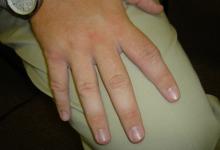


If you are a health practitioner, you may Login/Register to comment.
Due to the nature of these comment forums, only health practitioners are allowed to comment at this time.