

All News
Gout Cavalcade (7.10.2026)
Dr. Jack Cush reviews the news, journal articles and regulatory decisions from the past week. July is Gout: More than Flares month.
Read Article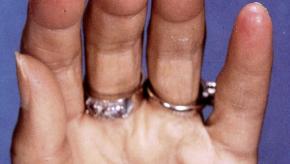
EULAR26: Reports on Systemic Sclerosis
In an oral abstract presentation at EULAR 2026, results were shared from a longitudinal observational analysis of the EUSTAR database. The aim was to characterise organ involvement and disease progression – and time to these events – stratified by having a modified disease activity index (mDAI) score of less than 2.5 at baseline (inactive), versus those with 2.5 or higher (active).
Read Article
From BiTE to TriTE: Progress of T-cell Engagers in RMDs
The EULAR 2026 Congress in London showcased growing interest in T-cell engagers as a novel strategy to achieve deep B-cell depletion and drug-free remission in refractory rheumatic and musculoskeletal diseases (RMDs).
Read Article
NK Cells Without a CAR: AB-101 Is Neither CAR-T nor CAR-NK
Much of the meeting came for the next CAR T readout. AB-101 drew attention for a different reason. It depletes B cells by a completely different route.
Read Article
Improving Understanding in SSc
Systemic sclerosis is a rare connective tissue disorder characterised by autoimmune features with vascular manifestations, causing fibrosis of the skin and internal organs. EULAR is focused on systemic sclerosis as the rheumatic disease with the highest morbidity and mortality. New data presented at the EULAR 2026 Congress underscore key complications, and offer hope for a possible new therapeutic strategy.
Read Article
5 years since Patient ID001: Progress on CAR-T Therapy in RMD
Five years on, are we closer to licensing of the first CAR-T therapy in rheumatic and musculoskeletal diseases (RMD)?
Read Article
Digital Platforms and AI
EULAR works with the network of national organisations of People with Arthritis/Rheumatism in Europe (PARE) to ensure the voices of people with RMD are heard and have influence – creating powerful alliances that make a real difference. Artificial intelligence is another potential ally in that fight. At the EULAR 2026 Congress in London, work was presented from three PARE initiatives that showcase how digital tools can be used in treatment education and decision-making, and potentially avoid the use of general web searches to answer important questions.
Read Article
CAR-T Cell Therapies in Refractory RMD
Current therapies for rheumatoid arthritis rely on sustained immunosuppression rather than restoration of immune tolerance, with off-drug remission remaining rare.
Read Article


Links:

Links:
Links:

Links:


Links:

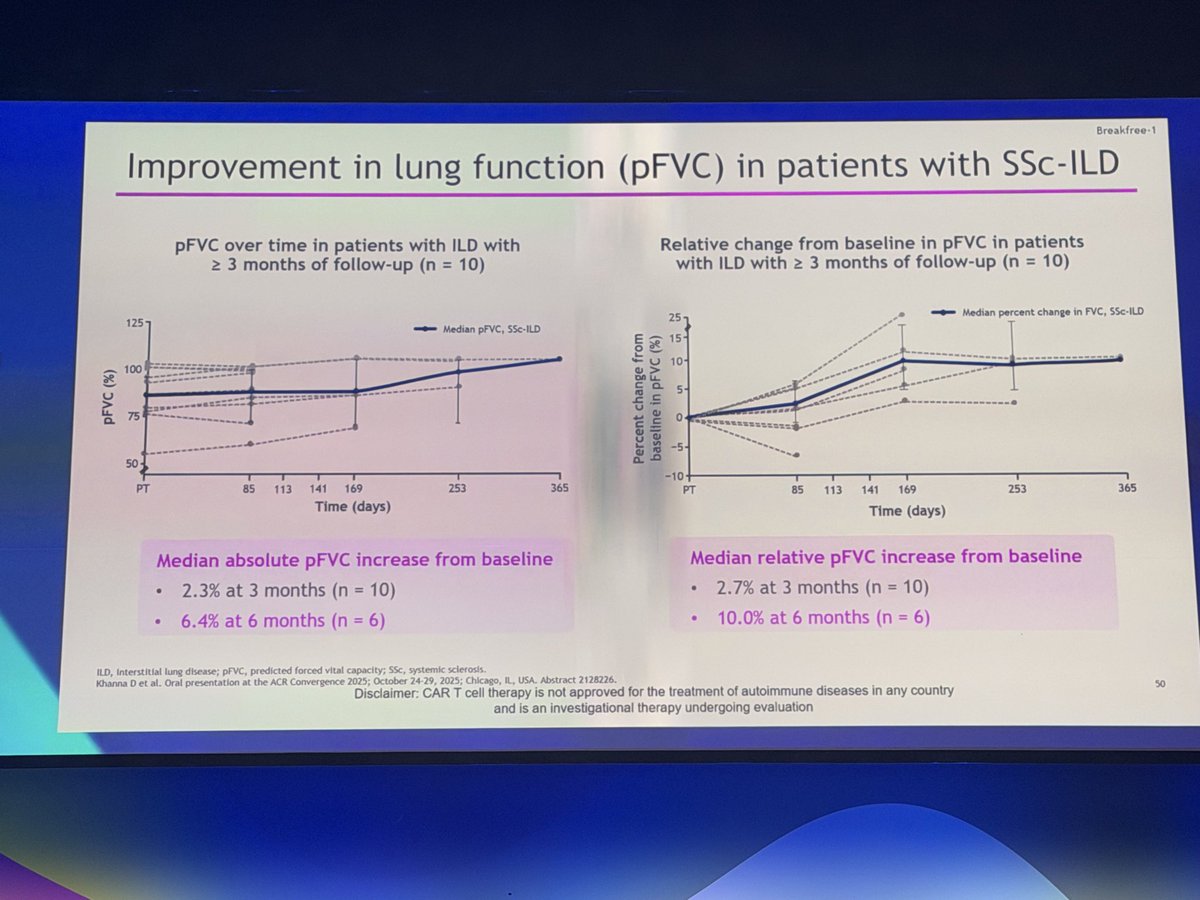
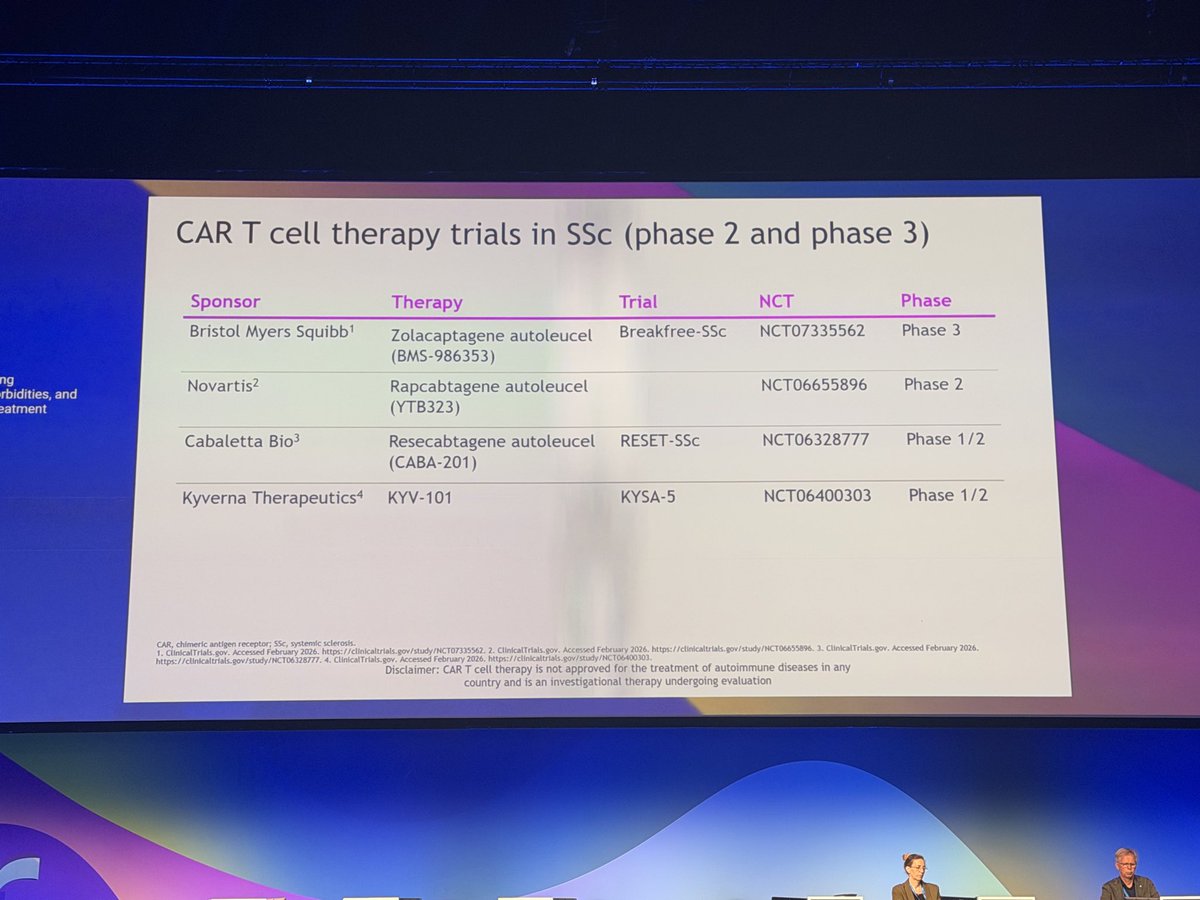
#EULAR2026 OP077 Another promising CAR-T in autoimmunity. In a Phase II study, Rap-Cel autologous CD19 CAR-T (shorter infusion time ~2d & low dose) vs traditional CAR-T showed drug-free improvement in N=6 #IIM & N=6 #SSc patients. Safety similar to other CAR-Ts @RheumNow https://t.co/byNn5X8JGh
Links:

#EULAR2026 OP076 Of 50 patients treated with autologous CAR-T, 12% relapsed; median 13 mths. More frequent in #IIM vs #SLE or #SSc. These relapses were significant. Switching to BCMA-CAR or BCMA-TCE restored response. Should BCMA instead of CD19 be targeted initially?@RheumNow https://t.co/lgdsJQm3xY
Links:

