
Article
Here are a few important advances in our understanding of interstitial lung disease (ILD) from the ACR 2018 meeting last week.

Search for Terms or Answers
Here are a few important advances in our understanding of interstitial lung disease (ILD) from the ACR 2018 meeting last week.

More intense treatment of gout with a treat-to-target strategy can reduce patients' risk for death, a Spanish researcher told a press conference Monday at the American College of Rheumatology annual meeting here.

This past week in Chicago gave us a plethora of new and eye-opening research, people, KOLs, exhibits, sessions, guidelines, posters and a never-ending supply of coffee served in small paper cups. ACR 2018 highlights for me included:

Some patients typically contraindicated for prescription nonsteroidal anti-inflammatory drug (NSAID) use may be able to take them with no increased risk of harm, according to a large observational study.
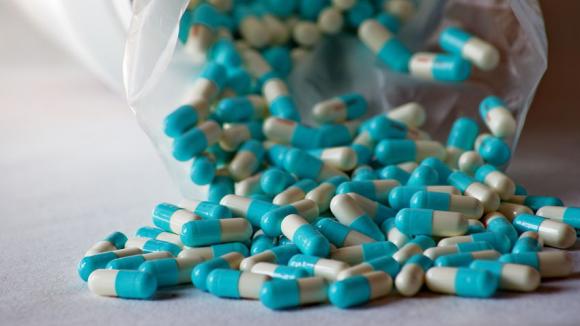
Neogi and colleagues have shown that standard doses of allopurinol (300 mg/day) were associated with a 13% lower risk of renal function deterioration in chronic gout patients - thus, allopurinol does not appear to impair renal function over time.
The high prevalence of symptoms of anxiety and depression among adults with arthritis warrants awareness, screening, and subsequent treatment of these conditions.

Dr. Jack Cush reviews the news from the past week on RheumNow.com.

The current edition of Lancet Diabetes & Endocrinology suggests that neither vitamin D supplementation, nor dose, will improve bone density or prevent fractures in adults.

Use of wearable activity trackers was associated with increases in the number of daily steps among individuals with rheumatic and musculoskeletal disorders, a meta-analysis found.

The NEJM reports that zolendronic acid was shown to significantly lower the risk of nonvertebral or vertebral fragility fractures in older women with osteopenia.
Males and females can both be affected by axial spondyloarthritis (axSpA). A recent study shows that while there are some differences and similarities, HLA-B27 and imaging are still pivotal elements for diagnosis of axSpA in both genders.

Only inhibitors of IL-1 (canakinumab) and IL-6 (tocilizumab) are FDA approved for use in children with systemic onset juvenile idiopathic arthritis (sJIA). Now, long-term data from the extension studies from two phase III studies shows that canakinumab yields long-term improvements with reduced glucocorticoid dosing with no new safety findings with long-term use.

Researchers from the British Society for Rheumatology Biologics (BSRBR) set out to define under what circumstances will rheumatoid arthritis (RA) patients manifest biologic disease-modifying antirheumatic drugs (bDMARDs) refractory disease.

Dr. Jack Cush reviews the news from the past week on RheumNow.com, including news on inappropriate opioids, pre-clinical RA treatment, DMARDs in Gout, the decline of arthroscopy, and a pain in the mouth.

Ronald F van Vollenhoven and colleagues have reported in Lancet that ustekinumab (UST), an interleukin-12 and -23 inhibitor, when added to usual therapy in systemic lupus erythematosus (SLE) patients, was shown to be superior to placebo at improving clinical efficacy and laboratory param

Stem cell clinics are popular and proliferating as they are largely a cash business and fall outside of FDA regulatory control. In lieu of scientific proof, most advocates use patient testimonials and the placebo effect to back up their claims.
Implementing a treat-to-target approach for the care of rheumatoid arthritis (RA) did not result in an increase in adverse events or resource use, a post-hoc analysis of a randomized trial showed.

In response to the growing opioid crisis, the US Food and Drug Administration has approved the final Opioid Analgesic Risk Evaluation and Mitigation Strategy (REMS), designed to reduce the risk of abuse, misuse, addiction, overdose, and deaths due to prescription opioid analgesics.
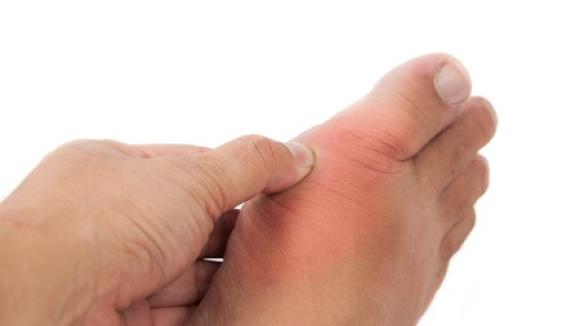
The Annals of Internal Medicine reports that interleukin-1 (IL-1) inhibitor treatment is associated with a reduced risk of gout attacks - such are the findings of an anlysis of the CANTOS study previously reported at the Annual ACR 2017 meeting in Washington, DC.
A study from the British Society for Rheumatology Biologics Register in Axial Spondyloarthritis (BSRBR-AS) shows that biologic use significantly improves work productivity and overall activity impairment.
By downloading this material, I acknowledge that it may be used only for personal use and personal education and that I will accredit RheumNow.com as the source and owner of this material. Commercial use or mass reproduction of this material without permission from RheumNow (info@rheumnow.com) is prohibited.