All News
Best of 2025: Dermatomyositis Reviewed
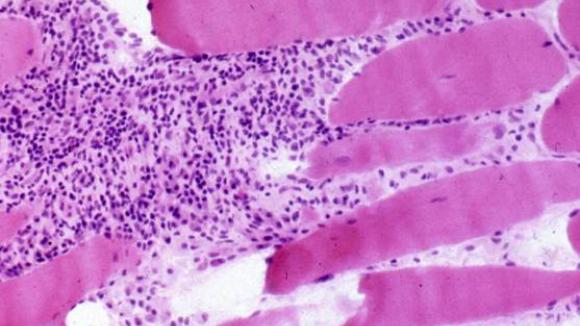
Researchers from the University of Pennsylvania have published an open-access review of dermatomyositis (DM) - its manifestations, hallmark cutaneous features, etiopathogenesis and treatment options.
Read ArticleBest of 2025: Vitamin D for Prevention of Disease
JAMA has published a clinical guideline on the use of vitamin D to prevent disease in children and adults.
Read ArticleBest of 2025: Methotrexate intolerance in rheumatoid arthritis
Methotrexate (MTX) is the most commonly used DMARD in rheumatoid arthritis (RA); however, there is significant intolerance to this drug among adult RA patients - especially at doses above 15 mg per week.
Read ArticleNerandomilast FDA Approved for Progressive Pulmonary Fibrosis
The FDA has approved nerandomilast (Jascayd), a PDE4b inhibitor, to treat adults with progressive pulmonary fibrosis (PPF). Nerandomilast was approved to treat idiopathic pulmonary fibrosis (IFP) in October 2025.
Read ArticleBest of 2025: Overview of the VEXAS Syndrome
A current systematic review in Rheumatology addresses the clinical features seen in the VEXAS syndrome.
Read ArticleThree Things to Know About Hiring, Onboarding, and Training APPs
As the utilization of APPs (nurse practitioners and physician assistants) in rheumatology becomes more prevalent, here are three things to consider if you are thinking about adding an APP to your practice.
Read ArticleTelling You Where to Go (12.19.2025)
Dr. Jack Cush reviews the news and journal articles from the past week on RheumNow.com. Who would've thunk - a PsA FMF connection? Labs to diagnose SSc-ILD? IgA-RF may be important or RZV may not work in JAK inhibitor treated patients?
Read ArticleTricks of the Trade – Clinic Advice from APPs
December 2025 is focused on advanced practice providers, their impact, education and priorities. In seeking and soliciting the help and advice of leaders in the rheumatology APP world, I have been impressed by APP pride, dedication and passion for what they do.
Read ArticleDisease Activity Criteria for Adult-Onset Still's Disease: EULAR Points to Consider
EULAR has published a "points to consider" (PtCs) guidance on the development of criteria for the assessment of the disease activity in adult-onset Still’s disease (AOSD).
Read Article
Dr. John Cush RheumNow ( View Tweet)
Links:
Dr. John Cush RheumNow ( View Tweet)