

All News
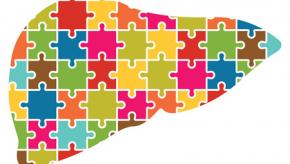
2020 Nobel Prize in Medicine Goes to the Discovery of Hepatitis C
The Nobel Assembly at Karolinska Institutet has awarded the 2020 Nobel Prize in Physiology or Medicine jointly to Harvey J. Alter, Michael Houghton and Charles M. Rice for the discovery of Hepatitis C virus. These three scientists made a decisive contribution to the fight against blood-borne hepatitis C, a major global health problem that causes cirrhosis and liver cancer in people around the world.
Read Article
RheumNow Podcast – Function Follows Form (10.2.20)
Dr. Jack Cush reviews the news and journal articles from the past week on RheumNow.com. Regulatory approvals, update on global rheumatology alliance, smoking and psoriasis, gabapentin let down and defining difficult RA.
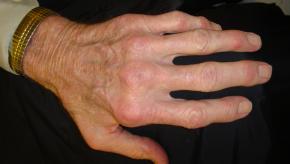
Defining Difficult Rheumatoid Arthritis
‘Difficult-to-treat RA’ is an oft-used term that carries various clinical qualities and therapeutic disappointments. A EULAR Task Force was established to develop recommendations for the management of difficult-to-treat rheumatoid arthritis and as a first step, have put forth their definition of this rheumatoid arthritis (RA) subset.
Read Article
Low Risk of Latent TB with Secukinumab
TB reactivation and latent tuberculosis infection (LTBI) are warned against with biologic agents, especially TNF inhibitors; yet clinical trial data now shows that the risk of LTBI with IL-17 inhibition via secukinumab is uncommon.
Read Article
Gabapentin Fails to Lessen Chronic Pelvic Pain
Lancet reports that in a randomized, blinded, controlled trial, gabapentin failed to significantly lower pain scores in women with chronic pelvic pain, and was associated with higher adverse event rates compared to placebo.
Read Article
RheumNow Podcast – Cardiovascular Risk in Psoriatic Disease (9.25.20)
Dr. Jack Cush reviews the news and Journal articles from the past week on RheumNow.com.
Read Article
EULAR Updated 2019 Recommendations for Psoriatic Arthritis Management
In June 2020, we failed to report on the ARD publication updating the 2019 update the European League Against Rheumatism (EULAR) recommendations for the pharmacological treatment of psoriatic arthritis (PsA) - these are presented below.
Read Article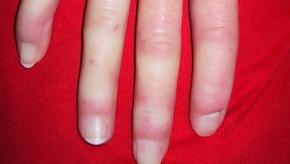
Romilkimab Effective in Early Diffuse Systemic Sclerosis
A phase II study of patients with early diffuse systemic sclerosis (SSc) has demonstrated improvement in SSc skin outcomes by targeting T cells and fibrosis with the bispecific monoclonal antibody romilkimab (RMK).
Read Article
Young Adults are Driving Up COVID-19 Rates
CDC reports that since June 2020 individuals infected with COVID-19 have largely been young adults in the 20-29 year age bracket. Moreover, younger adults appeared to be driving community transmission of COVID-19.
Read Article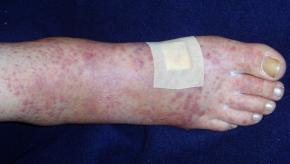
Livedo, Purpura and Coagulopathy in Severe COVID-19
JAMA Dermatology expands the spectrum of complications seen with severe acute respiratory syndrome coronavirus 2 (SARS-CoV-2) infection describing cutaneous purpura and livedo lesions in patients with severe COVID-19.
Read Article
DMARDs for Early Rheumatoid Arthritis Have Cardiovascular Benefits
Patients with RA have up to a three-fold increased risk of mortality versus the general population, largely due to an increased incidence of premature CVD, such as atherosclerosis and heart failure.
Read Article
RheumNow Podcast – Lupus Delights (9.18.20)
Dr Jack Cush reviews the news and journal reports from the past week on RheumNow.com:
Read Article
COVID-19 Risks in Pregnant Women
There has been little science or evidence regarding the effects of COVID-19 infection on pregnancy and vice versa; and now the recent MMWR addresses the subject with two new reports
Read Article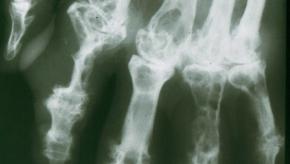
Methotrexate-Pegloticase Combination in Refractory Gout - MIRROR Study
The MIRROR study, an open-label pilot trial in refractory, uncontrolled gout patients, showed that pegloticase given in combination with methotrexate was safe and effective and maintained responses for 6 months after initiation.
Read Article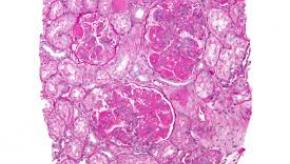
Belimumab Effective in Lupus Nephritis
Dr. Rich Furie has lead a group of investIgators in reporting the significant efficacy of intravenous belimumab when added to standard of care induction therapy in patients with active lupus nephritis. This phase 3, 2-year study included 448 systemic lupus erythematosus patients with biopsy proven lupus nephritis (class III or IV +/- V) patients who required induction therapy and have a UPCR ≥1 g/g.
Read Article
Links:
Dr. John Cush RheumNow ( View Tweet)
Links:
Dr. John Cush RheumNow ( View Tweet)
Links:
Dr. John Cush RheumNow ( View Tweet)
Links:
Dr. John Cush RheumNow ( View Tweet)
Links:
Dr. John Cush RheumNow ( View Tweet)

