
Article
CNN has published a recent government report from the Tick-Borne Disease Working Group that suggests the US tick population is growing and may bring with it an increase in tick-related illnesses.

Search for Terms or Answers
CNN has published a recent government report from the Tick-Borne Disease Working Group that suggests the US tick population is growing and may bring with it an increase in tick-related illnesses.

Frustration may be the word that best characterizes many scleroderma management plans - owing to a lack of trials, lack of agreement and lack of clear guidance on management.
The CDC's Morbidity and Mortality Weekly Report (MMWR) reports that during 2015–2016 there was a total of 27,394 firearm homicides and 44,955 firearm suicides among US residents, with 12% and 5% of events occuring in children 10–19 years.

Methotrexate has been shown to reduce cardiovascular (CV) deaths in rheumatoid arthritis (RA) patients. Given that inflammation underlies the pathogenesis of atherothrombosis, Dr. Paul Ridker and colleagues studied the value of low dose methotrexate (MTX) in preventing cardiovascular events.

Dr Jack Cush reviews the News and Journal reports from the past week on RheumNow.com. Be sure to check out our upcoming meeting in March 2019 - RheumNow Live.

JAMA reports on a randomized clinical trial of 202 adults with acute low back pain showing the addition of intensive patient education failed to improve pain outcomes.

Boston researchers have found that in a large cohort study of patients receiving rituximab (RTX), most were not being monitored for hypogammaglobulinemia, despite the observed significant increase in severe infections and increased mortality in RTX treated patients.

Analysis of the FDA Adverse Event Reporting System data examined the association between statins' musculoskeletal adverse events (MAEs).

JAMA has published a large Canadian claims-based study showing that nonsteroidal anti-inflammatory drug (NSAID) use in patients with hypertension, heart failure, or chronic kidney disease was not associated with a significant safety risk - but this only looked at short-term outcomes (7-3

Amidst a new DEA report demonstrating a record number of opioid overdose deaths (n-72,000 or ~ 200 deaths per day), the FDA has approved a newer and far more potent opioid than those that are currently being abused at alarming rates. The new agent is named Dsuvia.

Lancet has published the results of a study showing that ixekizumab (an IL-17A inhibitor) yielded significant clinical benefit and radiographic protection when given to NSAID treated patients with radiographic axial spondyloarthritis (AxSpA).
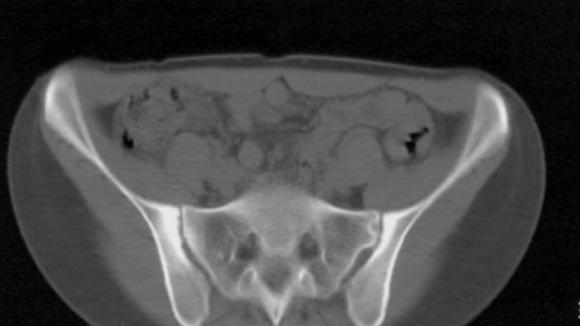
“Autoimmunity is the Achilles heel of onco-immunotherapy” per Dr. Leonard Calabrese, which leaves a dilemma for rheumatologists.
Onco-immunotherapy induces immune dysregulation to allow patients to develop an immune response to their cancer cells. An unfortunate side effect for patients taking onco-immunotherapy is often autoimmune-like diseases referred to as immune adverse reactions (irAEs). Studies in France and the United States have shown that irAEs can be a good prognostic sign, suggesting these therapies are working. Rheumatology is faced with new problems as onco-immunotherapies may induce new chronic diseases in multiple different forms secondary to the treatment.

The monoclonal antibody bimekizumab, which neutralizes both interleukin (IL)-17A and 17F, was effective for both musculoskeletal and skin outcomes in psoriatic arthritis (PsA) in a phase IIb study.
ACR 2018 has come and gone. It was a conference filled with a number of highlights. One thing from this conference which really stood out was the continued plethora of data on JAK inhibitors. First in RA, and now in psoriatic arthritis and psoriasis.
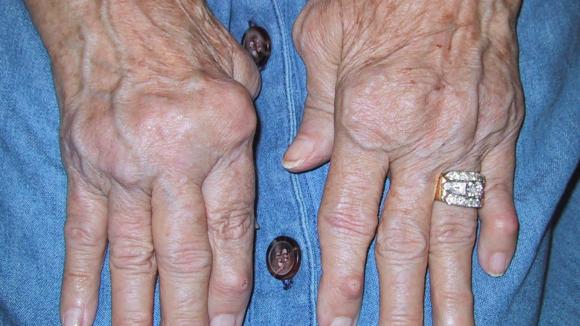
Here are a few important advances in our understanding of interstitial lung disease (ILD) from the ACR 2018 meeting last week.

The Annals of Internal Medicine features a communique from the Karolinska Institutet in Sweden demonstrating that elevated levels of antiphospholipid antibodies may be found in patients with myocardial infarction without any autoimmune co-morbidity, published in Annals of Internal M

More intense treatment of gout with a treat-to-target strategy can reduce patients' risk for death, a Spanish researcher told a press conference Monday at the American College of Rheumatology annual meeting here.

This past week in Chicago gave us a plethora of new and eye-opening research, people, KOLs, exhibits, sessions, guidelines, posters and a never-ending supply of coffee served in small paper cups. ACR 2018 highlights for me included:

I think 2018 was the year that belonged to psoriatic arthritis (although some may argue in favor of immune conditions induced by Checkpoint inhibitors). Many years ago the late Professor Verna Wright in Leeds (UK) was a lone voice for many years describing the clinical subtypes of Psoriatic arthritis as something distinctive from rheumatoid arthritis. For a long time we thought that the treatments for PsA were just the same as RA since we were treating the same problem of synovitis.
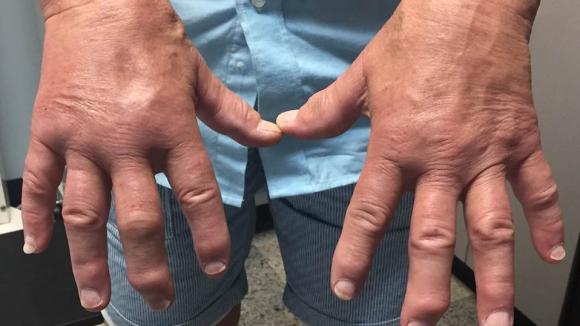
As expected, this year’s ACR meeting saw an upswing in the number of abstracts on immune related adverse events from checkpoint inhibitor therapy compared to last year.

By downloading this material, I acknowledge that it may be used only for personal use and personal education and that I will accredit RheumNow.com as the source and owner of this material. Commercial use or mass reproduction of this material without permission from RheumNow (info@rheumnow.com) is prohibited.

