Sclerostin, an inhibitor of the Wnt/β-catenin pathway, negatively regulates osteoblast differentiation and has anti-anabolic effects on bone formation. Thus, inhibition of sclerostin is currently being studied as therapy for postmenopausal osteoporosis.

All News
The use of tumour necrosis factor α inhibitors (TNFis) at the time of major surgery has been a challenge for surgeons, rheumatologists and those wishing to develop evidence-based guidelines for this clinical scenario.
Several new interleukin-6 inhibitors made headlines this week. While none of the new IL-6 inhibitors are soon to be approved and available, these studies may redefine the role of other non-TNF biologics in the future.
Most medical school faculty don't have time to observe third- and fourth-year medical students doing a complete medical exam? In When Medical Students Push Back, Westby Fisher, MD, FACC, offers his take on unnecessary testing and this particular issue.
A small cohort study has evaluated the utility of the minimal disease activity (MDA) criteria that has been advocated for use in psoriatic arthritis (PsA) studies and clinical trials.
The use of opioids has become increasingly problematic in the last few years. First, the rising rates of use and abuse, followed by greater restrictions and regulations that have curtailed use, and, finally, a resultant increase in illicit drug use (heroin) and opioid overdoses.
Weight change can have substantial effects on the outcomes of patients with arthritis. It has long been known that weight loss and low body mass index (BMI) are associated with poorer arthritis outcomes.
Highlights from this week at RheumNow.com:
The ACR is inviting members and rheumatologists to comment on their proposal to develop recommendations for the "Perioperative Management of Rheumatic Disease Medications in Total Joint Arthroplasty of the Hip and Knee".
Healio reports that patients followed in a combined Dermatology and Rheumatology clinic in Canada revealed high patient satisfaction.
As the number of biosimilars in development keeps on growing, reaching nearly 700 products to date, demand for data from randomized controlled trials (RCTs) and an understanding of these new biologics is peaking the interest of many.
The frequency of not returning (lost to follow-up) (LTFU) in patients with rheumatic diseases is high. Associated demographic factors included older age in RA, female gender in SLE and Ps/PsA, and younger age in Ps/PsA, with various reasons for being LTFU.
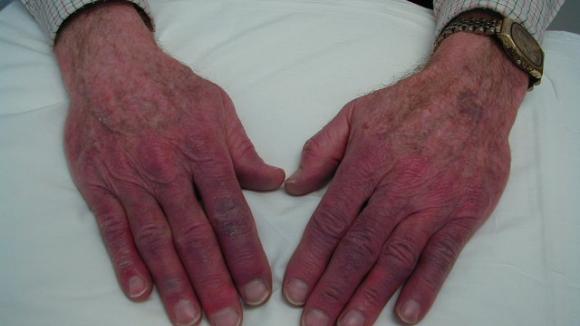
A systematic review by Khouri examined the extent drugs are capable of inducing Raynaud's phenomenon (RP).
Vitamin D supplementation for individuals with knee osteoarthritis and low 25-hydroxyvitamin D levels did not reduce knee pain or slow cartilage loss, according to a study appearing in the March 8 issue of JAMA.
Highlights from this week on RheumNow:
Hip and knee intraarticular injection of corticosteroids are frequently prescribed to alleviate pain or inflammation in patients with osteoarthritis and rheumatoid arthritis, especially in the period leading up to scheduled arthroplasty.
Chronic liver disease, and in particular hepatitis B infection, is a contraindication to methotrexate (MTX) use.
Clinicians often face the issue of using a TNF inhibitor (TNFi) in patients with heart failure or cardiac disease. Here are the facts and data necessary to make a cogent decision to use or avoid TNFi.
Two population-based cohorts from Ontario (ON) and Quebec (QC) were used to assess if early DMARD influenced the need for joint replacement surgery among elderly patients with incident rheumatoid arthritis.
A recent review compared elderly-onset rheumatoid arthritis (EORA) to those with younger-onset rheumatoid arthritis (YORA) to assess treatment responses and safety issues with biologics and DMARDS. EORA is generally defined as the onset of rheumatoid arthritis after age 60 years.