
Article
ACR 2015 RA treatment guidelines were published yesterday, nearly a year after they were preliminarily presented at the 2014 ACR meeting in Boston. After a year of review and revision these have been posted.

Search for Terms or Answers
ACR 2015 RA treatment guidelines were published yesterday, nearly a year after they were preliminarily presented at the 2014 ACR meeting in Boston. After a year of review and revision these have been posted.

Clinical decision-making, occurring at the intersection of the ’art’ and the ’science’ of medicine, remains enigmatic and controversial.

Hydroxychloroquine is one of many medications frequently used in rheumatology practice.

What are your rules on methotrexate and alcohol use? How about casual, social or occasional alcohol use? If one alcoholic beverage is ok, what about 2, 3 or six while taking MTX?

Reactivation of hepatitis B virus infection can have devastating consequences, especially amongst those patients receiving immunosuppressive therapy.

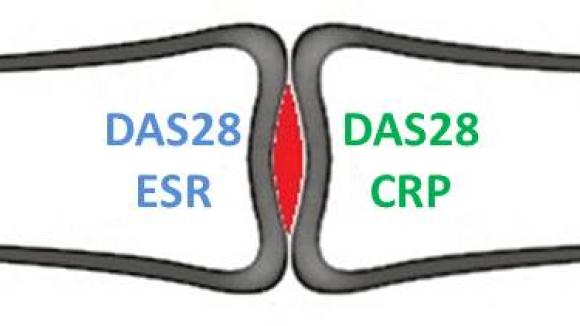
The disease activity score (DAS28) has been developed as a dynamic assessment tool and a therapeutic response measure for use in clinical trials and practice.
Researchers at Stanford University analyzed 2013 Medicare Part D prescription drug coverage claims for narcotic painkillers containing hydrocodone, oxycodone, codeine and other opioids. (Citation source http://buff.ly/1JgR2Tr)
Researchers from Keio University have published their results using novel JAK inhibitor peficitinib (ASP015K) as a monotherapy in moderate to severe RA patients.
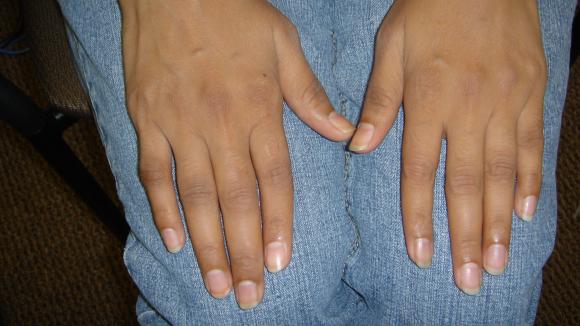
Rheumatologists and physicians are commonly asked, "what can I do to avoid rheumatoid arthritis?" This is usually a concern for family members of those affected by RA.

Obesity is a modest risk factor for rheumatoid arthritis (RA) onset. More importantly, obese patients have significanty lower treatment responses to DMARDs and biologics, making them harder to treat than your average RA patient.

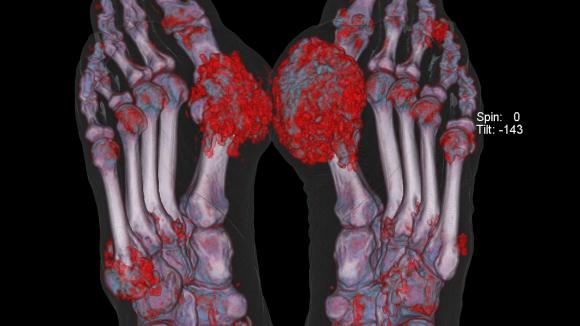
German investigators studied 100 RA patients with a uric acid > 6 mg/dl and assessed them for MSU crystal deposit with dual energy computed tomography (DECT) of both feet and hands.
(Reuters Health) - Water- or land-based exercise should provide some short-term benefit in pain management for hip osteoarthritis, though there are few well-designed trials testing it, according to a new review published in the British Journal of Sports Medicine.

Here's what you may have missed: in November 2015, RheumNow published 80 tweets on news, research and teaching points that impact the rheumatology community. We had a reach (impressions) of 79,100, 79 mentions, and over 3399 visits to RheumNow.com to check out what we publish.

Despite the potential contributory role of TNF in the pathogenesis of multiple sclerosis, several trials have shown that TNF inhibitor (TNFi) use may lead to worsening of MS, optic neuritis and other demyelinating disorders.
Joint erosions in RA result from a complex process with multiple contributing mechanisms. One of those mechanisms involves RANK receptor activation by RANKL leading to osteoclast differentiation, activation and survival.
Desai and coworkers analyzed public and private insurance claims data (2001-2012) to assess patterns of drug use in pregnant woment with RA, SLE, PsA and AS. Specifically, they looked at immunosuppressive drug use in the 3 months preceding and during pregnancy.

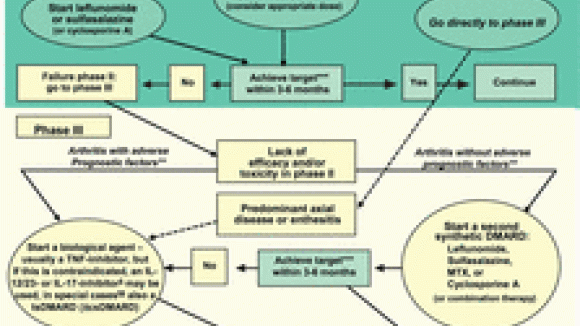
The management of psoriatic disease, including psoriatic arthritis (PsA) has evolved significantly in the last decade. Nevertheless, there are still some uncertainties - such as what the role of methotrexate should be, and when to use newer and novel therapies.
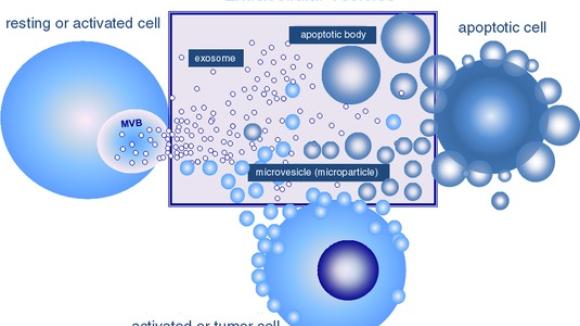
Microvesicles are emerging as a new mechanism of intercellular communication by transferring cellular lipid and protein components to target cells, yet their function in disease is only now being explored.
Azathioprine (AZA) is widely used in the treatment of several autoimmune diseases. Its use and optimal dosing may be limited by adverse drug reactions (ADRs). Thiopurine S-methyltransferase (TPMT) is an important enzyme involved in AZA metabolism.

Rituximab (RTX) is highly effective at B cell depletion and this may be one of several hypothetical ways in which the drug works. B cell numbers (measured as CD19+ B cells) plummet rapidly after the first infusion and stay down for 6-12 months.
By downloading this material, I acknowledge that it may be used only for personal use and personal education and that I will accredit RheumNow.com as the source and owner of this material. Commercial use or mass reproduction of this material without permission from RheumNow (info@rheumnow.com) is prohibited.

