All News
2018 Rheumatology Year In Review
This annual appraisal of hallmark moments, news and research articles from 2018 are gleaned from that published in RheumNow during the last year and filtered by other news sources and literature review. The top 10 list herein is rooted in what rheumatologists should know and what will likel
Read ArticleBest of 2018: Advance Practice Clinicians Proliferating in Specialty Practices
An analysis of SK&A outpatient provider files, covering 90% of physician practices in the United States, shows that between 2008 to 2016, there was a 22% increase in the employment of advanced practice clinicians (APCs) by specialty practices. By 2016, 28% of all specialty practices employed APCs.
Read ArticleBest of 2018: Patients May Not Fill Your Prescription
A new study linking administrative claims and electronic health records (EHRs) shows that nearly 40% of patients fill and take newly prescribed methotrexate (MTX), tofacitinib or biologics.
Kan et al set out to estimate the extent and predictors of primary nonadherence in rheumatoid arthritis (RA) patients who received new prescriptions for methotrexate, biologics or tofacitinib.
Read ArticleRheumatologist and Physician Salaries for 2018
Medpage Today has published the results of their 2018 Rheumatology Specialty Salaray Survey.
Read ArticlePatients Don't Always Tell the Truth
Sometimes patients withhold information from their doctors, and a new study suggests that as much as 60 - 80% of patients consciously omit information to their doctors, despite knowing this may bear on their health and well-being.
Read ArticleDeprescribing to Battle Polypharmacy
The Gerontological Society of America has published a report calling for deprescribing as a means of managing polypharmacy in the elderly.
Read ArticlePhysical Activity Guidelines for Americans
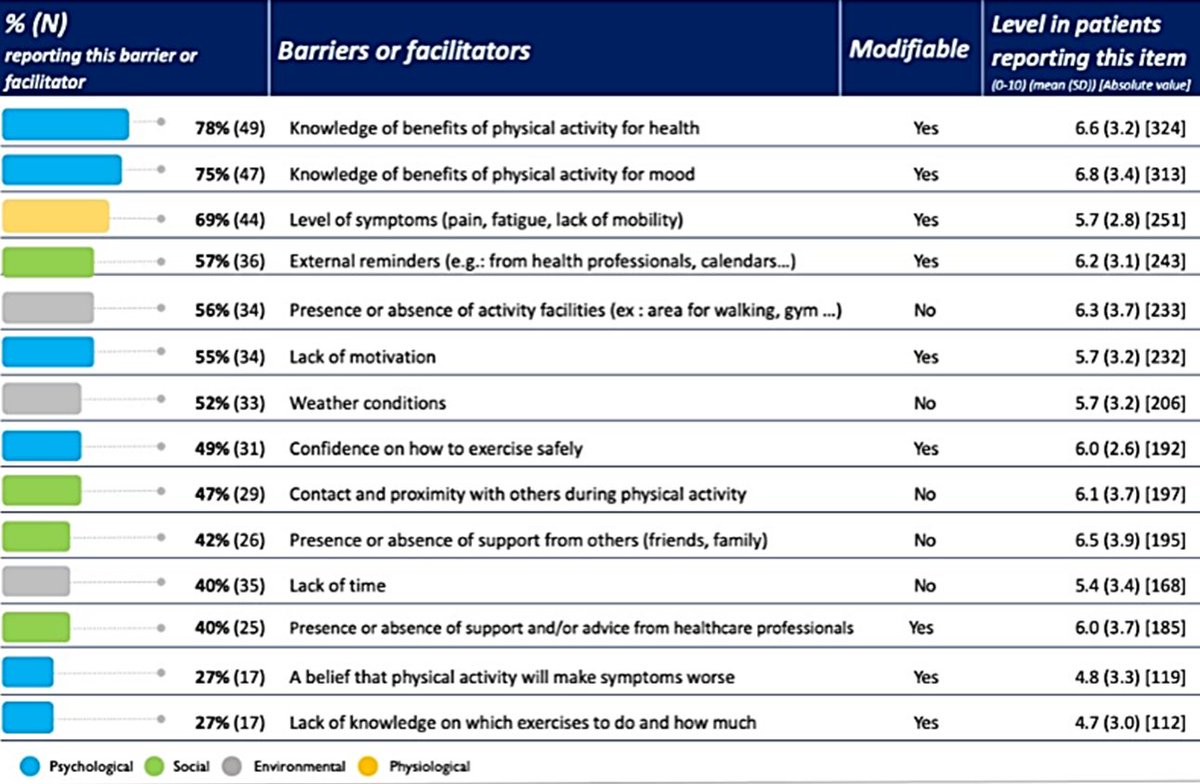
The data are clear and disappointing: despite the well-known health benefits, four out of five US adults are not active physically. JAMA has published the new US Physical Activity Guidelines for Americans, so that health professionals and policy makers can promote lifestyle changes and awar
Read ArticleScleroderma Expert Treatment Preferences
Frustration may be the word that best characterizes many scleroderma management plans - owing to a lack of trials, lack of agreement and lack of clear guidance on management.
Read ArticleRheumNow Weekly Podcast – 3 Wiseguy Rheumatologists (11.9.18)
Dr Jack Cush reviews the News and Journal reports from the past week on RheumNow.com. Be sure to check out our upcoming meeting in March 2019 - RheumNow Live.
Read ArticleE/M Guidelines: Right Road, Wrong Direction
Last July, the Centers for Medicare & Medicaid Services (CMS) proposed new E/M guidelines for office visits with physicians. It issued the final guidelines on November 1, with a few tweaks.
Read ArticleNEJM Debate on Medical Marijuana for Chronic Pain
This week’s NEJM features a case discussion and debate over whether medical marijuana should be used to treat chronic pain. The debate focuses on a 31-year-old woman with long-standing complex regional pain syndrome in her leg and foot.
Read ArticleDefining Refractory Rheumatoid Arthritis
Researchers from the British Society for Rheumatology Biologics (BSRBR) set out to define under what circumstances will rheumatoid arthritis (RA) patients manifest biologic disease-modifying antirheumatic drugs (bDMARDs) refractory disease.
Read ArticlePhysician Burnout May Jeopardize Patient Safety
A metanalysis of studies and over 42,000 physician shows that MD burnout is associated with 2-fold increased in unsafe care, unprofessional behaviors, and low patient satisfaction.
The primary outcomes were the quantitative associations between burnout and patient safety, professionalism, and patient satisfaction.
Physician Conflicts Overlooked by Physicians
An analysis of Centers for Medicare & Medicaid Services Open Payments Database (OPD) shows a high level of inconsistency for physician self-declared conflicts of interest amongst physicians receiving the highest industry payments.
Read ArticleManaging Comorbidity and Poor Drug Responses
Comorbidity is pervasive and complicates medical care in general. It can be a by-product of aging. It may result from drug therapy or an inciting disease process and may be part of the constellation that defines the primary disorder. A growing body of evidence that suggests that comorbidity has a significant dampening effect on drug responsiveness and, adds to poorer outcomes in patients with inflammatory arthritis.
Read ArticleDr. Roland Moskowitz (1929 - 2018)
Dr. Roland Moskowitz was a giant in the rheumatology world for decades, and one of a handful of researchers who doggedly rose to one of rheumatology's greatest challenge: osteoarthritis. He has passed away at the age 88 years.
Read ArticleSelective Use of HLA-B*5801 Testing in Gout
The current edition of JAMA Internal Medicine describes an Asian gout patient who presents with an allopurinol hypersensitivity reaction that could have been diagnosed by testing for HLA-B*5801.
Read ArticleUnsafe Practices with Ambien Use
Ambien (zolpidem) is the most widely used prescription hypnotic sedative since its introduction in 1992 and is currently the fourth most frequently prescribed psychiatric drug (2013). Recent US Food and Drug Administration Drug Safety Communications suggest limitations on use to reduce adverse effects. A study of the Medical Expenditures Survey in 2015 revealed that over 3.8 million adults reported using one or more prescriptions for zolpidem.
Read ArticleBest of 2017: Are ANA Tests Unreliable?
Pisetsky and colleagues have reported in the Annals of Rheumatic Disease that ANA tests done on established SLE patients may yield surprisingly disparate results.
While ANA negative lupus was a problem of old assays and the loss of ANA positivity may be seen with chronicity or age, most rheumatologists believe that ANA positivity is an absolute requirement for the diagnosis of systemic lupus erythematosus.
Read ArticleEULAR 2018 - Day 2 Report
Highlights from Day 2 of the EULAR meeting in Amsterdam include high MBDA scores in ACPA negative RA predicts remission; characterization of difficult RA; and gender differences in psoriatic responses to TNF inhibitors.
Read Article