It has been just over a decade since the approval of tofacitinib (JAK1/JAK3-inhibitor) by the US FDA for the treatment of rheumatoid arthritis. Since then, baricitinib (JAK1/JAK2-i), filgotinib and upadacitinib (both selectively targeting JAK1) also have been licensed for the treatment of rheumatoid arthritis. As there are many more JAK-inhibitors evaluated in clinical trials currently, how do you stand out?
All News
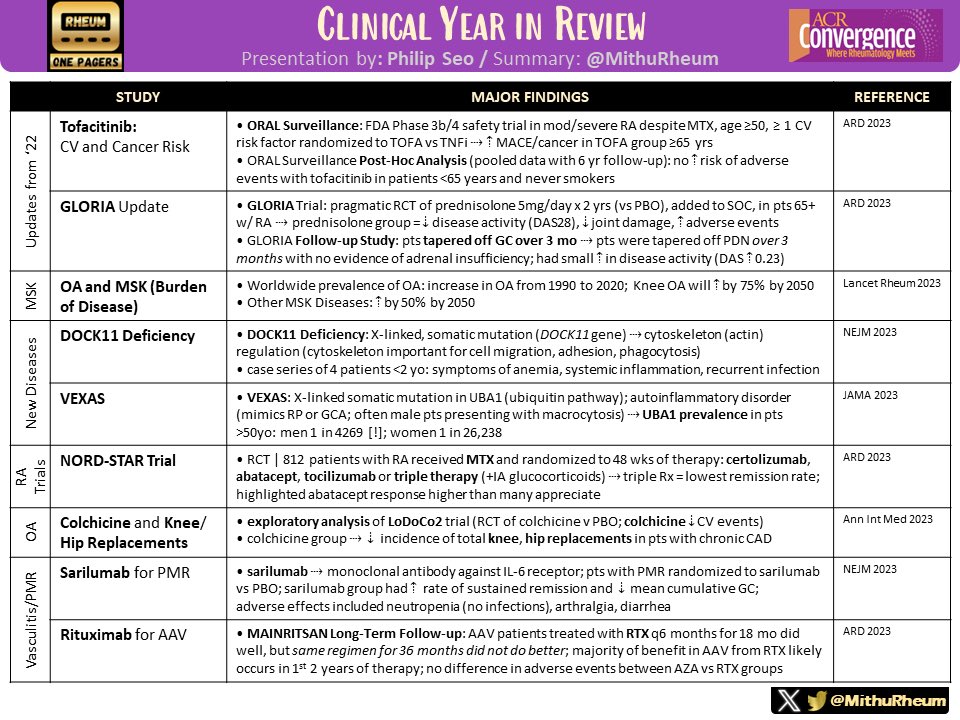
Here's what I learned at ACR23 that will change the way I practice in rheumatoid arthritis.
You can see that the JAKi/TYK2i have both approved or potential seropositive and seronegative indications. There are also improvements in PsO for the class and studies in CTDs. So, it is difficult to know which to choose.
Drs. Jack Cush and Arthur Kavanaugh discuss highlights and key takeaways from ACR 23.
We have known about the VEXAS (vacuoles, E1 enzyme, X-linked, autoinflammatory, somatic) syndrome for nearly 3 years, but there has been relatively little to say about how to treat it. To date there have been over twice as many publications about VEXAS (263 publications) as there have been patients described with respect to treatment strategies (116 patients). One of the late breaking abstracts may finally have rectified this imbalance.