On Tuesday, April 7th, RheumNow hosted its first Tuesday Nite Rheumatology webinar - kicking off a two-month series of Rheumatology Grand Rounds lectures. The first session featured Jack Cush, MD (UT Southwestern) who lectured on "The Safety of Biologics and Newer Agents".
All News
On April 3rd, the National Institute for Health and Care Excellence (NICE) in the UK, published a rapid guideline for managing children and adults with rheumatological autoimmune, inflammatory and metabolic bone disorders during the COVID-19 pandemic, while protecting staff from infection.
We indeed are living in interesting times and we all are seeking not to contract COVID-19 - this is logical. While our goal is to avoid infection, I think we all must agree that our aspirations must encompass more than disease avoidance. What we should be seeking now, as well, is more than absence of disease but rather a state of optimal wellness.
Dr. Jack Cush reviews the news on COVID-19 and FDA actions this past week. Be sure to check out:
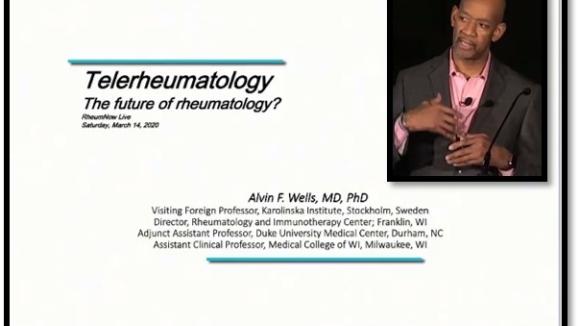
RheumNow Live 2020 featured a series of shorter STEP (TED-like) talks. This one features Dr. Alvin Wells discussing the opportunities and new paradigms encumbent with telemedicine in rheumatology.
Drs. Cush and Kavanaugh discuss the downside of stopping hydroxychloroquine, DMARDs and biologics in lupus, RA and pregnancy.
As they say, necessity is the mother of invention. After years of bemoaning the challenges of telemedicine, our rheumatology clinic transition entirely to a remote clinic in the space of a week.
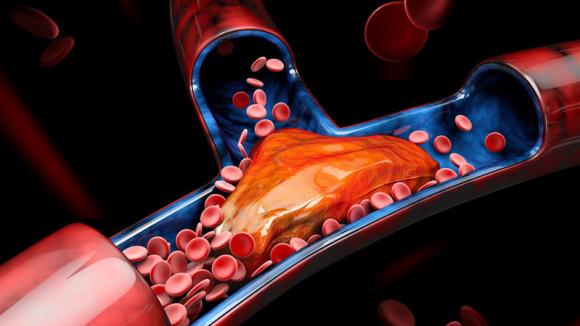
On 14 November 2019 the European Medicines Agency (EMA) concluded that Xeljanz (tofacitinib) could increase the risk of blood clots in the lungs and in deep veins in patients who are already at high risk. These recommendations have been formally published and are intended for EU nation
A full-read, novel Viewpoint article published in the Annals of Rheumatic Disease (Huizinga TWJ, et al) spotlights a recent international meeting of big thinkers, scientific collaborators and industry dedicated to innovation in rheumatology.
A cohort analysis of the Nurses' Health Study suggests that asthma and COPD are associated with increased risk for incident rheumatoid arthritis (RA), independent of smoking- thus airway inflammation may be an important factor in the evolution of pre-cllnical RA.
Recent research from the Lown Institute reports that 750 older Americans are hospitalized daily because of serious side effects from and the core problem is that of polypharmacy, especially in the elderly.
QD Clinic - Lessons from the clinic
The Consult that shows up without a cause - and what to do?
QD Clinic - Lessons from the clinic. Today’s clinic topic: Dealing with Non-Adherence in the Clinic.
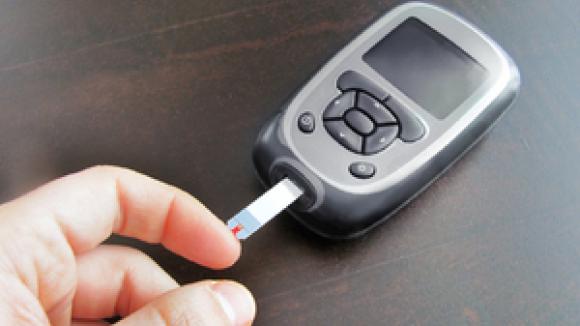
Researchers from the Brigham and Women's Hospital have reported that adults with type 2 diabetes who were treated with SGLT2 inhibitors had a lower risk of gout compared to GLP1 agonist, suggesting that sodium–glucose cotransporter-2 inhibitors may reduce the risk for gout with type 2 diabetes mellitus (T2DM).
Medscape has reported the results of its 2020 annual physician survey, This year rheumatologists (60%), general surgeons (60%), public health and preventive medicine physicians, and allergists/immunologists are the "happiest" outside of work compared to other specialists, according to Medscap
A group of Western Australian clinicians have set out to assess current practices and proved guidance recommendations for high-quality care for the most common musculoskeletal (MSK) pain scenarios encountered by clinicians in emergency and primary care.
Today, the American College of Rheumatology (ACR), in partnership with the Arthritis Foundation (AF), released the 2019 ACR/AF Guideline for the Management of Osteoarthritis of the Hand, Hip and Knee.
It’s a great time to be a rheumatologist and to manage RA. But, if you keep doing what you’re doing, you’re going to keep getting what you’ve got.
We have options that are endless – we have 28 biologics in rheumatology; 19 approved for RA in the last 20 years, but 15 of these are me-too copies or biosimilars. We currently have 2 JAK inhibitors and may have 3 or 4 by year end. But what we really need is the right drug, at the right time, in the right patient – but how will we know.