Article
While comorbidities are associated with severe COVID-19 infection, it appears they also influence severity and survival in rheumatic disease (RMD), according to a a French cohort study,

Search for Terms or Answers
While comorbidities are associated with severe COVID-19 infection, it appears they also influence severity and survival in rheumatic disease (RMD), according to a a French cohort study,

Among children with multisystem inflammatory syndrome (MIS-C), treatment with IVIG and methylprednisolone vs IVIG alone was associated with a more favorable fever course. MIS-C is a rare but serious pediatric condition associated with COVID-19 where different body parts can become inflamed, including the heart, lungs, kidneys, brain, skin, eyes, or gastrointestinal organs.

On January 22nd, the FDA approved voclosporin (Lupkynis) for use in adults with active lupus nephritis; voclosporin is a calcineurin-inhibitor immunosuppressant indicated for use in combination with a background immunosuppressive therapy. FDA approval was based on data from the pivotal AURORA Phase 3 study and the AURA-LV Phase 2 study, which demonstrated the ability of voclosporin to significantly improve LN outcomes after 52 weeks of followup in SLE nephritis patients receiving background standard of care therapies like MMF, and low dose steroids.

The ProDERM study design and outcomes are previewed in Medicine; and as promised the results were revealed at ACR Convergence in November 2020 showing that IVIg is safe, effective and superior to placebo i(PBO) in patients with dermatomyositis (DM).
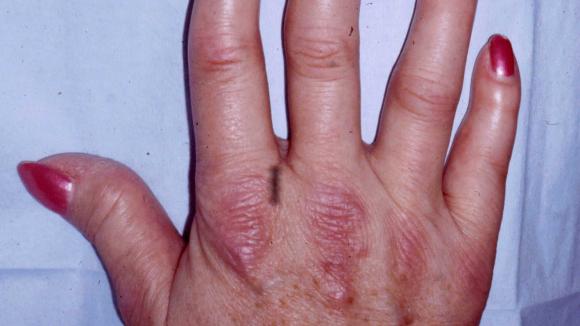
Recurrent pericarditis is a rare, probable autoinflammatory disorder mediated by interleukin-1 (IL-1); and is often refractory to glucocorticoids and colchicine.
JAMA has published a clinical update of recent studies on GCA. While PET/CT scanning are novel means of demonstrating activity, they have not changed the diagnostic approach to GCA or PMR and although there are no new proven treatment strategies for PMR beyond glucocorticoids, the FDA has approved tocilizumab as a first-line glucocorticoid-sparing agent.
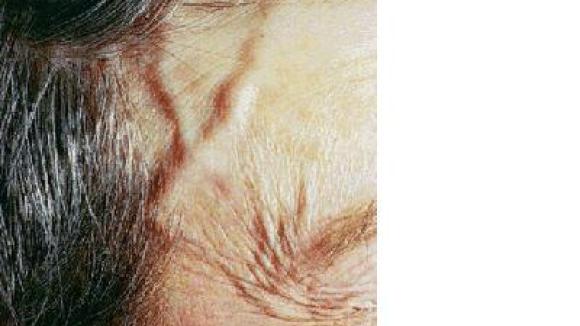
What started out as online tweets and sharing newsfeed and case reports, has progressed to the formation of the COVID-19 Global Rheumatology Alliance, whose mission is to create an international rheumatology registry of patients affected by the disease in order to better understand the disease and guide clinicians in assessing and treating patients.

2020 evidence-based clinical practice guideline for the prevention, diagnosis, and treatment of Lyme disease was cooperatively developed the Infectious Diseases Society of America (IDSA), the American Academy of Neurology (AAN), and the American College of Rheumatology (ACR).

Patients with rheumatic and inflammatory diseases who develop COVID-19 share risk factors for severe disease with the larger population, including older age, male sex, obesity, and hypertension, but also are at increased risk if they are on corticosteroids, French investigators reported.

This podcast features a discussion of autoinflammatory and Still's disease abstracts from virtual ACR 2020. Dr. Jack Cush is joined by a panel of experts including Drs. Olga Petryna, Bella Metha and Michael Ombrello.

Saturday's session on autoinflammatory syndromes featured Dr. Dan Kastner addressing - The Adult with Undifferentiated Autoinflammatory Disease.

Here are my highlights from day three, Sunday, of the ACR 2020 Convergence.

Here is the last of our QD Clinics in Podcast form, just before we start ACR2020 coverage.
In this compilation from the past week we talk about
- HIV and arthritis
- Hyperuricemia in PsA
- An odd kind of dermatomyositis
Dr Jack Cush overviews the RheumNow commitment, upcoming bonus coverage of ACR20 and the good news and journal reports from the past week on RheumNow.com

An open-label extension of the ASSET trial (abatacept in diffuse cutaneous systemic sclerosis) showed continued safety with significant improvements in the modified Rodnan Skin Score (mRSS) at 12 months, suggesting abatacept (ABA) may benefit early systemic sclerosis (SSc).
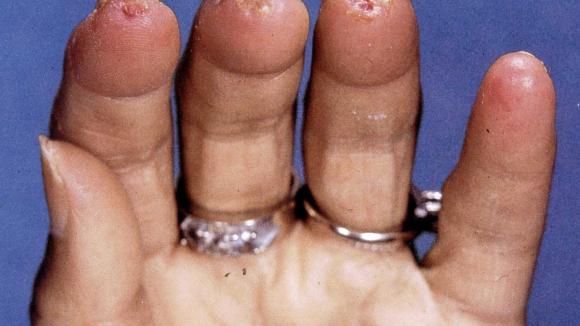
A full read review of immune-mediated necrotizing myopathy is portrayed as a distinct subtype of inflammatory myopathies first described in 2004.

Dr. Jack Cush reviews the news, journal reports, survey results and "Back Talk" questions from Rheums.
Cancer patients treated with immune checkpoint inhibitors (ICI) who develop severe arthritis may be at risk for progression of the malignancy, a single-center study suggested.

Two biologic therapies showed promise in the treatment of refractory or relapsing eosinophilic granulomatosis with polyangiitis (EGPA) in a retrospective European study.
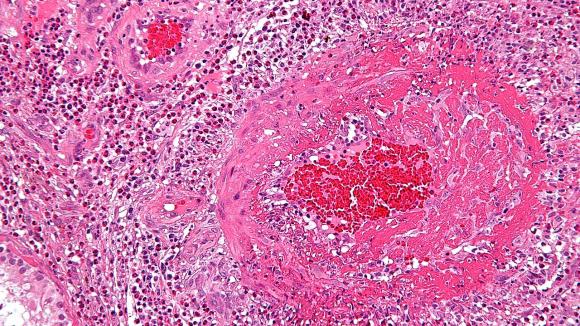

By downloading this material, I acknowledge that it may be used only for personal use and personal education and that I will accredit RheumNow.com as the source and owner of this material. Commercial use or mass reproduction of this material without permission from RheumNow (info@rheumnow.com) is prohibited.